One of the favourite manners of people identifying with liberal democracy is to present the past of the planet as an ongoing conflict for freedom, the constant breaking of the corset founded by despots, religions, society, authoritarian and totalitarian regimes. They execute a certain historicalosophical flashback, attributing to heroes of the communicative intentions that these heroes frequently did not have. Of course, the destiny of “freedom fighters” from the past is to legitimize the aspirations of those who appeal to them.
Or possibly past doesn't have a certain logical run? Stories of centuries-old wars between Germans and French are known, which in effect caused the border to shift by respective 100 metres.
It is likely that the imposition of narratives about past as about the constant liberation of various types of captivity, in addition to the function of opium for hearts and souls, is besides due to the mechanics described by Nobelist Daniel Kahneman, which involves the different perceptions of reality by man by means of the “fearing self” and the “remembering self” – the past felt during its becoming felt differently from that of many years after it, as we choose from it points that we have best remembered or those that let more coherent (although, of course, not more true) past of past stories.
Can it be argued that the French who had been revolutionized even 2 centuries earlier were the leaders of their efforts for law and freedom? Thus wrote historian Paweł Jasienica in “Polish anarchy” on the subject: “In the various periods of France’s history, the monarch’s power weakened enormously. But there has never been a final bill in this country that deprives the royal efforts to correct the qualities of legality. In Poland, after the enactment of the Henrytian articles, the 1 who opposed the extension of the parliamentary session beyond the six-week deadline was legal. Our kings remained in the way of the law contrary or indescribable difficult.”
If past is governed by logic, if it is simply a kind of linear momentum of progress, overcoming further barriers, the triumphant course of freedom, why did the revolution erupt in France and not in Poland? Or is the veracity of specified a view of past already being undermined by the revolutionary mechanics itself, which has more nihilism in it than by its freedom of aspiration, and which yet ended repeatedly in past with a fresh form of captivity (examples of revolution in France or in Russia are the most meaningful, though not the only ones)? So, as in the most significant, although worst-remembered part of Jack Kaczmarski's “walls grew, grew, grew”?
To Paul Jasienica's consideration, let us add that the Henrykovic articles mentioned by him, limiting the fiscal powers of the monarch, who from now on could not establish fresh taxes, besides guaranteed nobility privileges, and the interior and abroad policies rendered control of the Sejm. They besides included provisions guaranteeing freedom of religion. Interestingly, they were passed in 1573, while the night of St Bartholomew in France had taken place a year earlier, referred to as a slaughter on the Huguenots. This definitely undermines the designation of the linear improvement of past in 1 country and prompts the question of who in the late 16th century was in the avant-garde fight for freedom – Poles or French?
Paweł Jasienica wrote about his peculiar interest in phenomena unique in history. This provokes the thesis that past is simply a collection of crucial and little crucial unique ones that we effort to give ex post meaning – in addition, everyone tries to give a different meaning.
Another contradiction can be seen in these theories of liberal democracy. Well – on the 1 hand – they affirm the importance of the will of an individual, which is not subject to limitations, its reason is the driving force of the past of the world, and it itself is capable of infinite self-improvement. On the another hand, they profess any historical determinism which, although not as expressive as in Marxist or Heglist concepts, appears in a form more veiled in all the related theories of Francis Fukuyama about the “end of history” concepts presenting liberal democracy in the aura of eventual triumph and the culmination of the past of the world.
It is worth noting that the authors mentioned are not able to convincingly explain the phenomenon of "escape from freedom", which – and the evidence of that plenty – occurs periodically with a frequency of no little than subsequent victories in the fight to increase areas of freedom. If they do, they trivialize the subject, blaming the “populists” (another concept that means everything and nothing) or the vulnerability of demos to manipulation.
In fact, this second view points to a certain elitist feature of liberal democracy that is prone to regularly insulting people who underestimate their significance. It is very interesting that by affirming a strategy based on highlighting the key value of the choice itself, completely independently of its content (which makes them realize freedom completely different from Christian, Roman or Greek concepts – but we will get to that) and by doing what we can specify as the privatization of morality, they have a very precise thought of what a good choice is – that is, the choice according to their indication.
It is worth noting, referring to the thought of Immanuel Kant, who made a discrimination between a "moral politician" and a "political moralist" – if the former, in terms of the philosopher of the King, works in harmony with ethics, the second bends ethical views to the needs of politics. The statements of modern bakers of liberal democracy are full of moralistics, showing the support of indicated particularisms as an work of “all good people”. Morality has been replaced by morality, with which it is most likely linked only by etymology.
A much more interesting explanation of the cyclical "fleeing from freedom" than the democratic-liberal 1 provided, for example, the French sociologist Erich Fromm, who, in his book entitled Escape from Freedom, did not minimize the work of liberals for the totalitarian tendencies of the masses. By creating a consumer society, in which – as the artist sang – “although the crowds walk on empty” liberalist theorists made individuals isolated and alienated, and thus seeking individual who would even brutally fill their area of solitude. As Fyodor Dostoevsky wrote in “The Brothers of Karamazov” (Fromm refers to him in “The Escape from Freedom”): “There is no more urgent request than to find individual to whom he could, as shortly as possible, give this gift of freedom, with whom he was born – an unfortunate being”.
The circumstantial characteristic lynx of a democratic-liberal man, consisting in accepting the inevitability and irreversibility of change, but besides of conformism, situated far from all radicalism and revolutionism, about the attitude that focuses on the praise of exchange, but besides considers it inevitable, carried by super-unitive forces, something like an abstract “spirit of time” interestingly wrote Ryszard Legutko in the “Tract about Freedom”. "It is natural for him to change, and to proceed without change it offends nature. Therefore, he deserves more sympathy from the spokesmen of change than the spokesmen of position quo. This is not the case – let us point out in contradiction to the democratic personality described by Tocqueville, whose main feature is conformism. It is actual that a liberal politician accepts only what reproduces his planet view. To this view of the world, i.e. 1 of the components of conformism, it is besides to submit to the fatalism of change."
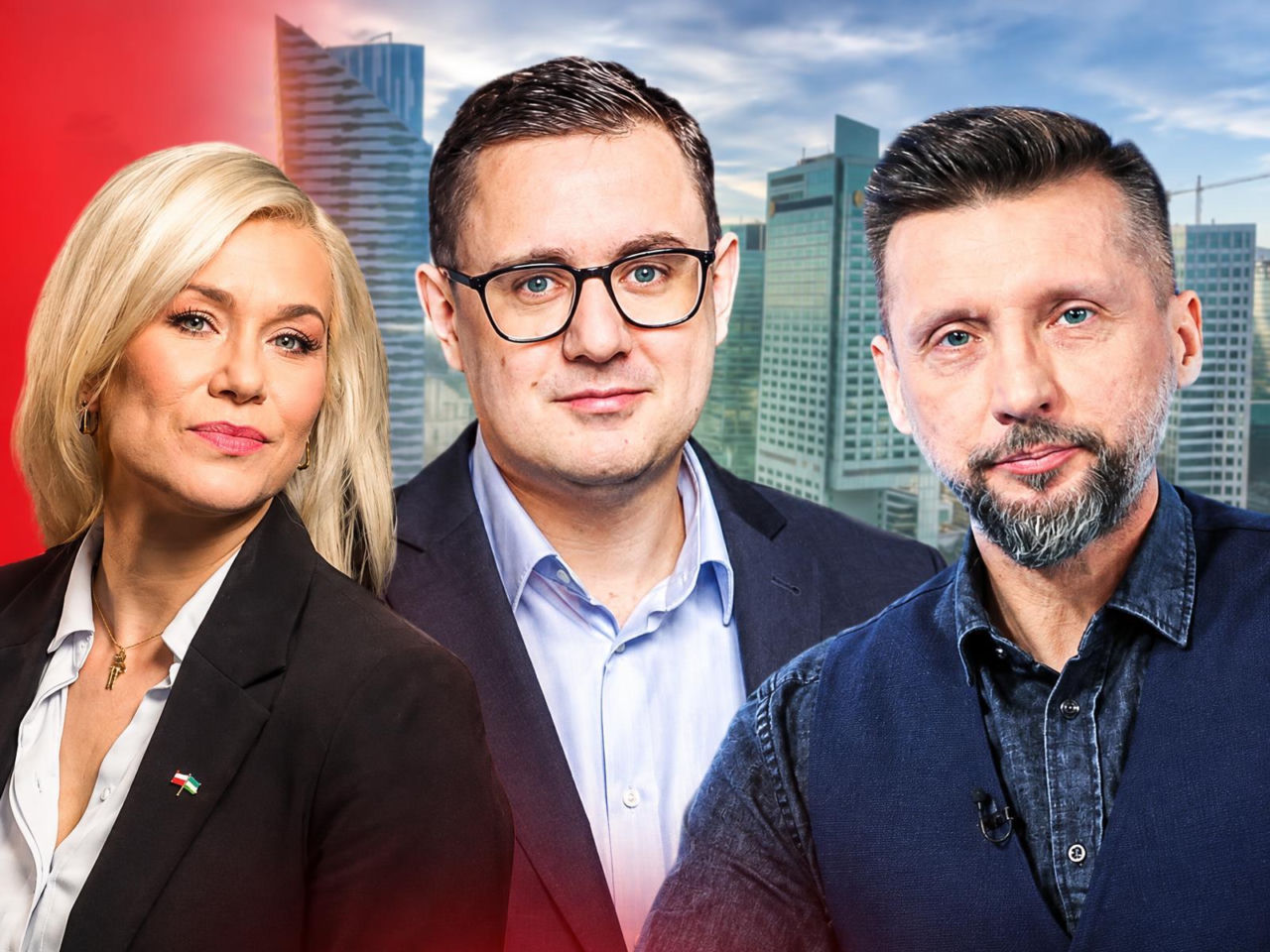
Jacek Tomczak