Information Agency: On February 24, 2022 the Russian Federation launched a second full attack on Ukraine (the conflict began 2014). The war continues. After 4 years, Paweł Sito – writer of Polish Radio summarizes the military effects of the invasion.
The Russian-Ukrainian War is devastating. Ukraine, although it is much smaller in all respect than the Russian Federation, inactive resists a large deal, showing that imperial ambitions are not enough.
Paweł Sito: Russian Federation – losses since February 24, 2022:
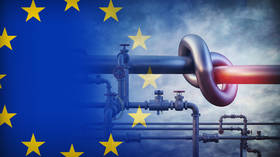
1.International credibility and the position of a predictable natural material supplier. Western countries have permanently changed their energy strategy, focusing on renewable sources and another suppliers.
2.About 1.500,000 human losses, including the deceased, permanently disabled and the giant brain drain of IT specialists and engineers (who escaped from the Russian Federation). specified a immense failure of the workforce inhibits the improvement of the Russian economy for generations.
3.Loss of direct access to Western technology, capital and know-how after the withdrawal of more than a 1000 planet brands. The Russian marketplace has become a technological museum, cut off from global innovation and standards.
4.Financial destabilisation – freezing approx. $300,000,,000,000 reserves. Currency and cut-off from SWIFT (Society for Worldwide Interbank Financial Telecommunications – a global telecommunications network that allows safe exchange of information on financial transactions between institutions (banks, brokerage houses), crucial for global transfers and trade). The state budget is presently based on a drastic drain on citizens' savings and reserve funds.
5.Destruction of relations with Ukrainewho became the most militarized and hostile neighbour of the Russian Federation, in Europe. Hatred and feeling of harm on the Ukrainian side exclude any close-up for decades.
6.Loss of technological sovereignty of the Russian economy – The industry, including mining, became completely dependent on Chinese components and services. The Russian Federation lost its ability to repair the key industrial infrastructure on its own.
7.Loss of dominance in Central Asia by the Russian Federation, for the increasing influence of the People's Republic of China and the Republic of Turkey (although the case of the Republic of Armenia). The erstwhile russian republics are increasingly boldly ignoring the directives of the Russian Federation, seeking fresh safety guarantors.
8. Participation of the Russian Federation in relations with the Republic of India and the People's Republic of China, becoming for them only a "gas station" selling natural materials at low prices (due to the imposed global sanctions). Asian giants are now dictated by commercial terms, utilizing the isolation of the Russian Federation.
9. failure of control over the east territories of the Russian Federation, which de facto they are evolving into the sphere of exclusive economical exploitation by the People's Republic of China. The mediate State ‘without firing’ takes over the resources of Siberia, treating it as natural material facilities.
10.Completing the monopoly on the European energy market, forcing the costly and inefficient construction of fresh infrastructure to the East. The fresh gas pipelines to the People's Republic of China are incapable to compensate for the failure of profits from the western direction.
11.Significant simplification in the Shadow Fleet and the safety of maritime transport by sealing sanctions and method incidents. Exploited ships and deficiency of insurance make it hard to circumvent oil export restrictions.
12.Loss of power position in the Baltic (now "NATO Lake" — the military-political North Atlantic Alliance) and limitation of operating freedom in the Black Sea After the demolition of key Black Sea Fleet units. The Russian Navy was pushed to defend itself in the waters it erstwhile controlled.
13. failure of influence in Syrian arabian Republic and Bolivarian Republic of Venezuela, where military and financial engagement had to be drastically restricted to the Ukrainian front. Local regimes are presently looking for fresh solutions, seeing the weakness of the Russian Federation.
14. hazard increase on the northern flank of the Russian Federation after the accession of the Republic of Finland and the Kingdom of Sweden to NATO structures. The North Atlantic Alliance border has increased by thousands of kilometres, forcing costly and impossible expansion of bases.
15.The story of the “second army of the world” was in ruins The Russian Federation, which dared local players to question Russian interests. Military compromise has made Russian "security guarantees" worthless.
16.$550,000 million. issued for war by the Russian Federation. These measures, alternatively of upgrading the state, were virtually burned on the battlefield.
17.The comparative safety of Russian citizens has fallen by returning armed demoralized veterans, frequently released prisoners. A wave of violent crimes floods Russian cities, creating a fresh dangerous social reality.
18.The fall of the cultural, technological and sporting position of the Russian Federation In the world. Russian artists and athletes became undesirable characters on the world's most crucial scenes and arenas.
19.Stopping the improvement of civilian and industrial technologies, resulting in primaryisation of production and insecurity in aviation and automotive. Mass production returned to standards a twelve years ago, offering products of inferior quality.
20.Cutting off the Russian Federation from Western medical and technological equipment, which has permanently reduced wellness care quality and excluded the state from the global innovation cycle. The deficiency of modern drugs and equipment translates into a real shortening of Russian life expectancy.
21.Significant demolition of hydrocarbon mining and retention infrastructure, by the Russian Federation, as a consequence of fires set by Ukrainians; the gas station of the planet introduces petrol cards. Regular attacks on refineries have led to a fuel crisis in the interior market.
22.3⁄4 simplification of Nordstream gas pipeline capacity linking the Baltic Sea to the national Republic of Germany. The billions of euros invested in this task have become useless scrap on the bottom of the Baltic.
23.Losing Europe (an tremendous number of countries) as oil and gas merchants. The richest marketplace in the planet has been closed for Russian Feeration for many years.
24.Non-ability to rise loans in the West by the Russian Federation. The Russian economy must finance itself, leading to galloping inflation and taxation increases.
25.Loss of safe servicing of the Boeing and Airbus fleet, machines can only be kept in motion in the Russian Federation through the phenomenon of "cannibalization" (collecting 1 device to fix the other). Air transport has become risky and the number of accidents and accidents is constantly increasing.
26.Freezing of EUR 210,000,000 billion of assets of the Central Bank of the Russian Federation in the European Union (most of which in Belgian Euroclear), which was frozen without a time limit in December 2025. These measures have de facto become a rebuilding fund for the opponent of the Russian Federation.
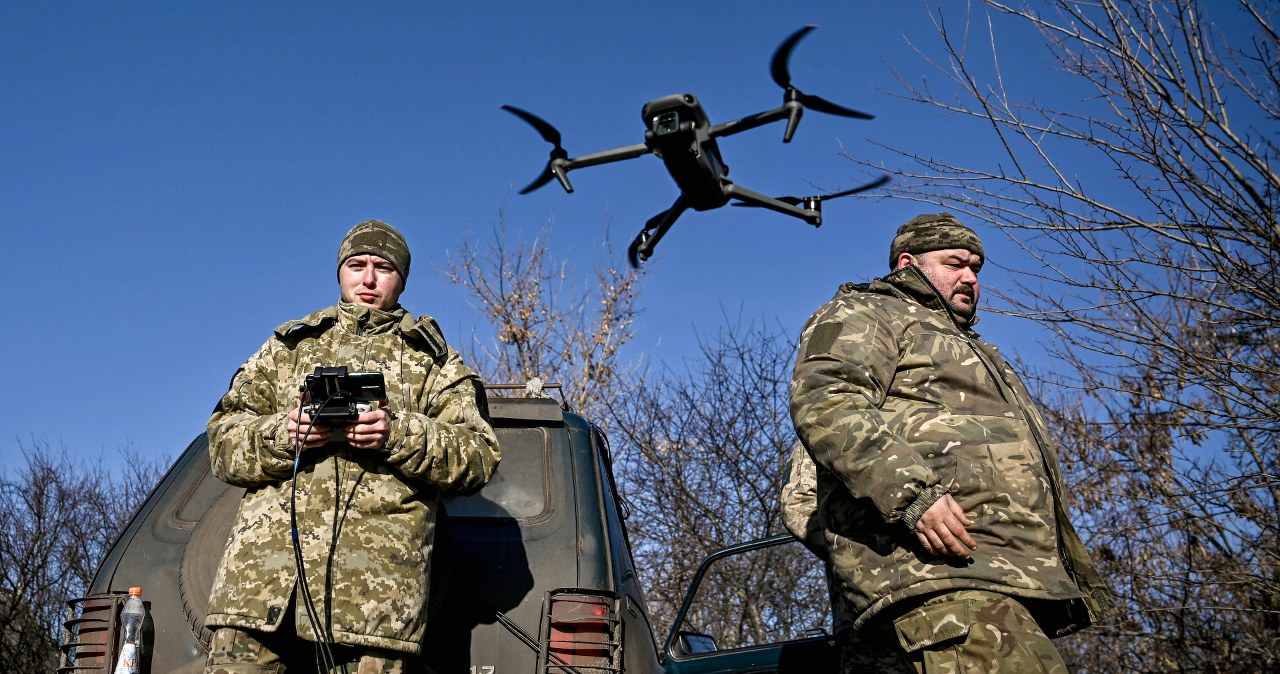
27. failure over 11.500 tanks and c. 24,000 armoured vehicleswhich represents most of the modern armory possible before the invasion. Okay. 430 aircraft and 350 helicopters and above 100,000 drones of different types; sinking or severe harm 28 vessels (including the flagship cruiser ‘Moscow’) and 2 submarines. The scale of these losses means the full disarmament of conventional Russia in key sectors.
28.Loss of planet food prices as the main stabiliser, which forced the African States and the mediate East to search safer suppliers outside the sphere of influence of the Russian Federation. Hunger blackmail proved ineffective and turned against Kremlin's interests in the Global South.
29.Loss of powerful production assetsThe Russian Federation has built in the West for decades. Many of them were taken over by the governments of the European countries as part of the "must-have-government", which in practice means that they have been lost irretrievably.
30.Limitation of airspace by aircraft of the Russian Federation over the full European Union, the United States of America, Canada, the United Kingdom of large Britain and Northern Ireland and the Nordic States. Russian airlines cannot even fly over these territories, which has extended flights to the Republic of Serbia or Africa for many hours.
31.Closure of entry for Russian tourists to the Republic of Poland, the Baltic States (Lithuania, Latvia, Estonia), Finland and Norway. These countries, erstwhile a "window to the world" and major land routes to Europe, have completely closed the borders for Russian visa holders.
32.Loss of opportunities for the Russian Federation to usage the European rail and road system. Russian road hauliers are banned from entering the EU and rail connections (such as celebrated trains to Paris or Berlin) have been permanently liquidated, cutting Russia off from modern land logistics.
33. A series of mysterious deaths (outbreaks from windows, abrupt attacks) over 50 leading businessmen and managers of the energy sector of the Russian Federation (such as Gazprom, Łukoil), which destroyed the stableness of the management of key state resources. The physical elimination and arrest of the heads of state-owned enterprises of the Russian Federation, on the charge of sabotage, which resulted in the mass escape of the remainder of loyal personnel to the private sector or abroad, lost 19 leading generals besides as a consequence of the targeted elimination.
Only to (not) get burned to the ashes of Donbas's lands.
Paweł Sito – writer of Polish Radio
Paweł Sito – basic information
Paweł Sito – a radio, press and tv journalist. In the second half of the 1980s, he collaborated with Polish Radio, co-authoring the broadcast: "National Youth Scene‘, ‘Third Program Hit List” (in 1987–1997, as a ‘restrictive fellow’ led her 14 editions), “Music at night” — Polish Radio Program I. From 1984 to 1991, Ww IV of the Polish Radio programme he led "List of Scouting Radio Hits“ In 1990, He was a press secretary. Ministry of National Education, in the government of Tadeusz Mazowiecki. From 1992 to 1995 he was a writer for Radio Free Europe. From 1995 to 1998 he was the head of promotion in the phonographic publishing home Koch and writer of Polish Television. From 1998 to 2001 he served as the programme manager of the radio station "Radio stationHe was the head of the amusement department in the weekly magazine "SectionIt’s okay. ” In 2003, he served as the manager of the tv channel programme "Kino Polska“ then, until 2005, program manager and maker at tv station 4fun.tv.
In 2005, he was manager and editor-in-chief Radio Bis of Polish Radio, and for Polish tv he created programs «Kinoffkino” on TVP Culture and “Oh!” on TVP3. From 2006 to 2007, he served as editor-in-chief of the monthly magazine “Lans” then 2008–2010 president of the Foundation New Media. From 2012 to 2016, he conducted broadcasts at Tok FM radio station: "Transformation” and “Musical sitoIt’s okay. ”
Since January 2016 he has been a writer of the net portal ♪ Reo.pl ♪ and between 2018 and 2019 he was editor-in-chief of this medium. As of March 23, 2020, he is the programme manager of the radio station "RadiospaceIt’s okay. ” Since 2024, Paweł Sito has been working again on the Polish Radio and is conducting the broadcast “Music Night: The Art of Survival“, on the air of the Polish Radio Program I, during which he addresses issues concerning civilization of modernity: psychology, ecology, technology and security.
Thank you for reading the text to the end. We urge another messages on the website www.agency-information.com. We want you an interesting reading. Information Agency
AI Reviews Russia /DC /January 14, 2026, source: facebook

![Wojsko irańskie jest gotowe na wojnę totalną [reżim ajatollahów]](https://wcn-media.s3.us-west-004.backblazeb2.com/2026/01/yeb8RbSd-QgnfDom9-Iran-1.jpg)