Introduction
In fresh years The Baltic Sea has ceased to be seen only as peripheral waters trade cooperation, energy, trade and regional ties. It happened. area with increased voltage[1] (for example, due to the Russian Federation's increased hybrid dimension since 2022), 1 of the key theatres of strategical rivalry in Europe, it has assumed a function – crucial for the region's functioning and stableness – of a military, logistical and energy hub in which the border between peace and conflict is increasingly blurred. This occurs in the form of actions below the threshold of war, military pressure, reconnaissance operations and threats of critical infrastructure (e.g. gas pipelines, power and telecommunications cables, drilling platforms and offshore wind farms). Indirect actions carried out origin newly shaped safety architecture in the Baltic region is no longer a theoretical issue, but actual operational and legal challenge.
The intent of this article is to discuss the main principles of the Safe Baltic Act in the context of the current safety situation in the Baltic Sea and the challenges associated with the improvement of the fresh maritime safety system.
Baltic as a fresh strategical confrontation area
Changing the perception of the Baltic Sea as a comparatively unchangeable safety basin is not accidental. The experience of the Russian-Ukrainian War in the Black Sea has shown how rapidly the operation of the full marine area can be paralysed without the request for classical landing operations or naval battles[2]. Missile systems deployed on land, drones, satellite reconnaissance, and precise critical infrastructure impacts began to play a key role.. As a result, the fight for control at sea is increasingly little and little frequent in the form of direct confrontation of fleets and is increasingly taking place in the information, technology and infrastructure domain[3].
The Baltic, due to its geographical characteristics, is peculiarly susceptible to this kind of action. It is simply a comparatively shallow water, heavy urbanised infrastructure and surrounded by NATO states and the Russian Federation. At the same time, this should not find reasoning of the Baltic as the "internal basin of the North Atlantic Alliance", although specified opinions, which I believe are incorrect, appear in public debate. Formal alliance advantage does not destruct operational risk, and the focus of key energy, telecommunications and transport installations in a limited area makes it possible for even point-to-point sabotage activities to make strategical effects.
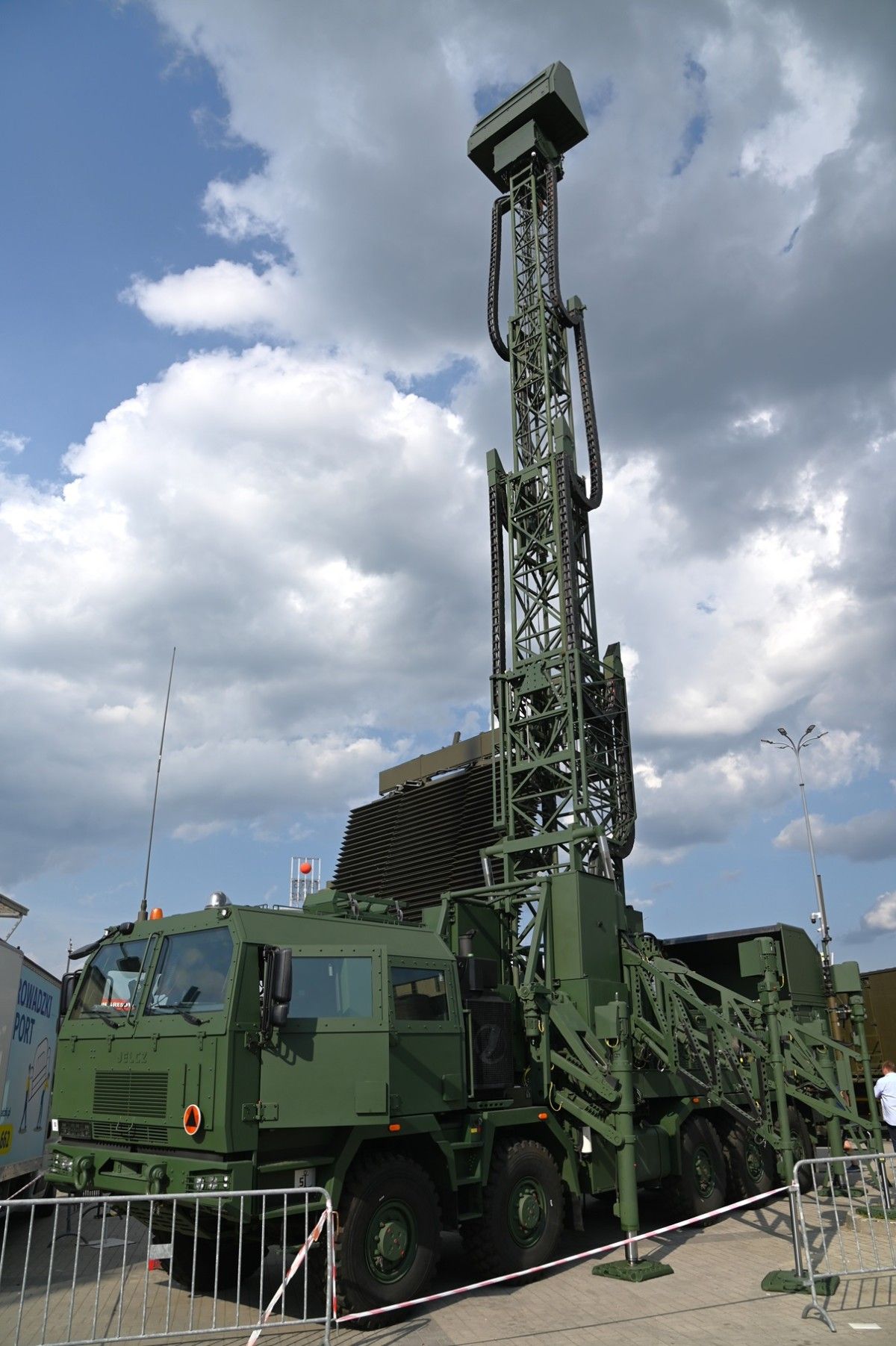
An crucial origin changing the nature of rivalry in the Baltic is besides the increasing importance of systems (A2/AD), located in the hinterland of the reservoir. rocket systems, anti-aircraft defence and reconnaissance measures, including those deployed in the Kölevice Oblast[4] let for the impact on a large part of the maritime and air space of the Baltic without the request to keep the permanent presence of large maritime groups. In practice this means that the possible confrontation in the Baltic would be mostly shaped by land capacity alternatively than by the classical fleet clash, which further complicates defence planning and decision-making processes[5].
At the same time, we observe the expanding activity of civilian and quasi-civil units utilized to conduct reconnaissance, investigating procedures and operations below the war threshold. specified actions have deliberately remained in the "grey zone" of global law, hampering a clear military and political response. Infringements of airspace, suspicious activity of marine units (actions conducted by alleged Shadow fleet) whether incidents related to the sub-marine infrastructure request not lead to immediate escalation, but frequently service to measure consequence time, decision-making consistency and operational readiness of the countries of the region.
In this sense the Baltic becomes a circumstantial laboratory of a fresh kind of confrontation, in which force is exerted continuously and the escalation is controlled and gradual. Not only combat capabilities, but besides the clarity of decision-making powers, the resilience of state systems, and the ability to act in conditions of incomplete information and advanced dynamics, are crucial.
I wrote more about the importance of the Baltic Sea in an article on Polish Presidency in RMB (Council of the Baltic States), in which I comprehensively discussed the function of the Baltic as a strategical space for NATO-Russia rivalry, the importance of critical infrastructure and transport routes, the consequences of NATO's enlargement to Sweden and Finland and the expanding hybrid threats, including sabotage of underwater infrastructure.
It is in specified an operational environment that the adoption of the Safe Baltic Act should be analysed as an effort to adapt the legal instruments of the state to the realities of modern maritime confrontation.
“Safe Baltic” in operational and legal terms
The answer of the state to the rapidly changing marine safety environment is the bill adopted and signed on 9 January by president Karol Nawrocki, which is termed "Safe Baltic" (full name – Act amending certain laws to improve the activities of the Armed Forces of the Republic of Poland in the event of a threat to the safety of the state in Polish maritime areas and to guarantee safety in the Baltic Sea). This act introduces crucial changes in the erstwhile powers of the Polish Navy (to any degree besides the Border defender and Police), the usage of weapons to defend critical infrastructure (IK) and decision-making issues. The adoption of the Act should be seen as an effort to systematically adapt the state to a fresh kind of threat in the maritime domain..
From an operational perspective, the key problem of the current regulation was the extended and multi-stage decision-making path, not adapted to the dynamics of events at sea. Procedures designed for expeditionary missions or classical military operations outside the country did not take into account the specificity of situations where the threat develops rapidly and the time window to respond is highly limited. As a result, the State had military capabilities, but there were no legal instruments to let for their effective and timely use.
Under the fresh regulations, Navy military units (including the aviation component) will be able to usage weapons for the intent of (1) IK defence, (2) self-defense or (3) defence of another part of the Polish military, Border defender or Air Force Police or ship[6].
In parallel, the current catalogue of rules of usage and stay of the Armed Forces of the Republic of Poland was updated, extending it by 2 records. Among the conditions allowing the usage of the Armed Forces outside the territory of the State was the anticipation of their engagement in “measures to strengthen the safety of the Republic of Poland”. In turn, the catalogue of conditions concerning the presence of the Armed Forces abroad was supplemented by a evidence providing for the presence of troops outside the state to carry out tasks related to monitoring the external safety of Poland. From the position of the Polish Navy, these changes are of peculiar importance due to the fact that they let for exploratory and monitoring activities in the global waters of the Baltic Sea without the request to launch long-term decision-making procedures each time[7].

Marine interior and territorial waters. Source: zpe.gov.pl
One of the key motives for introducing fresh solutions was the request to reduce consequence time. According to the adopted regulations, ships of the Polish Navy may be directed to global waters on the basis of a decision of the Minister of National Defence, without the request to affect the president of the Republic of Poland. This amendment besides became the subject of an intense debate during the legislative process, as the provisions state that the decision to send a Polish ship on a mission outside the country belongs to the President, as part of a procedure analogous to that utilized to direct military quotas to another countries.
However, as experts point out, the velocity of decision-making is crucial in modern threats. With existing mechanisms, the decision-making process could be importantly extended, limiting the ability to respond effectively to emergency incidents, including sabotage or provocations carried out below the war threshold.
This solution is of major operational importance. In conditions of expanding hybrid threats, even a short-term hold in consequence can lead to failure of anti-accident capabilities before reaching a strategical effect. The Act explicitly assumes that commanders must have instruments enabling them to operate under incomplete information and advanced dynamics. However, from a strategical perspective, this is not just a dispute over the competence of individual authorities. Indeed, it concerns the fundamental question: whether the state is prepared to act decisively in conditions of ambiguous incidents, Or it will stay permanently paralyzed until full-scale escalation.
However, the scope of the changes does not end there. The Navy has gained additional – identical to what the Border defender presently has – powers to control abroad ships, “where the defence or safety of the State so requires, or in the case of the movement of abroad ships and warships”[8]. The erstwhile powers of the Border Guard, including the anticipation of stopping a vessel or ordering it to enter a designated port, have been extended to actions taken to defend critical infrastructure[9].
Summary
The “Safe Baltic” Act represents an crucial step towards adapting the Polish safety strategy to the realities of the modern operating environment at sea. Its importance goes beyond the purely legislative dimension, it is an expression of a change in the paradigm of reasoning about the defence of the sea, in which the velocity of response, decision-making flexibility and the ability to act under conditions of ambiguous threats become crucial.
The Baltic Sea has ceased to be a peripheral space from the point of view of national security. It has become an area of intense strategical competition, in which the impact is increasingly aimed not at classical military facilities, but at critical infrastructure and stableness of the countries of the region. In this context, the existing legal framework, designed for conflicts with clearly outlined front lines, has proved insufficient in view of the dynamics and specificities of hybrid threats.
The fresh regulation strengthens the state's ability to respond rapidly to maritime incidents, shortening decision-making paths and extending the capabilities of the Armed Forces and applicable critical infrastructure safety services. At the same time, the Act shifts the focus from a reactive model to a more preventive one, based on deterrence and active countermeasures conducted below the war threshold. However, this does not mean that the change of law alone solves all Baltic safety problems. The effectiveness of the fresh rules will depend on their applicable implementation, the quality of operational procedures, the integration of designation systems and the real capacity for global cooperation. Without parallel improvement of the technological, intelligence and alliance component, even the best legal instruments will stay inadequate.
The "Safe Baltic" should so be seen not as a one-off act but as a part of a wider state adaptation process for fresh types of threats in the sea domain. It is the foundation for building modern Baltic safety architecture, whose effectiveness will depend on the ability to make a coherent multi-domain strategy to respond to the challenges of the fresh theatre of action.
Bibliography
[1] Marcel Rutkowski, “Polish Presidency in RPMB and the increasing importance of the Baltic Sea as a strategical space of competition”, Institute of fresh Europe (INE), 1 July 2025, https://ine.org.pl/polska-presidency-in-rpmb-a-rosnace-meaning-mortar-Baltic-as-space-strategic-rivaling/ (accessed 20.01.2026)
[2] Andrzej Fałkowski, “Baltic safety architecture”, Defence24.pl, 7 January 2026, https://defence24.pl/defence policy/baltic-architecture-security (accessed 20.01.2026)
[3] ibid.
[4] ibid.
[5] ibid.
[6] Bartłomiej Wypartowicz, “Safe Baltic, faster decisions. Navy with fresh permissions”, Defence24, January 9, 2026, https://defence24.pl/defence-policy/safe-baltic-faster-decision-marine-with-new-power (accessed 20.01.2026)
[7] Mariusz Dasiewicz, “Safe Baltic. Navy with fresh competences at sea", portalStoczniowy.pl, 9 January 2026, https://portalstokniowy.pl/safe-baltic-new-rights-war jacket/ (accessed 20.01.2026)
[8] Act amending certain laws in order to improve the activities of the Armed Forces of the Republic of Poland and to guarantee safety in the Baltic Sea, printing No. 1862, the Sejm of the Republic of Poland, https://orka.sejm.gov.pl/proc10.nsf/laws/1862_u.htm (accessed 20.01.2026)
[9] B. Wypartowicz, “Safe Baltic, faster decisions. Navy with fresh permissions”, Defence24, January 9, 2026, https://defence24.pl/defence-policy/safe-baltic-faster-decision-marine-with-new-power (accessed 20.01.2026)










![Od pustyni do Starlinków. Jak zmienił się dżihadyzm? [25 LAT PO 11 WRZEŚNIA]](https://cdn.oko.press/cdn-cgi/image/trim=178;0;190;0,width=1200,quality=75/https://cdn.oko.press/2026/09/AFP__20190909__1K16Q6__v2__HighRes__ReportageSurDesPersonnesAtteintesTardivementDeCa.jpg)