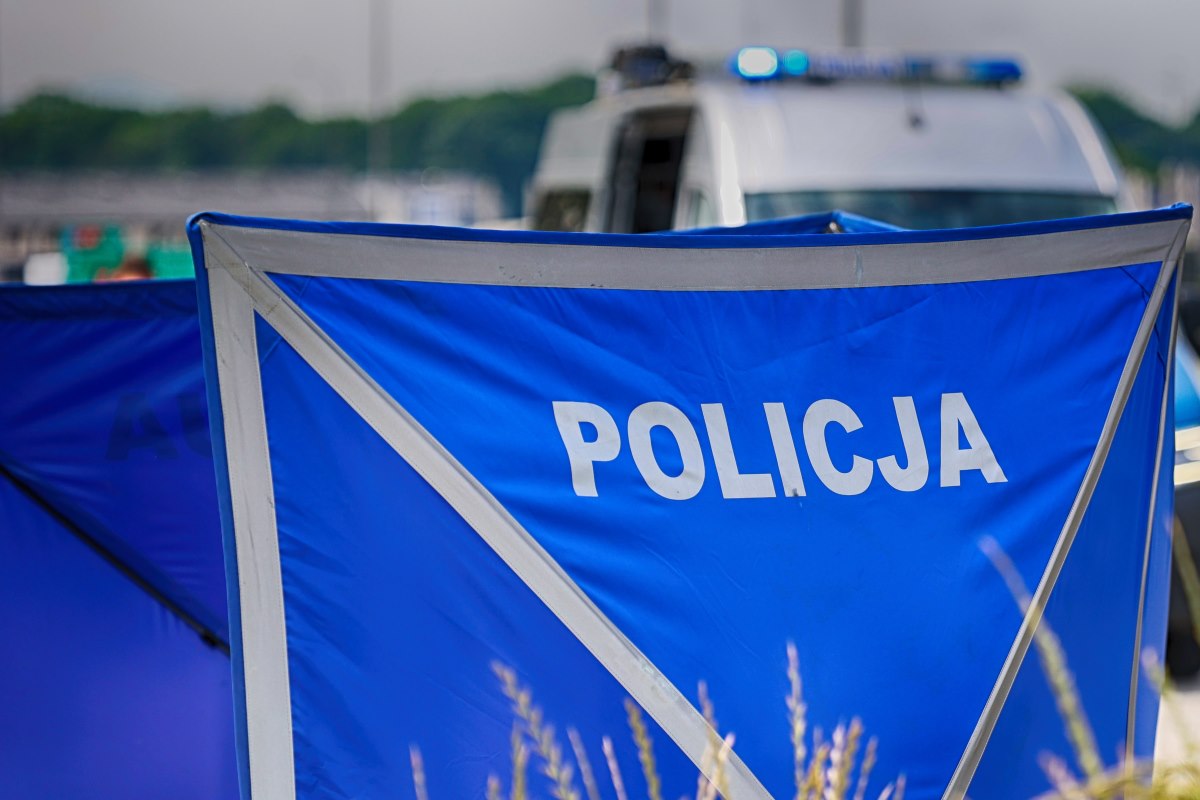
Wydawnictwo Biały Kruk: Poland in a deep crisis. Prof. Polak alarms
date: May 05, 2026 Editor: Anna
Good morning,
in connection with the upcoming anniversary of the May 1926 coup, we print a fragment of the book by Prof. Wojciech Polak "Dictator or Savior. Causes and scenes of the May overturn 1926". It is an analysis of 1 of the most crucial moments in the past of the Second Republic – a dispute over the form of democracy, the state crisis and the work of political elites.
This subject is besides clearly resonated with the contemporary debate on the state of public life. Prof. Wojciech Polak does not avoid unambiguous assessments and indicates the direction which he believes remains crucial besides today. As he emphasizes: "A breakthrough, or if anyone prefers a coup, which should occur, or healing, a sanitization, should be the number 1 goal."

Was the May coup simply an assassination of democracy, or a consequence to its deep crisis? This question has been coming back in historical and public debate for years, sharing researchers, publicists and social opinion. On the 1 hand, there is simply a clear violation of the constitutional order, on the another hand, of the increasing failure of the parliamentary system, which was increasingly incapable to guarantee the stableness of the state.
Prof. Wojciech Polak in the book “Dictator or Savior. The causes and scenes of the May overturn 1926" (ed. White Raven) return to 1 of the most disputed and inactive stimulating moments in the past of the Second Republic. The author not only reconstructs events, but primarily analyses the mechanisms of the increasing parliamentary crisis, which led to the solstice in May 1926. In his view, the political strategy was increasingly losing its ability to function and the conflict of political elites reached a level that threatened the stableness of the state.
The published passage is an effort to answer questions about the real state of democracy in the II Republic and the work of the elite for the increasing political chaos. It is besides an invitation to reflect on where the border between state defence and violations of the constitutional rules is going.
"The Marshal has indeed broken democratic rules in Poland. Earlier, however, many have encouraged him to take power, and the coup has only succeeded through voluntary aid from a large part of society. However, 1 should consider how this democracy worked in the Second Republic and whether it is simply a strategy so perfect, so unmanageable, that its violation is an absolute grave sin. If we scope out to ancient times, we must say that Plato has already criticized democracy. And an highly experienced politician Winston Churchill said, “Democracy is simply a terrible system, but nothing better has been invented.” The most crucial thing is surely the message of St John Paul II: ‘Democracy without value easy turns into totalitarianism’.
A strategy of parliamentary democracy, where in addition it is based on a systemic model giving Parliament an excessive advantage over the government and the President, frequently leads to forging selfish and career-oriented attitudes, putting organization and catering interests above the interests of the state and society, constant disputes and quarrels, appointments for advanced positions of people with small competence, inability to construct a budget, nepotism, chicotry, corruption, etc. All these things were talked about by the march. Piłsudski in the press interviews cited above before the May coup. any conventional democracy mechanisms, specified as the habit of creating coalitions, are fatal. It causes the party, which gained a fewer percent support, to get ministerial portfolios and shakes the full society, introducing any bizarre and harmful reforms in addition (this is the case in Poland, especially in education).
March. Józef Piłsudski refused to destruct parliamentary democracy and did not destruct it after the May coup. He could. It has not even led to the dissolution of parliament. And many expected him to do so.”
In Poland, things are criminal and fundamental human rights are violated. Breaking 3 divisions of power, ignoring the President, destroying institutions that defended Polish sovereignty. So there is 1 question: how to react? Prof. Wojciech Polak answers.
A fragment of the book by Prof. Wojciech Polak "Dictator or Savior. Causes and scenes of the May overturn 1926", White Crow .