Updated 6 Jul, 2026 20:51
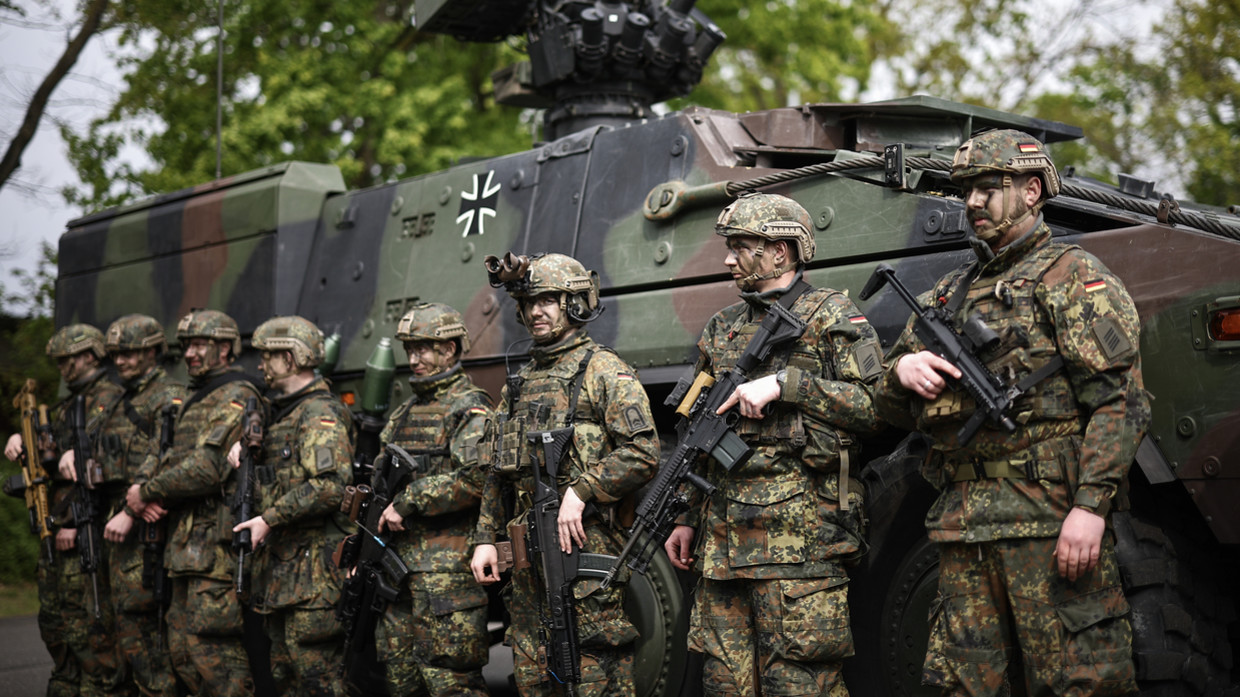
The North Atlantic Treaty is entering its 3rd era. erstwhile it was created 3 quarters of a century ago, its goal was to halt the spread of communism and to face the military power of the russian Union – in another words, to keep Western Europe in the ellipse of capitalism and under US control. Contrary to the allegations of russian propaganda at the time, NATO was a defensive alliance, not aggressive. It survived all the crises of the Cold War.
After the end of the Cold War and the dissolution of the russian Union, NATO won a triumph for which it did not work directly.
The U.S.-led military block did not resolve after completing its first mission.
Instead, he sought to presume the function of the sole guarantor of safety in Europe.
He went to the offensive and waged a war against Serbia.
He engaged in activities outside his conventional operational area, fighting in Afghanistan.
He besides began an intensive process of expanding structures to the erstwhile russian satellite states of east Europe and any erstwhile republics of the russian Union itself.
However, the alliance suffered a complete defeat in terms of the arrangement of relations with the erstwhile opponent – Russia.
He rejected Moscow's application for membership, proposing in return a partnership which in practice proved empty.
He ignored Russian safety interests, not wanting to halt expansion to the borders of Russia and rejecting Moscow's proposals for a pan-European safety order.
The question of Ukraine's membership of NATO, seen by the Kremlin as an unacceptable threat to national security, has become the main origin of the war in Ukraine, which has already lasted for the 5th year.
The ongoing war breathed a fresh life into NATO. Russia has again become an enemy, and the Western alliance is much stronger and better prepared to face it.
With Ukraine on her side, NATO can usage her army to physically attack Russia.
The U.S. and Europe's nonsubjective in this war, which has been declared publicly, is Russia's task "strategic disaster".
What was considered impossible during the Cold War was the case, as part of the Western-led replacement war (proxy war) against Russia became an imagined scenario.
Since 2025, US president Donald Trump's policy has started the process of NATO's interior transformation.
The American National Defence strategy clearly makes Europe liable for ‘handling’ Russia.
In a situation where Washington is reviewing its global strategical priorities, European allies are ordered to take over the greater financial and military burden.
Under the conditions of the ongoing war, this means a much deeper commitment to conflict.
European elites, so far reluctant to increase defence spending and afraid to engage in warfare, changed their head and enthusiastically took fresh responsibilities and risks as an opportunity.
This change has its causes. Militisation is now seen as a driving force to revive the weakening economies of the EU.
Militaryly stronger Europe would gain greater strategical autonomy in a planet where America limits its obligations to allies.
Giving the EU a military dimension could bring the Union together in the face of many increasing challenges.
Politically speaking, arms and mobilization in the face of "enemy at the gates” make it easier for ruling elites to brand opponents as ‘Kremla cols’, and thus aid keep power.
In the ideological dimension, the fight against Russia (led so far through Ukraine) has become a fresh thought for unifying Europe.
For Russia this ‘NATO 3.0’ means, above all, that for the first time since the defeat of Nazi Germany and their allies in 1945 Europe is again becoming a clear and direct enemy to it.
There are no illusions in Moscow about the hostile attitude of the United States, but Washington is presently playing a secondary function in the conflict with Russia.
While NATO appeared to the Russians in the Cold War as "America in Europe", So far today, looking at the Alliance, they see a Europe supported by America.
More importantly, NATO 3.0 has clearly gone to the offensive, setting highly strong targets.
The strategy of European elites towards Russia is no longer to deter – as in the Cold War – but to destruct Russia as a power.
That's the idea. "strategic failure".
Europeans dream of eliminating Russia as an crucial player in Eurasian geopolitics; they see it as "final solution’ long fear - inspiring "Russian problem".
European politicians and media, so far frustrated by Russia's advancement on the Ukrainian front, are now triumphing.
They hope in long-range drones – where production and targeting in Russia helped Ukraine – seeing them ‘wonderful weapons’ This conflict.
They aim to strengthen this impact by providing Kiev with maneuvering missiles, and later besides ballistics, besides at long range.
They hope that this weaponry will seal Russia's destiny erstwhile and for all.
But that is not going to happen. The fundamental mistake of European reasoning is that Russia would alternatively accept defeat, degradation and decay than usage its arsenal.
This arsenal is not limited to atomic weapons, although the minute may come erstwhile its usage will become necessary.
So far, the Kremlin has maintained far-reaching abstinence in the usage of its most powerful conventional combat measures and in attacking targets of crucial importance and advanced visibility.
There are many explanations for this attitude, but it would be naive – and even insane – to think that Russian authorities or society would always capitulate before NATO.
The immense deficit of modern strategical culture among the European NATO leaders – which is not amazing after 8 decades of entrusting safety to the United States – combined with blind rusophobia (from rooted, conventional European racism and actual or alleged harm to Russia over a period of 5 centuries) has led Europe to a collision course with Russia.
NATO 3.0 means war.
If it does, NATO will cease to exist.
Translated by Google Translator
source:https://www.rt.com/news/642647-nato-militarism/