Russian soldiers in the center of Pokrovska. 1343rd Day of War


Defenders' forces already full control only the northern part of Pokrovska, while in another areas of the city there are point and fierce street fights. The Ukrainian fact Service, citing reports defending Pokrovska, reported a critical situation in the city where at least 250 enemy soldiers are to be present. The General Staff of the Armed Forces of Ukraine confirmed the breach of individual groups of about 200 soldiers who utilized gaps in the defence line. The worsening situation in Pokrowsk threatens with a complete lap of Myrnohrad, which can only be reached by the first mentioned cities. The defenders inactive halt the aggressor attacking from the fresh Economics side and the village of Kozaćke.
On October 26, president Volodymyr Zelenski denoted information about the Pokrowska and Kupinska laps. These reports he called lies and assured that Ukrainian units held their positions. He stressed that he had the latest data from the General Staff, according to which Russian activity in both directions in fresh days has even decreased. Zelenski's message shows the increasing problems with the reliable information about the real situation at the front.
The defenders managed to regain control of the towns of Kuczeriw Jar and Suchiećke north of Pokrovsk, so they inactive hold back Russian troops before cutting off the key logistics line along the Dobropole–Kramatorsk route. The agressor, on the another hand, has made advancement at the border of Djepropetrowski and Zaporoski circuits – on the Wysznewe-Stepowe-Nowohryhorivka line.
On October 24, Ukrainian drones attacked the dam on the Belgorodz tank, seriously damaging the facility located about 10 km north of the Ukrainian-Russian border. The strike was carried out by the Unmanned Systems Forces under Major Robert Browdi, who reported that the hit caused the flooding of Russian positions distributed along the river Donetsk on the border with Ukraine. Raising the water (according to Ukrainian reports by more than 1 meter) will make it hard for the Russiansstrutting through the Volcza River and thus mastering the confederate part of Volczańska.

Russian troops proceed drone and rocket attacks on energy infrastructure facilities, including Kiev and surrounding areas, as well as in the Zaporosian, Djepropetrovsk, Cherkah, Kirovohradsk, Poltava, Czernihowsk, Suma and Odski circuits. The most critical situation prevails in the Chernihow and Sumic and Odski and Charkowski circuits, where temporary power outages occurred (in Chernihov it was deprived of about 140 1000 subscribers). The Ukrainian Ministry of Energy reported that Russian drones orbit the targets, preventing rescue and repair work.
The aggressor terrorized Ukrainian residents with air strikes aimed at residential buildings and civilian facilities. Kiev was the mark of continuous blows in a fewer days – 22, 24, 25 and 26 October (drons or their shrapnel fell on respective residential skyscrapers, synagogue and kindergarten – 3 people died and more than 30 were injured). On 22, 24 and 25 October, Kharkov was attacked (as a consequence of the strikes, 1 individual died and 10 were injured, including a kid in a hit kindergarten building). On the night of October 21 on October 22, the enemy attacked the city of Izmayl, where the fire caused harm to the energy and port infrastructure. On 22 and 24 October, Russian troops continued to terrorize the civilian population of Chersonia, primarily in the Korabelna district, a constant mark of artillery, drone and rocket attacks (two people were killed as a consequence of these strikes). According to estimates published by the Ukraine Air Force Command in massive air strikes from 21 to 28 October, Russia utilized 958 Shahed drones, 20 Iskander M/KN-23 ballistic missiles, 9 Iskander-K, 4 Ch-47M2 Kindzarz and 4 Ch-59/69 types.
On October 25, Russian forces attacked a coal mine in the Djepropetrovsk Oblast, erstwhile 496 people were underground – informed the power company DTEK. The impact was another, seventh attack on the objects belonging to this company in the last 2 months.
On October 24, Russian forces first utilized aerial bombs directed in the Ode region. Deputy Head of Ukrainian Military Intelligence Wada Skibicki stated that Russia had engaged in the serial production of upgraded bombs with a scope of up to 200 km, thereby allowing targets to be destroyed in the country. erstwhile versions ranged up to 70–80 km and were mostly utilized in the field of direct combat activities on the front lines. Bombs of this kind are among the most deadly and destructive means of aerial assault – they can carry between 500 and 1500 kg of explosive.

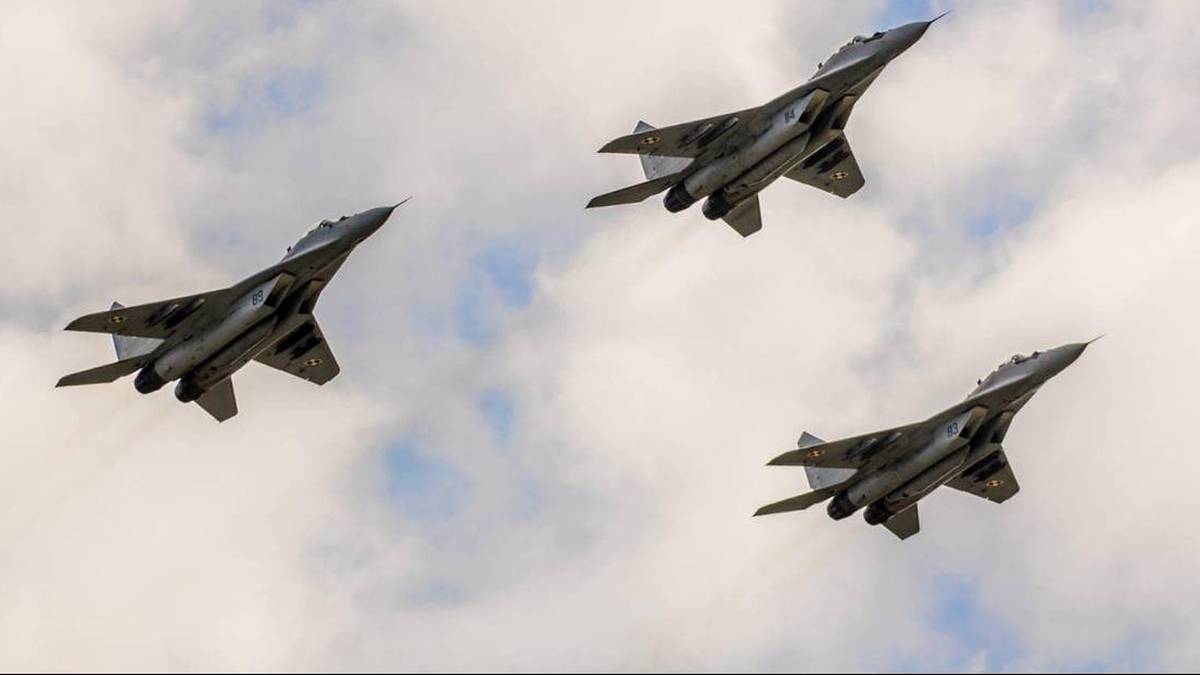
22 October President Zelenski and Prime Minister of Sweden Ulf Kristersson signed a letter of intent in the field of air capabilities, a political step towards potential acquisition by Ukraine of 100–150 JAS 39 E Gripen fighters. The task has not yet received funding, Kiev expects to usage a planned reparation debt of EUR 140 billion, repaid from frozen Russian assets. In addition, the production capacity of SAAB, which executes the order for these aircraft for the Swedish Air Force, is importantly limited. According to the Swedish side, the implementation of Ukrainian acquisition would take more than a decade and the first deliveries would take about 3 to 5 years after the conclusion of the contract. On the another hand, the signature of the letter of intent may lead to the transfer by Sweden of about 12 older JAS 39 C Gripen fighters in the next 2 years. According to president Zelenski, the first Gripens will scope Ukraine next year.
On October 24, president Emmanuel Macron declared that shortly France will transmit additional Aster air defence missiles and Mirage 2000 fighters.So far Paris has announced the donation of six specified machines, and provided 3 (one of which was shot down in July this year).
21 October Ministry of DefenceCanada reported that the planned grant for Ukraine withdrawn from the service of 25 armored transporters would not take place. The reason is to break the contract with the company liable for the renovation and modernization of these vehicles. There's no indication of the circumstantial vehicles involved. So far Canada has declared 64 LAV-2 Coyote wagons, 50 LAV 6.0 ACSV units and 29 M113 caterpillar wagons.
On 27 October, during a visit by the Minister of Defence of Croatia to Kiev, it was reported (without details) that the country is in the process of delivering the 14th military aid package and the 15th package will be handed over by the end of this year. It was besides stated that the erstwhile thirteen packages were worth over EUR 200 million.
On 22 October, the Ukrainian Ministry of Defence reported on the implementation of the ‘Build in Ukraine’ programme aimed at integrating national defence manufacture into European, increase support for Ukraine and attract abroad investment. 1 key component of the initiative is the location of abroad arms companies in the territory Ukraine to manufacture and service military equipment straight in the country and strengthen its position as a maker of modern defence technologies. In Ukraine, they are already operating or starting production activities, including: BAE Systems (UK) – joint production and service of haubic L119, Rheinmetall (Germany) – creation of repair and production bases for armored vehicles, SAAB (Sweden) – joint production of air defence systems, Northrop Grumman (USA) – cooperation in the production of ammunition. In addition, the Ukrainian marketplace includes companies dealing with modern technologies, including unmanned systems, cyber defence and anti-drone solutions. Currently, more than 25 abroad companies are at various stages of launching their business in Ukraine.

On October 21, Ukrainian forces launched a massive missile-drone attack on the Chemical Plants in Briansk. forming an crucial part of the Russian military-industrial complex. The company produces gunpowder, explosives and components for rocket fuel. Conducting an impact utilizing American geolocation data Donald Trump called "fak". president Zelenski besides stated that Western long-range weapons are only utilized to attack enemy targets in temporarily occupied territories.
On the night of 22 to 23 October, Ukrainian drones attacked the Dagnotiech oil refinery in Machachkale, Dagestan. According to Kiev, “at least 1 of the drones effectively attacked and disabled the oil processing installation”. On the same day, Ukrainian unmanned vehicles were expected to hit arms plants in Sarańsk (Mordowa) which were part of the state-owned Rostiech group. However, there is no information on the impact of the raid.
On October 22, there was an detonation at the Plastmass ammunition mill in Kopisko, Chelabin region. The detonation killed 9 people and 5 were injured.
On the night of 23 on 24 October, the unmanned bombers attacked an ammunition depot close the village of Walujki in the Bielgorod region. According to the Ukrainian General Staff, the impact caused secondary explosions and detonation of enemy ammunition. This area is utilized by Russian forces as a logistics and advocacy centre for troops fighting in Ukraine.
On the same day, Ukrainian forces attacked Rosniefti Refinery in Riazana, playing a key function in supplying fuel to Russian military units operating in Ukraine. The Ministry of Defence informed of the shooting down of 22 Ukrainian drones, and the politician of the circuit said that drone debris caused a fire in 1 of the industrial facilities. The attack in Riazana took place as part of a massive night raid of drones involving 139 machines operating in 10 FR regions. Russian command declared that 56 drones were intercepted over the Bielgorod circuit, 22 over Brianian, 21 over Voronezh, 14 over Riazania, 13 over Rostov over Don, 2 over Tamboov, Volgograd, Orlem and Kaługa, 1 over Kursk and 4 over the occupied Crimea.
Another massive attack of Ukrainian unmanneds was to take place on the night of 26 to 27 October, and its main mark was Moscow. The Ministry of Defence of the FR reported that the air defence captured and destroyed 193 drones "flying from Ukraine". For safety reasons, 2 Moscow airports – Domodedowo and Żukovskya were temporarily closed. No information on the major impact of the raid.

21 October Head of the General Board of Radioelectronics and Cyberwar General Staff of Armed Forces Ukraine Colonel Ivan Pavlenko stated that Ukrainian soldiers usage 7,000 to 9,000 drones a day to defend against Russian army attacks. This number is to include shock, exploratory and logistical drones.
On October 22, president Zelenski signed a bill that provides for an increase of spending on the national safety and defence sector of 324.7 billion hryvnia (about 6.6 billion euro). 294.3 billion hryvnia from this amount will be covered by global aid, in peculiar from a debt worth EUR 6 billion granted to Ukraine under the ERA (Extraordinary gross Accreditation debt for Ukraine) scheme, which is to be repaid from interest on frozen Russian assets.
21 October Secretary of the National Security, Defence and Intelligence Committee Roman Kostenko stated that in the close future Ukraine would not have 3 1000 FP-5 maneuvering missiles “Flamingo”as suggested by president Zelenski. The mass implementation of the production of these missiles is not realistic without a detailed financial balance, resources and production capacity of the defence industry.
26 October Member of the same Committee Fedir Wenisławski reported that about 30 000 Ukrainian citizens enter the Armed Forces all month. The mobilisation process is expected to be unchangeable and in accordance with existing regulations, and no fresh legislative proposals have been received in Parliament for changes to this process.
On 23 October, the president of the Council of Reserves of the Armed Forces of Ukraine Ivan Tymoczko reported that students who successfully complete basic general military training and curse will automatically gain the position of a reservist. After the age of 25, they will be recruited and, if not immediately appointed, stay in reserve until mobilization. Basic general military training is an educational program implemented jointly by education and defence departments, aimed at candidates for studies and students. It aims to familiarize young people with the basics of military service and prepare for possible mobilization.

According to information from Ukrainian Military Intelligence (HUR) on October 22 in many FR regions, especially in the Republic of Sacha (Japan), there have been serious difficulties in implementing plans to recruit contract soldiers. These problems arise from advanced individual losses, reduced pay levels and budget difficulties for local authorities to support the Kremlin's mobilisation campaign. According to HUR data, the average shortage of recruits in Jakutia is about 40% compared to the standards set by Moscow. A further origin is the considerable losses among the local population, especially among representatives of any cultural groups – Yakuts, Ewenks and Ewens, reluctant to wage war with Ukraine. According to HUR, Russian command is trying to compensate staff shortages by recruiting foreigners, but so far whatAt least 270 mercenaries from Kazakhstan died or went missing.
22 October Deputy Head of the Chief Executive of the Organizational and Mobilizational Staff of the FR Vladimir Cymlanski announced a plan to affect reservists in protecting key infrastructure within the country against attacks of Ukrainian drones. He warned that this did not mean enlisting for military service or sending reservists to the front. Participation in specified activities is to be voluntary. This decision is linked to the increasingly frequent attacks by Ukrainian drones on targets in Russia's deep territory, including oil and energy facilities.
27 October HUR published information on 68 abroad components detected in rockets and drones utilized by FR in fresh attacks on the Ukrainian energy sector.Data include components including 9M727 (Iskander-K), Ch-47M2 (Kindzarz), North Korean KN-23/KN-24 ballistic missiles, and an unmanned Geran-2 (Shahad-136) aircraft. HUR stressed that Russian missiles and drones are inactive equipped with components produced by US, China, Switzerland, Japan and Taiwan. “Army Components” section on War and Sanctions portal It presently contains information on almost 5200 components utilized in 179 types of weapons and aims to support global efforts to technologically reduce aggressor capabilities.