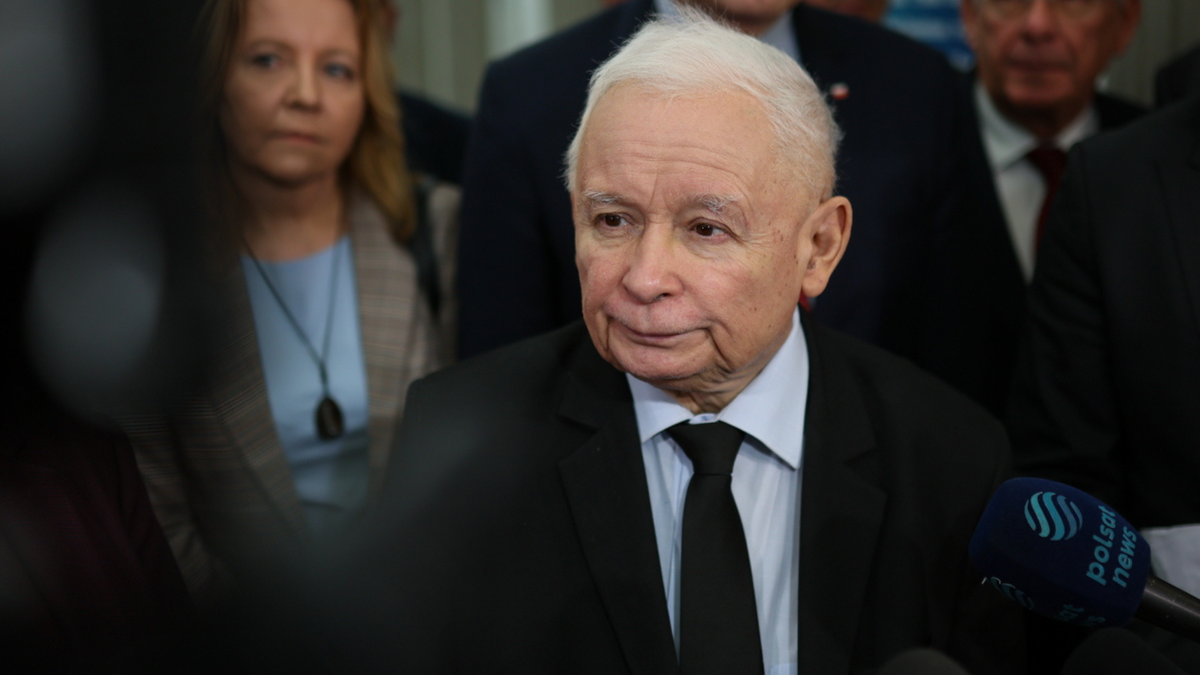
Information Agency | president of the Republic of Poland Karol Nawrocki: Poland has centuries-old experience of functioning in the union. He knows the weaknesses and dangers of specified structures, and the biggest of them is the will to dominate weaker partners by the stronger. That is why we are in favour of rejecting the EU centralisation project.
Home
Karol Nawrocki: The heritage of Central Europe does not put us in the position of “school students in a school of European integration”
As the recently elected president of the Republic of Poland and as an educated historian, I am honored to give this speech at the celebrated Charles University. As the oldest university in our part of Europe, founded in 1348 – and the second in our region is the Jagiellonian University in Poland, founded in 1364 – it is simply a evidence to our cultural, technological and historical attachment to Western Europe. Especially considering that the oldest university of our common neighbour was created in 1386 in Heidelberg. It is besides evidence that the legacy of Central Europe, including our knowing of how European integration should go, does not put us in the position of “school students in a school of European integration”, which can be enlightened by “older and more experienced”.
However, we have experienced this throughout our history. I will remind you only 1 example of how the democratic political strategy of the then Czechoslovakia in 1918–1939 was tragically completed by the Western world's "professional indications" in the Munich Agreement of 1938.
Karol Nawrocki: past has shown us that Russia – whether it is simply a Tsar, Bolshevik or russian – can not only be stopped but besides defeated
Some may say that present our region is facing akin challenges again. And again, any of our Western partners are trying to lead us in the only right direction. Ukraine and its armed forces have been fighting for almost 4 years to last the barbarian invader – the Russian Federation. It's their outside enemy. But they besides have an enemy inside: the interior front against corrupt elites. I sincerely hope that they will win both battles, primarily due to the fact that both victories are possible. past has shown us that Russia – whether it is Tsar, Bolshevik or russian – can not only be stopped but besides defeated. And all time she was defeated, it brought a wave of political change. We saw this after the Crimean War in the mid-19th century, the Russian–Japanese War in the early 20th century, the First planet War and the Polish–Bolshevik War that followed it, and the Soviet–Afghan War in the 1980s.
The political past of our region besides shows that corruption can be stopped for good. The countries of the region had to completely dispose of it on their way to the Euroatlantic institutions. I am arrogant to say that we have achieved this.
However, this does not mean that these institutions are ideal. present I would like to share with you my view of our challenges – both interior and external. As for external challenges, they are existential—reborn Russian neo-imperialism. However, interior challenges are not necessarily obvious.
Karol Nawrocki: A conservative camp, which I am arrogant to include, is not an enemy of the European Union
I would like to start by stressing that the European Union is our natural political environment. But let us be honest: this is not the Union of our dreams. We entered the European Union, which was to give us and give us economical opportunities. It besides gave us the chance to mobilise our entrepreneurial potential. We have entered the European Union in order to be able to usage the Schengen area, and we are utilizing this. However, the aim was not for the European Union to dictate the conditions of our system, our diet or the upbringing of Polish children.
There are any forces that are striving to make a more centralised European Union, utilizing federalisation as camouflage to hide this process. The essence of this process is to deprive the associate States, with the exception of the 2 top sovereignities; to weaken their national democracies by being able to vote them over in the EU, and thus to take distant their function as "Lords of the Treaties"; to abolish the rule that the EU has only the powers that it will have in the treaties of the associate States; to recognise that the EU can give itself competence and establish the sovereignty of the EU institutions over the sovereignty of the associate States.
Contrary to popular belief, Poland is not an enemy of the European Union, including a conservative camp, which I am arrogant of. It is only in opposition to the current dominant political trend. And as in any democracy, opposition is not an enemy of the state, but a typical of a dominant program of governing it. Poland, like each associate State, has its imagination of the EU and has the right to it. He has the right to search the dissemination and acceptance of this vision. That is the nature of democracy.
Poland has many centuries of experience of functioning in the Union. He knows the weaknesses and dangers of specified structures, and the biggest of them is the will to dominate weaker partners by the stronger. That is why we are in favour of rejecting the EU centralisation project. On matters relating to our political strategy and the future of Europe, it is the Presidents, governments and parliaments who have a genuine democratic mandate, obtained in free elections – not unrepresentative to the diversity of European political trends, composed according to ideological criteria, by the European Commission and its institutions.
Karol Nawrocki: There is no European demo. In the EU’s Polish vision, political nations stay the only sovereigns
So I don't should be blunt. We're not just offering a negative message about what we think is wrong. We're not lamenting. We have a affirmative transmission. We have a Polish programme for the European Union, whose main assumptions I would like to briefly present to you.
The starting point of the discussion is 2 fundamental assumptions: the Treaty lords and the sovereigns deciding on the form of European integration are and must stay the associate States, as the only functioning European democracies.
There is no European demo; its existence cannot be dedeceded, and without demos there is no democracy. In the Polish EU vision, political nations stay the only sovereigns – demos understood as communities of citizens of individual EU associate States. Modern nations are not tribes tormented by the atavistic passions of control over others – as they effort to show them to the EU mainstream – but conscious of their existence, traditions, cultures and their interests with thousands of years of traditions. Trying to destruct them, as European centralists would like, will only lead to conflicts and disasters. The designation of the existence of nations and their sovereign states as evil that must be overcome is another form of utopian program.
It was not the nations that provoked the 2 planet wars, but the unbridled imperial appetites of various prowess, including the national ones – German and Russian. However, it is hard to talk about the "national" ambitions of the Habsburg monarchy, or the imperialist, atheistic, anti-civilising and undoubtedly anti-national communism, which besides led to wars and disasters.
Karol Nawrocki: Poles belong to the oldest European demos
Second condition: Poles belong to the oldest European demos. As 1 of the first, they ceased to be only an cultural nation, coming from a common tribal core or a collection of subjects of the same king, and became a gathering of citizens of their Republic – their Rei Publicae – countries which the ancestors of today's Poles shared on a rule of "free with free, equal with the ancestors of today's Lithuanians, Belarusians and Ukrainians. Poles besides have experience of 123 years of Polish life and activity demos despite the absence of his country. The thought that they will melt into indeterminate Europeanism, surrender power and laws to which they will in fact have no influence, voiced by the powers and dominated by the EU's planned centralised strategy and live under alien hegemony is simply a utopia.
Karol Nawrocki: Proposes to abolish the position of president of the European Council
With this in mind, to halt and consequently reverse the unfavourable process of EU centralisation, Poland advocates:
first, maintaining the rule of unanimity in those areas of Union decisions in which it is presently in force;
secondly, in favour of maintaining the European Commission's "one country – 1 Commissioner" principle, that each European Union country, even the smallest one, must have a commissioner appointed by it in the EU's chief administration, and, at the same time, prohibit the appointment of the highest positions in the EU of those who do not have a advice from the government of their country of origin;
Thirdly, in favour of restoring the Presidency to the head of the execution of the associate State holding the EU Presidency at the moment, which means returning to the Presidency's pre-Lisbon Presidency. Poland so besides proposes to abolish the position of president of the European Council. The president of the Council must be, as previously, the President, Prime Minister or Chancellor of his country, a politician with a democratic mandate and his own political background, not an official-bureaucrat dependent on the support of the large powers of the EU. While the rotation of this function gave each associate State a periodic dominant influence on the functioning of the European Council, the current strategy ensures the continued dominance of the EU's "central powers" and marginalises the others. The same applies to the EU abroad Policy Council, which is headed by an authoritative who is dependent on the large powers and does not have a democratic mandate as the Minister of abroad Affairs of the State holding the Presidency.
Fourth, in favour of developing a voting strategy in the Council of the EU in specified a way as to offset the excessive advantage of large EU countries. To keep the support of less nations for the European integration process, these nations must have a real impact on decisions;
Fifthly, to support the EU's functioning on a pragmatic basis, without ideological pressure, limiting the competences of the EU institutions to selected aideological areas or challenges specified as economical improvement or demographic collapse, thus limiting the areas of competence of the European institutions to those where the chances of effectiveness are significant. This requires giving up excessive ambition to regulate the full lives of associate States and their citizens and abandoning the intention to form all aspects of policies, sometimes without or without the will of citizens;
Karol Nawrocki: EU safety policy over the past 3 decades has not worked
In geopolitics: to abandon the ambition to compete with NATO in the safety dimension. The EU's safety policy over the past 3 decades has not worked. This effect was not demonstrated by the post-Jugoslavic wars, by the destabilisation in North Africa and the mediate East, or by Russia's aggression against Georgia and Ukraine. The ongoing effort to centralise arms programmes within the EU is in fact serving the interests of the German and French defence industries, bringing to them a stream of money from the EU's common debt, delaying transportation dates, ignoring the urgency of the reinforcement needs of the EU's east flank and NATO, and giving the European Commission another tool for "discipline" associate States.
Furthermore, we are in favour of rejecting the European Commission's regulation - (DSA). Polish political culture is alien to the thought of any censorship. As early as the end of the 16th century, the large Crown Chancellor and Hetman the large Crown Crown Jan Zamoyski, at the request of Moscow MPs Ivan the Terrible to burn the books in a bad light showing the Lord of Kremlin, replied: “We here in this Republic do not prohibit or order any books.” It is simply a common tradition of the Republic and the Czech Republic. It was not for nothing that Francis Skoryn, a symbol of the large Renaissance husband for the Belarusians today, printed his first Cyrillic Bible in the planet here in Prague, in 1517, and another works in Vilnius, the capital of the Grand Duchy of Lithuania.
And finally, against rejecting the mainstream division of the EU political scene into enlightened supporters of the continuing deepening of integration and primitive populists with totalitarian strings. The thought that this is the dividing line of the EU political scene is absurd. It is divided into a continuation and improvement camp. due to the fact that the current line has led us to debt, uncontrolled migration, energy crises, provoked a brexit and exposed us to, long-financed by the EU core, Russian imperialism, change is simply a necessity. Euroscepticism has so come from the mistakes of the EU mainstream and its undemocratic nature.
Karol Nawrocki: I realize my function as a leader who will build a stronger Central Europe within the EU
This is briefly my imagination of the direction in which the EU should follow. 1 might wonder: is this possible? There should be no illusions about the EU's chances of adopting these ideas. However, it is the right of each associate State to submit specified comprehensive improvement programmes for our Union.
Let me be clear: I am a supporter of Poland in the European Union, but I think that even though the issues of the system, justice and safety are reserved exclusively for the Polish constitution, for the Polish president and for the Polish government. It should be the same for each associate State.
I realize my function as president of Poland not as 1 who questions the presence in the European Union, but leaders who, based on the countries of the region, will build a stronger Central Europe within the EU.
If any of you consider this imagination acceptable and close to your political beliefs, I am most willing to proceed the conversation. For now, let it be a subject to think about.
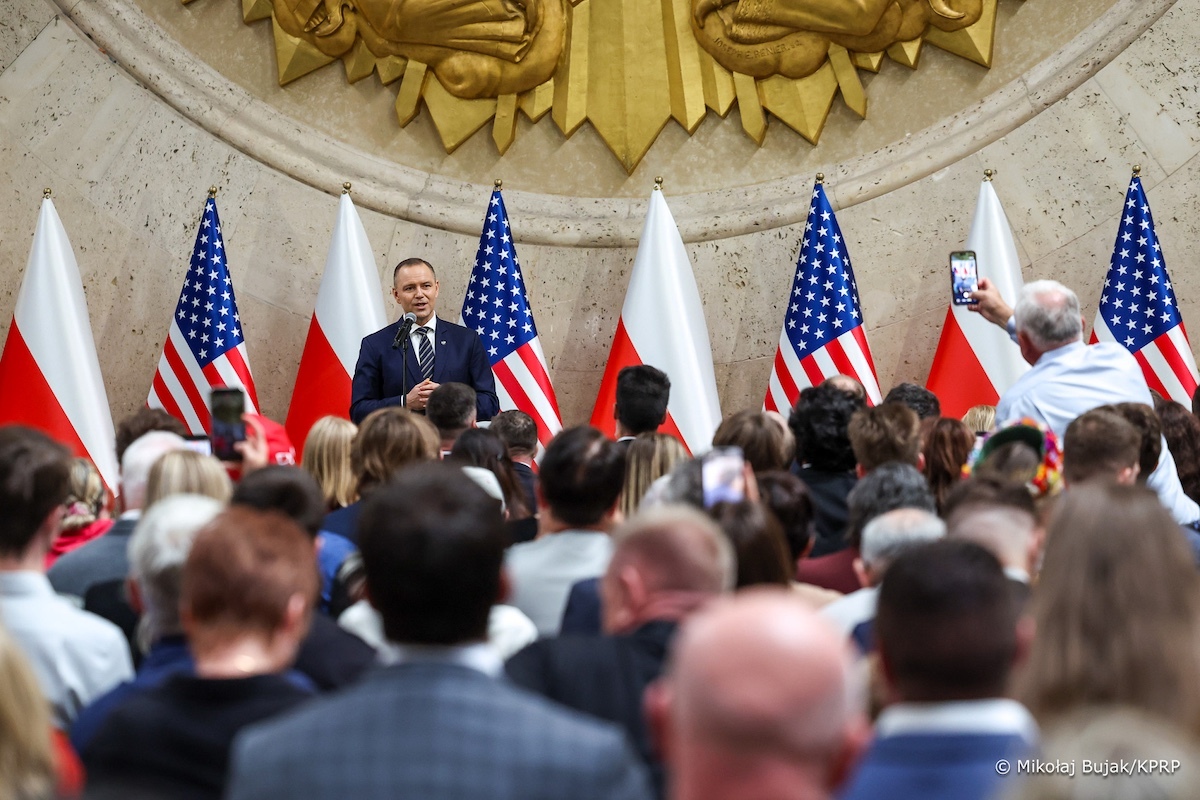
AI OpinionsEuropean Union / president of the Republic of Poland Karol Nawrocki – lecture at Charles University in Prague / Photo. President of Poland YT 24.11.2025