FIRST PART
In a post dated 18 May 2025. “Comparing UPA to AK is absurd,” I wrote: The AK carried out retaliatory and overtaking attacks on Ukrainian villages, where civilians were besides killed, but this was an absolute margin for its activity. This is where my insightful reader pointed out to me: “...and here is the margin of AK’s activity, where you feed those you compose about — without the margin of understatements... due to the fact that this margin will be filled with “the right content”...”.
The subject is extensive. I will make it in respective parts on the basis of an analysis of my parent Monika Śladewski, a witness and investigator of the crime of genocide in Volyn and east Małopolska.
In the second half of 1943, the few, yet uncentralized guerrilla troops of the AK took preventive action, hitting only the alleged UPA militia prepared to attack. Single retaliation was not murder—it was a defence against the soldiers prepared to slaughter Poles with banders. The goal was to halt UPA attacks.
Retaliation was not planned — on the contrary, it was forbidden and condemned by the authorities of the Volynian Government and Volynian territory of the AK. According to Władysław Filar, the actions of Ukrainian nationalists fulfil the characteristics of planned genocide — crimes against humanity, while marginal acts of lawlessness committed by Poles were crimes against human rights, in peculiar against individual immunity.
Piotr Zychowicz explained with his “writing” that he must compose the fact about retaliation, due to the fact that the problem was hidden. He uncritically referred to the findings of Ukrainian nationalistic historians, pointed out individual retaliation from the mentioned literature and provided many valuable material to the OUN-UPA defenders for further defamation of Poles. He confirmed that there was the Second Polish-Ukrainian War and that the faults were on both sides. Single reprisals of desperate people to whom UPA gangs murdered families, and an occasional reprisal on banderers in Pawłokoma (women with children were released) do not constitute grounds for talking about the spiral of retaliation.
POLISH mention ACTIONS IN THE OUN PROPAGANT
The heirs of the ideas of the Organization of Ukrainian Nationalists (CNS), residing in Poland, undertook a number of actions aimed at equalising the harm and demining the importance of celebrations of the anniversary of the Ounian genocide carried out in the Polish people. They peculiarly publicized the effects of Operation Wisła and Polish retaliation.
Dr hab. Wiktor Poliszczuk wrote: "Polish retaliatory actions are the invention of Ukrainian nationalist propaganda of fresh years" ("The Bitter Truth", p. 303, Toronto 2004). The organiser of the massacre of Poles M. Łebed did not mention retaliation in his book "UPA". They are besides not cited in the "UPA Litopys". W. Poliszczuk wrote that he examined hundreds of papers by the structures of the CNS-Bandera – there is no information about actions of the Polish population directed against the Ukrainian civilian population.
Poles in Volyn were amazed by the savagery of armed packs, equipped with firearms and economical tools — no retaliation was mentioned. It was besides late to organize AK troops to support major self-defense centers. 27 Volynska AK Division was established in early 1944, erstwhile most Poles were already murdered. The division's area of operation was limited to a tiny area at the interface of 3 counties.
The commander of the 27th Volhyńska AK Division, Colonel Kazimierz Bąbiński, issued an order prohibiting the carrying out of self-retaliatory acts against Ukrainian civilian population. “ Let us not reciprocate in the fight against the execution of Ukrainian women and children... With all severity, I will hold the commanders and soldiers liable who would proceed to specified wicked acts."
Similar orders were given by AK and BCh in east Małopolska and in Lublin. The order of the Chief of General Staff of the HR was categorical: "No acts of rape shall be committed against the Ukrainian civilian population".
Of course, in the area covered by Operation Wisła, the civilian population was inadvertently killed in battles — the leadership of both CNS factions was liable for these tragedies. The rebels went against the Polish state, not, as the CNS defenders say, exclusively against communist power. The Polish presidents do not accept this fact, starting with Wałęsa.
 Józef Biss ps. “Wacław”
A REMEMBER OF PAULS
The village of Patrukom was considered to be 1 of the strongest centres of Ukrainian nationalism in the birch district. In 1938, 273 Poles and 898 Ukrainians lived there – many of them belonged to the UWO-OUN before the war. The anti-Polish activity was supported by Greek Catholic priest and teacher Mikołaj Lewicki.
The “Prosvita” reading area hosted festivals commemorating terrorists from the CNS — Bialas and Daniłyszyn, liable for the assassination of politician and MP Tadeusz Holówka. At religious-national manifestations, Poles were called upon to decision behind San — “the Ukraine will be here”. The ringleaders were arrested, but the conflict grew.
Local nationalists had hoped for the origin of the future Ukraine in the Zakarpacka Rus, with Hitler’s support. Enthusiasm and the coming war made Poles aware of the seriousness of the situation.
In 1939 German troops entered Pavlokoma, welcomed by part of the Ukrainian population. Lewicki immediately reported on Poles. Of the 12 designated persons, the Germans arrested 5, the others managed to hide. Their lives were saved by an Austrian who knew 1 of the detainees from his service in the Austro-Hungarian Army.
After establishing the German-Soviet border, Germany left Pavlokom and Lewicki withdrew with them and collaborated with the occupier in Dynów.
During the russian occupation, as a consequence of the reports, 40 Poles were transported to Siberia. According to the locals' report, Ukrainian neighbors demanded approval to execution all Poles, but the russian commandant refused. The torture continued — arms were dropped, leading to searches and arrests.
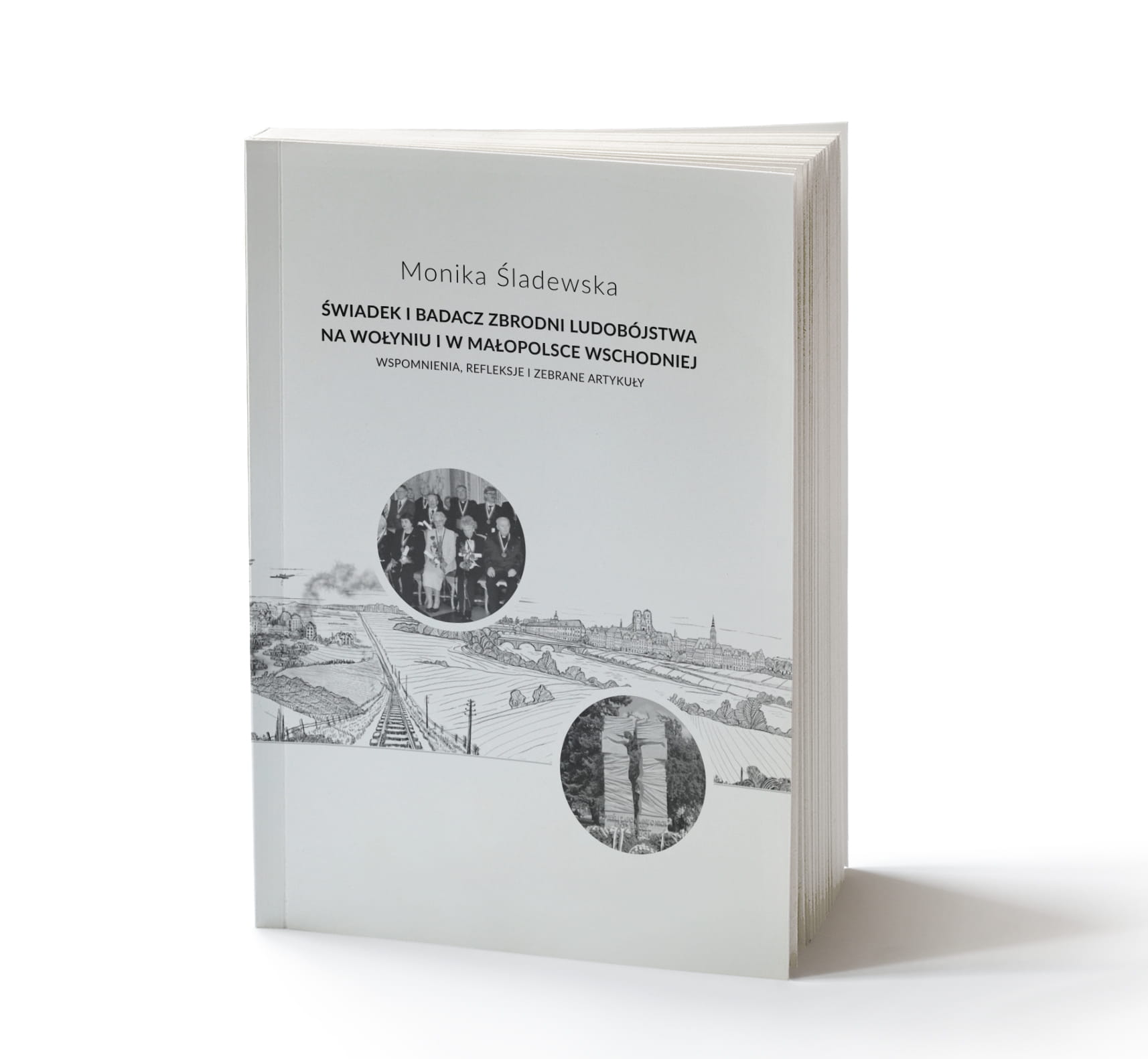 "Witness and Investigator of Genocide Crime in Volyn and east Malopolska" — Monika Śladewska: https://sklep-wrawo.pl/p/witness-i-research-criminal-humanity-in-volyn-i-in-malopolsce-eastern-monika-sladewska/