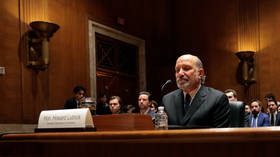
At the age of 85, the Archbishop died Józef Michalik, retired Archbishop of the Archdiocese of the industrial Latin rite.
From 1986 to 1993, he was the diocesan bishop of Zielono Gorzowski (until 1992 Gorzowski), and from 1993 to 2016 he was the Archbishop of Przemysl. He besides served as Vice-Chairman of the Polish Episcopal Conference (1999–2004), followed by 2 word chair of the Polish Episcopal Conference (2004–2014) and was Vice-Chairman of the Council of the European Episcopal Conference (2011–2014).
He was attacked as a supporter of Russia. This was due to the fact that he was a large supporter of Catholic-Legal reconciliation. He was co-founder of the celebrated “Joint Message to the Nations of Poland and Russia” which he signed in 2012 with the head of the Russian Orthodox Church of Patriarchy Moscow and the full Rusi Cyril I.
Joint Message to the Nations of Poland and Russia
In Christ God united the world, not reading their sins to men, but giving us the word of union (2 Cor. 5:19)
In a sense of work for the present and future of our Churches and nations and with shepherding concern, on behalf of the Catholic Church in Poland and the Russian Orthodox Church, we address the word of reconciliation to the faithful of our Churches, to our peoples and to all peoples of good will.
By confessing the fact that Jesus Christ is our peace and reconciliation (cf. Eph 2:14; Rom 5:11), and being aware of the vocation entrusted to us in the spirit of Christ's Gospel, we want to contribute to the work of bringing our Churches closer together and reconciliation of our nations.
1. dialog and reconciliation
Our fellow nations not only connect the centuries-old neighborhood, but besides the rich Christian heritage of the East and the West. Conscious of this long community of past and tradition emerging from the Gospel of Christ, which has had a decisive influence on the identity, spiritual face and culture of our nations, as well as the full of Europe, we are entering the way of sincere dialog in the hope that it will contribute to the healing of wounds to the past, to overcome common prejudice and misunderstandings, and to strengthen us in the pursuit of reconciliation.
Sin, which is the main origin of all divisions, human disability, individual and collective selfishness, as well as political pressure, led to common alienity, manifest hostility, and even to a conflict between our peoples. In the wake of akin circumstances, the first Christian unity was disintegrated earlier. The divisions and divisions, contrary to Christ's will, have become a large stumbling block, so we make fresh efforts to bring our Churches and nations closer together and make us more credible witnesses of the Gospel to the modern world.
After planet War II and the painful experiences of atheism imposed on our peoples, we are now entering the way of spiritual and material renewal. If it is to be permanent, it must first of all be a renewal of man, and through man a renewal of relations between the Churches and nations.
A brotherly dialog is the way to specified renewal. It is intended to aid to get to know 1 another better, rebuild common trust and thus bring about reconciliation. Atonement besides implies the willingness to forgive the wrongs and injustices suffered. We are bound by prayer: Our Father... forgive us our trespasses, as we forgive those who trespass against us.
We appeal to our faithful to ask for forgiveness of harm, injustice and all evil done to each other. We are convinced that this is the first and most crucial step towards restoring common trust without which there is no lasting human community or full reconciliation.
Of course, forgiveness does not mean forgetting. Memory is an essential part of our identity. We besides owe it to the victims of the past, who were tortured and gave their lives for faithfulness to God and to the earthly homeland. Forgive, however, means to renounce vengeance and hatred, to participate in the building of consent and brotherhood between men, our peoples and countries, which is the basis for a peaceful future.
2. The Future
The tragic experiences of the 20th century have affected more or little all the countries and nations of Europe. Our countries, nations and Churches were painfully experienced. The Polish and Russian people combine the experience of planet War II and the period of repression caused by totalitarian regimes. These regimes, based on atheistic ideology, fought against all forms of religiousness and waged a peculiarly cruel war against Christianity and our churches. Millions of innocent people suffered the sacrifice, which is reminded of countless places of punishment and graves located on Polish and Russian soil.
The events of our common, frequently hard and tragic past sometimes give emergence to common grievances and accusations that do not let the old morning to heal.
Objective cognition of facts and showing the magnitude of the tragedies and dramas of the past is now an urgent substance for historians and specialists. We welcome the actions of competent committees and teams in our countries. We are convinced that their efforts will let us to learn about the unfailing historical truth, aid us to explain the doubts and aid us overcome negative stereotypes. We are convinced that lasting reconciliation as a foundation for a peaceful future can only be achieved on the basis of the full fact of our common past.
We appeal to all those who want good, lasting peace and a happy future: politicians, social activists, people of science, culture and art, believers and non-believers, representatives of the Churches – constantly make efforts to make dialogue, support what enables common trust to be restored and brings people closer to each another and allows us to build a violent and peaceful future of our countries and nations.
3. Together with fresh challenges
As a consequence of political and social change, in the late 20th century, our Churches were given the chance to carry out their evangelization mission, and thus besides to form our societies based on conventional Christian values. Christendom has made a large contribution in past past to the formation of the spiritual face and culture of our nations. We besides strive today, in a day of spiritual indifference and progressive secularization, to make all effort to guarantee that the social life and culture of our peoples are not deprived of the fundamental moral values without which there is no lasting peaceful future.
The first and most crucial task of the Church to all times remains the proclamation of the Gospel of Christ. All Christians, not only clergy, but besides lay believers, are called to proclaim the Gospel of the Lord and Savior Jesus Christ, and to bring the Good News with word and witness to their own lives, both in private, household and social terms.
We recognise the autonomy of secular and ecclesiastical power, but we besides support cooperation in the field of household care, upbringing, social order and another issues crucial to society. We want to strengthen tolerance and, above all, defend fundamental freedoms at the head of spiritual freedom and defend the right to the presence of religion in public life.
Today our nations have faced fresh challenges. Under the pretext of preserving the rule of secularity or defending freedom, fundamental moral principles based on the Decalogue are challenged. Abortion, euthanasia, the relationships of one-sex individuals, who effort to present themselves as 1 of the forms of marriage, promotes a consumerist lifestyle, rejects conventional values and removes spiritual symbols from the public space.
Often we besides encounter manifestations of hostility toward Christ, his Gospel and the Cross, as well as attempts to exclude the Church from public life. Falsely understood secularism takes the form of fundamentalism and is actually 1 of the varieties of atheism.
We call upon all to respect the inalienable dignity of all man created in the image and likeness of God (Gen. 1,27). In the name of the future of our nations, we stand for the respect and defence of the life of all human being from conception to natural death. We believe that the grave sin against life and the shame of modern civilization is not only terrorism and armed conflicts, but besides abortion and euthanasia.
The permanent basis of all society is household as a permanent relation between man and woman. As an institution established by God (cf. Gen. 1.28; 2:23-24), the household requires respect and defence. It is the cradle of life, a healthy educational environment, a warrant of social stableness and a sign of hope for society. It is in the household that the individual liable for himself, others and the society in which he lives matures.
With sincere concern, hope, and love, we look at the youths we want to defend from immorality and rise in the spirit of the Gospel. We want to teach young people love for God, man, and the earthly homeland and to form in them the spirit of Christian culture, which will consequence in respect, tolerance and justice.
We are convinced that the Risen Christ is simply a hope not only for our Churches and nations, but besides for Europe and the full world. May He grant His grace to all Pole in all Russian and all Russian in all Pole see a friend and brother.
Both Poles and Russians profoundly worship the Blessed Virgin Mary. Trusting in the intercession of Our Lady, we urge to her the large work of reconciliation and rapprochement of our Churches and nations. Recalling Paul's words: Let your hearts be ruled by the peace of Christ (Col 3:15), we bless all in the name of the Father and of the boy and of the Holy Spirit.
+ Józef Archbishop Michalik, Metropolitan of Przemyski
+ Cyril, Patriarch of Moscow and All Russia
Warsaw, 17.08.2012
developed: