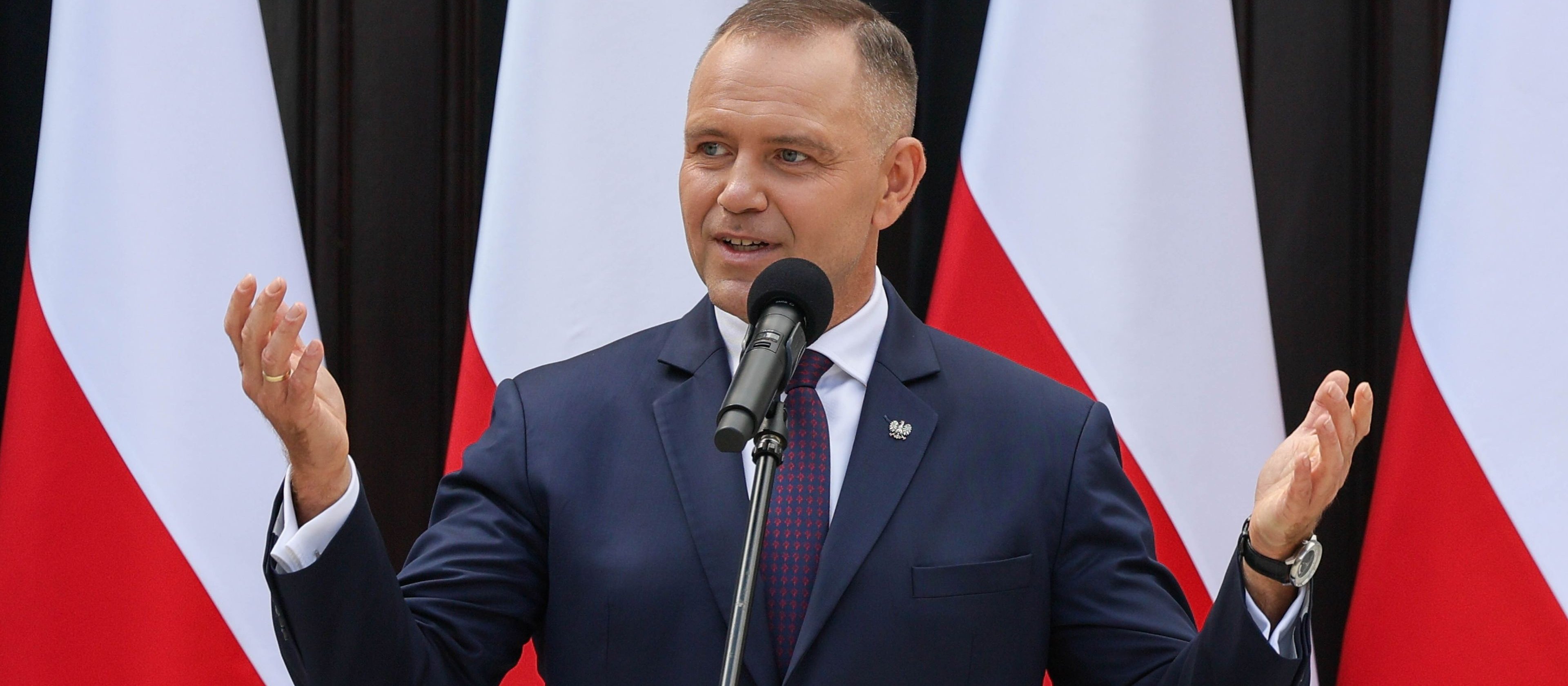
President Karol Nawrocki announced that he would accept a vow from prof. Sławomir Patyra, a fresh justice of the Constitutional Court. The celebration is due to take place on Tuesday, and its meaning goes far beyond 1 signature, due to the fact that the Court has been paralyzed for weeks. Why does this judge, not a fewer others elected by the Sejm, get a green light from the Palace?
The case concerns Sławomir Patyra, prof. of constitutional law associated with Maria Curie-Skłodowska University in Lublin, where he has been head of the cathedral of his specialty since 2019. The Sejm elected him to justice the Constitutional Court on 11 June, by 235 votes to 184, with 5 abstentions. The candidates were supported by the governing coalition clubs and rejected by the opposition of Artur Kotowski. Patyra is scheduled to take the place of justice Andrzej Zielonack, whose nine-year word ended in late June.
A vow without which there is no office
The Sejm's choice is only half the way. In order to take up his duties, the justice must take his oath before the head of the State, which follows straight from the Act on the position of Judges of the Court. Without that act, Patyr can't formally sit in the lineup. The prof. did not cover impatience and repeatedly urged the Palace with writings, the first making at the beginning of July and declaring readiness at any time. The President's Chancellery yet appointed a ceremony for Tuesday, on the occasion of which Karol Nawrocki is besides to present nominations to 4 ultimate Court judges and asessors.
Why him and not others
The most meaningful is the comparative context. Nawrocki has not yet received a vow from 4 another judges elected by the present Sejm, including Maciej Taborowski, Marcin Dziurda, Krystian Markiewicz and Anna Korwin-Piotrowska. The law firm explained this with possible procedural shortcomings on the part of Parliament. The president justified his decision simply by saying that he was fulfilling the law, and Patyra commended him for acting like a liable man and not taking part in political nativity scenes. The point was that the professor, unlike the others, did not make a vow in the Sejm, but patiently waited for a formal ceremony at the President.
Paralysis of the Court
In the context of the full case lies the deep crisis of the Court itself. It presently includes 8 judges from the time of the regulation of law and justice, and 10 people are needed to convene the General Assembly, which decides on the most crucial issues. At the end of June, the Assembly's deliberations were blocked erstwhile 2 judges, although physically present, did not sign the attendance list. The efficiency of the institution so depends present on whether the quorum can be completed. The oath of another justice is unofficially read as a signal of weakening the position of president Bogdan Święczkowski, although this is an interpretation, not a confirmed fact.
President between law and politics
Nawrocki's decision shows how narrow the way the Palace is today. On the 1 hand, the President, associated with the right-wing camp, honors the justice appointed by the ruling coalition. On the another hand, he does so on his own terms, separating those who, in his opinion, respected the procedure from those who are accused of participating in the performance. Whether this decision brings the Court closer to leaving the clink or just adds a fresh subject to the dispute, it will not be until after the Tuesday ceremony.