Who's gonna pay this debt?
The smiling coalition continues the disastrous public finance policy pursued by a good change. Budgetary deficits and public debt evidence further records.
Since the alleged systemic transformation, the Polish budget has never been balanced. This means that all year the budget expenditure was first adopted and then implemented at a higher level than taxation and another revenues (in the 1990s, crucial items were the proceeds from privatisation). Poland's closest budget balance was in 2018. The deficit was only 0.2% of GDP. A budget was planned for 2020 without a deficit (the first 1 since 1990), but due to demented expenditure on quidosis implementation and resulted in a major deficit.
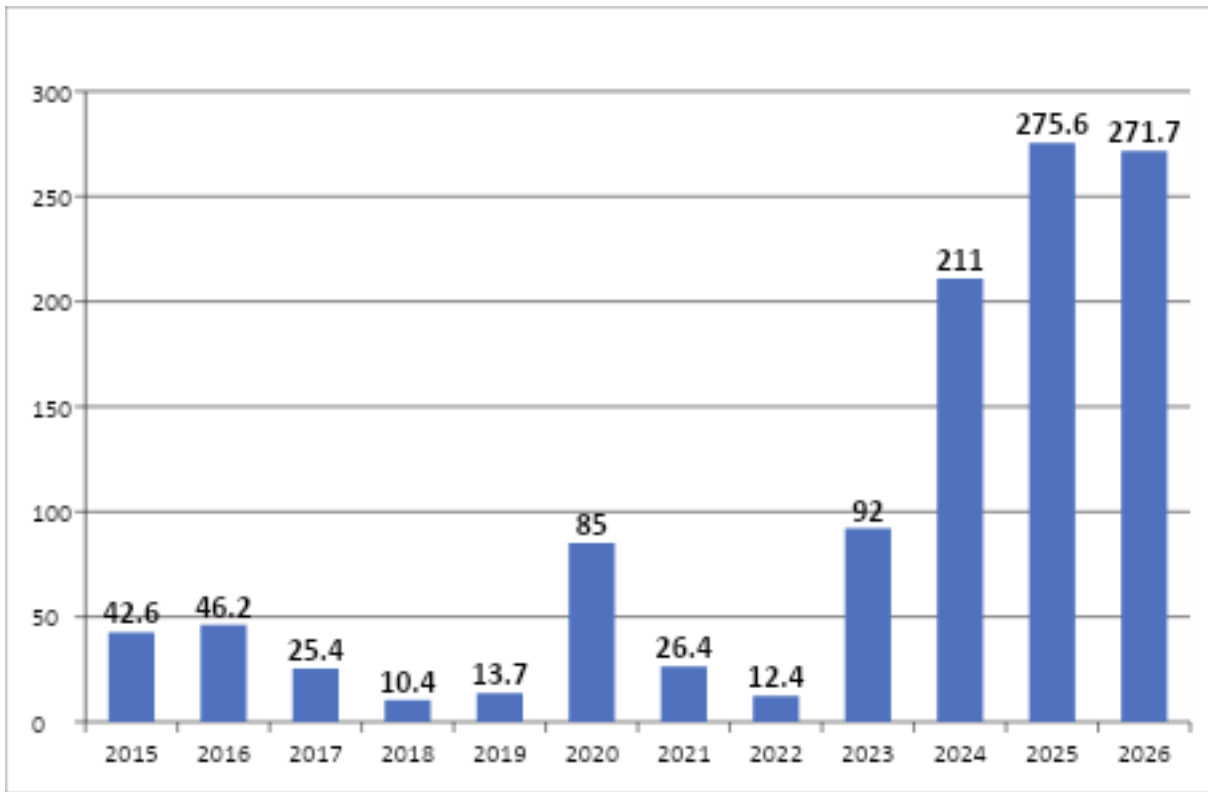 Deficit of the state budget in 2015-2026 in billion PLN (2026 = plan). Own improvement based on: https://www.bankier.pl/newsc/Budget-on-2026-year-catastrophic-deficit-and-unconstitutional-dlug-9052642.html and data from the Ministry of Finance
A raging deficit
After joining the European Union in 2004, Poland must respect EU law. The Maastricht Treaty obliges associate States' governments to keep the fiscal deficit below 3% of GDP. Unfortunately, the current government does not respect this. In 2024, the Council of the European Union stated that there is an excessive budget deficit in Poland due to the failure to meet the EU deficit criterion in 2023, while recommending Poland to destruct the excessive deficit by 2028. Meanwhile, the deficit of the public finance sector in subsequent years of Donald Tusk's regulation alternatively of – according to Brussels recommendations – falling at a crazy rate. According to the latest CSO figures, the general government deficit was 3.4% in 2022, with 5.2%, 6.4% and 7.2% in subsequent years. On 28 November 2025 on Facebook, the guru of the current ruling Leszek Balcerowicz warned: “According to the last “The Economist”, we have the largest budget deficit in Europe: 7% of GDP! Donald Tusk's coalition continues its bad policy on the Law and Justice.” In the study Risks of excessive public debt published by the Institute of liable Finance, we read that in Debt Sustainability Monitor 2024 of March 2025, "Poland has been reclassified in a list of countries showing risks to fiscal stableness in the average word (up to 2035) from a group of countries with average hazard to a group with a advanced hazard of failure of fiscal stableness in the average term".
The problem is not only the budget deficit, but besides the extra-budget funds, generating additional public debt. 1 of the first specified funds was created in 2004 managed by BGK National Road Fund. Donald Tusk's erstwhile government began utilizing extra-budget funds more intensively, including since 2009 excluding the National Road Fund from the debt limit of the public finance sector. This was the minute erstwhile the "out-of-budget spending" mechanics began to be deliberately applied to circumvent fiscal constraints. Under the Law and Justice, extra-budget funds exploded. Among others, the Polish improvement Fund, the Solidarity Fund for Supporting Persons with Disabilities and the COVID-19 Anti-Activation Fund were established. You can besides replace for example: Government Fund of Poland Management, National Reconstruction Plan, Armed Forces Support Fund or Local Government Investment Fund. Mariusz Zielonka, the chief economist of the Leviathan Confederation, points out that an crucial part of the expenditure remains outside the central budget (...), which "makes the real burden on public finances understated and the image of the budget incomplete". Current government withsaid the liquidation of many extra-budget funds, but worse with implementation.
Record debt
The effects of specified a policy led first by the government of good change and now continued by the smiling coalition are, among another things, that public debt is increasing at a catastrophic rate. Public debt in Poland is calculated by 2 measures – national (state government debt – PDP) and EU (government debt – EDP). The first reports the debt of 3 sectors: government, self-government and social security. On the another hand, EU debt methodology besides includes out-of-budget funds. According to the data of the Ministry of Finance at the end of 2025, Polish PDP amounted to over PLN 1.9 trillion, and EDP – over PLN 2.3 billion. The difference between the PDP and the EDP is precisely a debt generated by extra-budget funds, which is cheerfully increasing beyond the debt generated by gigantic budget deficits funded by Poles smiling. At the end of 2023 this difference amounted to PLN 363.2 billion, and at the end of 2025 – already PLN 421.7 billion. Suffice to say, that in 8 years of good change government 2015-2023 EDP increased from PLN 924 billion to PLN 1691 billion, i.e. by PLN 767 billion. But the coalition smiling in 2 years 2024-2025 increased this debt by small less, due to the fact that as much as PLN 644 billion! And that's not their last word!
At the end of 2025, the public debt of EDP was calculated by the Ministry of Finance at 59.97% of GDP. That's the highest score in 3 decades! According to the assumptions for this year's budget, public debt according to the EU methodology will scope 66.2% of GDP by the end of this year. According to the IMF, public debt at the end of 2027 will increase to 69.2% of GDP. The European Commission's forecasts are besides frightening. In the February 2025 study by Debt Sustainability Monitor, the EU government estimates that in 2036 the level of public debt in Poland will be around 107% of GDP. “This is shocking! Poland's debt is expected to exceed 100% of GDP and alerts... European Commission von der Leyen! I am asking for ACCESS, due to the fact that this authority leads us to a financial disaster!” – the Euro MP Ewa Zajączkowska-Hernik alerted on her Facebook, adding that we have a evidence pace in Poland's past of debt, which is almost a billion zlotys a day.
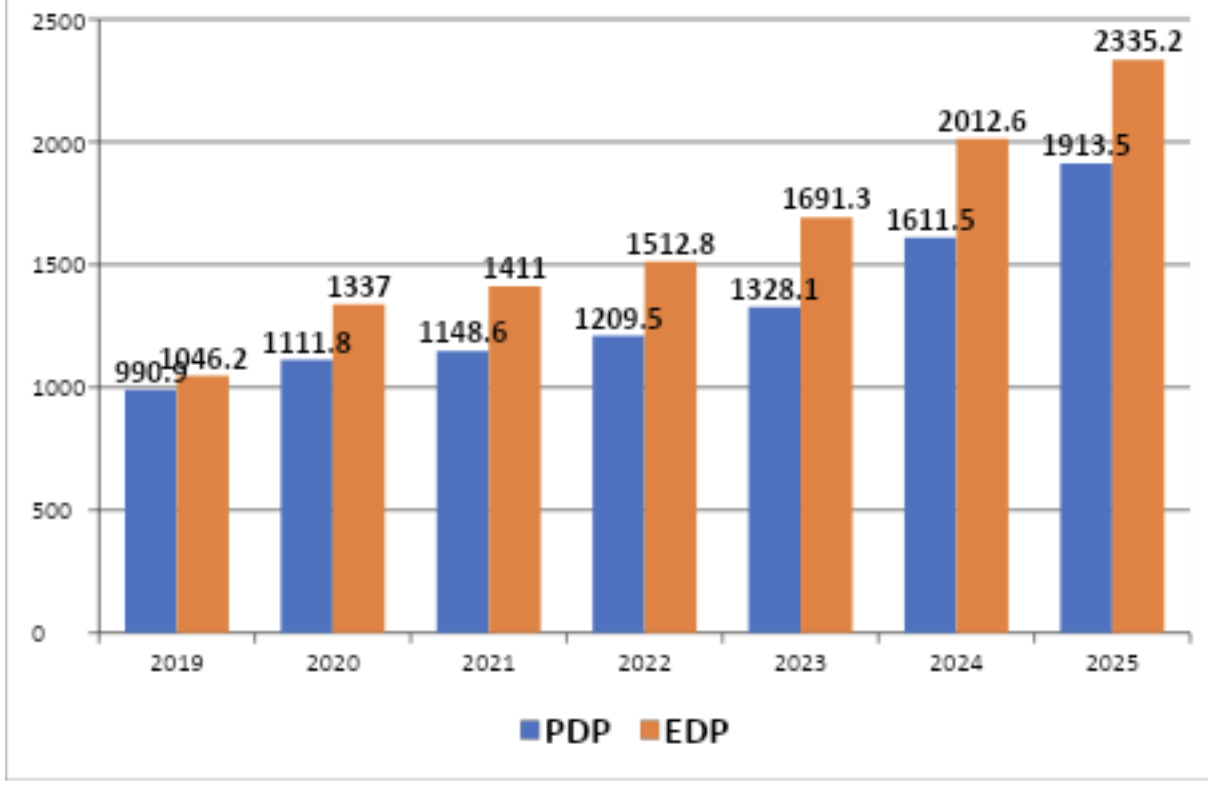 Public debt in the period 2019-2025 – state public debt – PDP and government debt – EDP in billion PLN. Own improvement based on: https://www.gov.pl/web/finance/sector-public finance
Fatal Consequences
This has its very bad consequences for Poland. With the increase in public debt, the costs of its service increase. In 2022, spending on handling the State Treasury debt amounted to PLN 32.7 billion, while in 2026 it was planned at PLN 90 billion. That's not all. In addition, there will be expenses for the handling of debt of non-budget funds, which will consequence in a full debt service of around PLN 115 billion in 2026.Higher debt usually means worse lending conditions. due to specified a alternatively different situation of public finances already ine September 2025 Moody’s and Fitch agencies lowered the prospects of Poland’s credit assessments from unchangeable to negative. In March this year, Moody’s Agency announced that the negative outlook reflects a crucial deterioration in the prospects for public finances, leaving Poland’s credit rating at A2 level. And the worse the rating, the more costly the credit. This is how the debt spiral is driven. Debt besides means dependence on creditors.
The misfortune of Poland is power, which spends more than it can collect in taxes. In addition, it wastes this money not necessarily in accordance with the interests of Poland and Poles, for example, for always deeper surveillance (Pegasus, KSeF, but besides European funds going in this direction), for quidosis, for financing illegal immigrants, for media spreading false propaganda, for anti-Polish and depraved culture (e.g. Jasia Kapela poems) or for educating children in a harmful direction, about backing leading to nowhere renewable energy sources, not to mention.
Tomasz Piepienik
![Nawrocki i Putin przy jednym stole? Polacy nie mają wątpliwości [SONDAŻ]](data:image/png;base64,iVBORw0KGgoAAAANSUhEUgAAAAIAAAACCAYAAABytg0kAAAAFElEQVQYV2N8+vTpfwYGBgZGGAMAUNMHXwvOkQUAAAAASUVORK5CYII=)