With Szymon Andrzejewski – author of the book “Local Democracy in Gdańsk in theory” and a polytologist dealing with investigation on democracy, we are talking about the referendum in Krakow, the thought of a democratic voucher and the possibilities of more equitable policy financing.

Simon Andrzejewski
Expand BiogramA sociologist and a political scientist working on democracy research. He defended his PhD at the University of Gdańsk in 2023, now an assistant at the Department of Sociology at the University of Warmia and Mazury. It seeks a fresh organization form for local government, taking into account democratic innovations specified as mini-publics, civic science, democratic vouchers and civic vouchers, or extended democracy based on public data. Author of the book "Local Democracy in Gdańsk in Field Theory".
Read the lyrics of the author »
(Interview is simply a edited and completed version of the podcast Are you aware? p. A referendum in Krakow showed a red card. Will a democratic voucher give power to citizens?)
Rafał Górski: Residents showed a red card to Alexander Miszaliski, president of Krakow, but – as any commentators believe – the strategy of dudehood survived. Does the result of this referendum have anything to do with the request to discuss how political parties and run campaigns in Poland are financed?
Szymon Andrzejewski: This is simply a very legitimate question, regardless of the issue of the referendum in Krakow, which led to the appeal of Alexander MiszaIski. From media reports it was possible to learn that very large money was pumped into the referendum run after the callback of president Krakow. 1 can only speculate what the amounts were – a million zlotys, respective million zlotys or respective million zlotys.
It reminded me. Machiavelli, who wrote, “All sides of Ambition and Greed reach”.
There was besides repeated information that the multiple presidential candidate of this city, Łukasz Gibala, financed the collection of signatures for the referendum, and even that he financed the referendum run for the appeal of Alexander Miszalski.
Interestingly, if local elections were held on a average date, then paying volunteers for collecting signatures for the referendum would not be possible. The electoral code prohibits specified practices under fine. However, the Local referendum Act does not have clear and precise rules on this issue.
An example of this referendum shows how many things on electoral issues are inactive unregulated, how much they request to renew and look at calmly what works and what does not work.
Many things request to be changed, e.g. the issue of spending at the time of the alleged pre-campania, or electoral run before the authoritative announcement of the election deadline, which is not yet subject to any legal conditions and regulations by the State Election Commission.
What is simply a democratic voucher?
The U.S. began to look for a way to limit the excessive impact of money on politics, peculiarly money from the pockets of very wealthy citizens and private companies.
It has been argued that people who have large assets can possibly influence another citizens' decisions. Citizens can only vote for certain candidates due to the fact that they believe that if individual has earned quite a few money, he will surely be a good candidate for public office.

Week of civilian Affairs
Since 2020 we have been discovering uncomfortable truths and announcing stories that have the power to change Poland.
Donate and become our contributor
It began to wonder if a better way to accomplish the rule of equality of elections from the average 1 individual – 1 vote would not be a formula: 1 individual – 1 vote – 1 voucher. For example, all citizen would have a $100 voucher, divided into smaller denominations, which could hand over a candidate or political organization to the election campaign.
A Democratic voucher, with limited backing from another private sources specified as the SuperPAC (Political Action Committee), could make the main means of financing an election run a certain amount allocated to each citizen. As a result, very wealthy people could no longer pay millions of dollars to a peculiar candidate as easy as they presently do.

A Democratic voucher? Why we request a fresh way of financing policy Simon Andrzejewski
This concept developed in the 1990s and early 21st century in the United States. There have been various academic debates on how to improve it and how to reduce the impact of money in politics. It was wondered how much legal conditionality was adequate and whether publically identifying candidates by wealthy citizens, for example in interviews, could be considered as a form of paid promotion. However, specified things are hard to regulate.
Perhaps the concept of a democratic voucher would have developed for a long time if it had not been for the changes in the US related to the 2008 financial crisis and the birth of the Occupy Wall Street movement. In 2015, the democratic voucher strategy was introduced in Seattle.
Why right there?
Because local socialists have long sought ways to introduce more equal rules in the financing of election candidates.
As there is no public support strategy in the US for candidates in public elections, different approaches have emerged in different cities to address this problem. In fresh York, there was a regulation called matching funds. It was that if the candidate had contributed $1,000 to his campaign, the city would add another $1,000 from public money. Later, the proportion of this subsidy changed. Public backing in a ratio of 4:1 could be paid for the campaign.
However, under the influence of people who had previously acted in the Occupy Wall Street movement, Seattle decided on a fresh solution, a strategy of democratic vouchers. Interestingly, this strategy was introduced from the bottom up in 2015. It was not the councillors who voted for its introduction, but a group of local organisations and local activists who introduced this thought to the agenda of the Seattle City Council, utilizing the citizens' legislative initiative. In very many states of the United States, if a adequate number of signatures can be collected, the citizens' resolution initiative is held in a local referendum. This was besides the case with the proposal to introduce a democratic voucher.
Since the 2015 vote on this initiative, it has been 2 years since its actual implementation, so the first democratic vouchers were utilized in practice during the 2017 elections.
What results did this result?
Since 2017, a number of technological papers have been created to analyse this system. It follows that a democratic voucher made local election campaigns in Seattle more financed by the residents.
The problem of many cities in the US is that local electoral campaigns are frequently funded by large companies. It was the same in Seattle. Prior to the introduction of democratic vouchers, the vast majority of the money came from business-related donors outside the city.
After the introduction of a democratic voucher, the share of tiny contributions increased. True, the inhabitants did not massively usage democratic vouchers due to the fact that they were mistrustful. In the first election following the introduction of a voucher in Seattle in 2017, there were cases that residents receiving vouchers by post (in the U.S. states on the West Coast is very popular with a postal vote) treated them as scam and threw them away.
I had the chance to talk with the typical of the Seattle Ethics and Elections Committee, the municipal election commission liable for the elections in this city and for implementing the Democratic voucher programme. She stressed that before his introduction little than 1% of the money came from tiny donors. After launching the program, depending on the election year, Democratic vouchers benefited from between 4 and 8% of Seattle's citizens.
The Democratic voucher besides caused a crucial increase in the number of candidates in elections.
Candidates began to be people who were popular in their local environment and had energy to change. We can presume that many specified people had previously resigned from the election due to the fact that they thought, "We have no money, so why effort to compete at all with political organization representatives who have all the staff and large money."
In 2025, 10 years after the introduction of this system, it was decided to proceed it.
Professor Jarosław Flis in an interview withWeek of civilian AffairsHe said: "If there is an thought of how to organise funds, make a base, it is able to break the pattern, while generalising public backing is simply a stabilising factor, but unfortunately not peculiarly healthy".How would the democratic voucher strategy look in Poland? What would be the benefit of specified a solution in parliamentary and local elections?
W analysis, which I wrote for the Foundation for the improvement of Local Democracy about a democratic voucher – the first specified analysis in Polish, available online – I pointed out the problem of money in local politics.
In 2016, a study was produced “Money and policies at local level” prepared for the Institute of Public Affairs, which afraid local elections. On the basis of the accounts of the electoral committees, which are submitted to the National Election Offices throughout the country, it has been concluded that local policy is highly oligarchied.
Who contributes to the election run in local elections?
If we follow closely the payments of the committees of the most crucial candidates, we will announcement that if the president of the large city is requested by the President-in-Office, his run is financed by people specified as city company presidents, vice presidents, councillors, etc. Łukasz Gibala, presidential candidate of Krakow, contributed PLN 25,000 to his campaign. Almost the same amount, or 24 950 zł was besides paid by his father, Leszek Gibala. In turn Sławomir Ptaszkiewicz, who competed in the 2014 election for president of Krakow, besides allocated immense funds to his campaign.
It's a good place to look for contributions from average citizens.
The problem is besides that the financial statements of the election committees are submitted 3 months after the election, erstwhile most people will forget them. But money plays a very large function in local elections.
I believe that at national level, a democratic voucher strategy could do quite a few good due to the fact that it would give any power to the people. This is PLN 100 we could contribute to a completely fresh political movement, a fresh political organization that is only trying to get on the political stage.
Our political marketplace is becoming increasingly competitive, and the organization that seeks backing from the state budget must get 3% of the vote in the Sejm elections. specified a democratic voucher could influence egalitarianism in general elections, through the anticipation of financing entities that would have large difficulty in reaching this ceiling.
If we wanted to introduce specified a strategy in Poland, the electoral code would should be changed. It's up to the legislator.
In 2012 we started "Citizens Decide" campaign, which aims to change the agreement of forces on a citizens' legislative initiative, i.e. the rules for collecting 100 000 signatures under civilian draft laws. It is 2026, organization concrete is inactive blocking any change and it does not want to give citizens more opportunities to come out with their own initiatives. All of this happens with the accompaniment of complaints of alleged political elites to a low level of social engagement of Poles.
Will legislators want to introduce specified innovation?
It may turn out that fewer politicians would vote for specified a change. However, I effort to convince myself to do so in many places. It is not a cure for all the problems of our political system, but it could be part of a wider package of solutions to the democratisation of our political life. specified solutions could be, among another things, civic learning and changes in the plan of the citizens' legislative initiative, so that the proposals made by citizens at first reading cannot be rejected. Instead, they should end with a request for a referendum.
We could besides introduce a civic senate, like the second Chamber of Parliament at local level, to which citizens would be drawn according to certain criteria, specified as age, education, residence or gender. As you can see, there are many possible solutions that can change the arrangement of forces in both local and central politics.

What problems and risks do democratic vouchers have?
As with any specified system, it can be the victim of abuse or manipulation.
There have been cases of charges against candidates in Seattle. They were accused of collecting money from citizens and spending it in an inappropriate way. There is besides a hazard that individual could collect vouchers from citizens and then effort to sale them back to any candidate. To avoid this, the safety features of specified vouchers are akin to those utilized in banknotes, including recognition numbers and bar codes. There have been no major problems so far, unlike another policy backing systems.
This strategy can be regarded as not sufficiently tight, but it needs to be tested first. Only then will it be possible to measure how many people would like to usage it and what value specified a voucher could have. For example, in Poland a democratic voucher could have a value of PLN 40, divided into denominations of PLN 10. It would be a truly large amount if we wanted to introduce specified a strategy in the general election. According to my preliminary calculations, depending on the number of voters participating in the vote, the cost of vouchers would be about PLN 1.2 billion. This is simply a much larger amount than subsidies from the state budget for political parties, which amounted to around PLN 330 million between 2021 and 2020.
This amount varies according to the election results. In 2021 it was about PLN 55 million and in this year about PLN 84 million. However, these are tiny amounts in the state budget.
That would be a much larger amount than those that get parties in the current system. What would parties do to gain that money? How can we convince citizens to spend this money on political parties alternatively than wellness care or public transport?
In Poland, various kinds of discharges are very popular. This shows that assurance in this form of financing is rather high. If each citizen receives a certain amount to be utilized under a democratic voucher, he will surely be willing to usage it.
Therefore, as part of my technological work, I am developing the concept of a civic voucher.
The citizen could divide the example amount of PLN 40 and 1 part for the election run of a peculiar candidate, and the remainder could be donated to the operation of any independent local medium.
He could even spend only PLN 10 on local politics, part on local mediums, and the remainder on support for a non-governmental organization that monitors the activities of authorities or a trade union.
The anticipation of allocating a certain amount within a democratic voucher or a universal civilian voucher, not only for political purposes, but besides for the functioning of civilian society, is, in my opinion, an interesting thought that is worth developing in the future.
All non-profit organisations working for civilian society are chronically underfunded and operate only through collections. The media continues to sale information, but their outlays besides decline, and the gross from the subscription is not high. Unfortunately, local media is getting worse. The "Baltic Journal" was erstwhile the most crucial local paper in Pomerania, but the scope of this paper has now decreased significantly. Local organisations, NGOs, trade unions, research, local start-ups developing social innovation if they prosecute good social objectives should be financed somehow.
The universal civilian voucher strategy could not only finance policy in a more egalitarian way than before, but besides support another sectors of civilian society.

Local referendum – good change Jarosław Sachajko, Rafał Górski
What crucial question has no 1 always asked you on the topics we are talking about, and what is the answer to them?
No 1 has always asked me erstwhile we're going to implement this system. I would like to find out if there is any political force or environment that would be willing to turn this thought into concrete statutory solutions and then effort them in respective municipalities in Poland.
My answer to this question would be: I would be happy to take this initiative. There is only a question of erstwhile concrete work can be started.
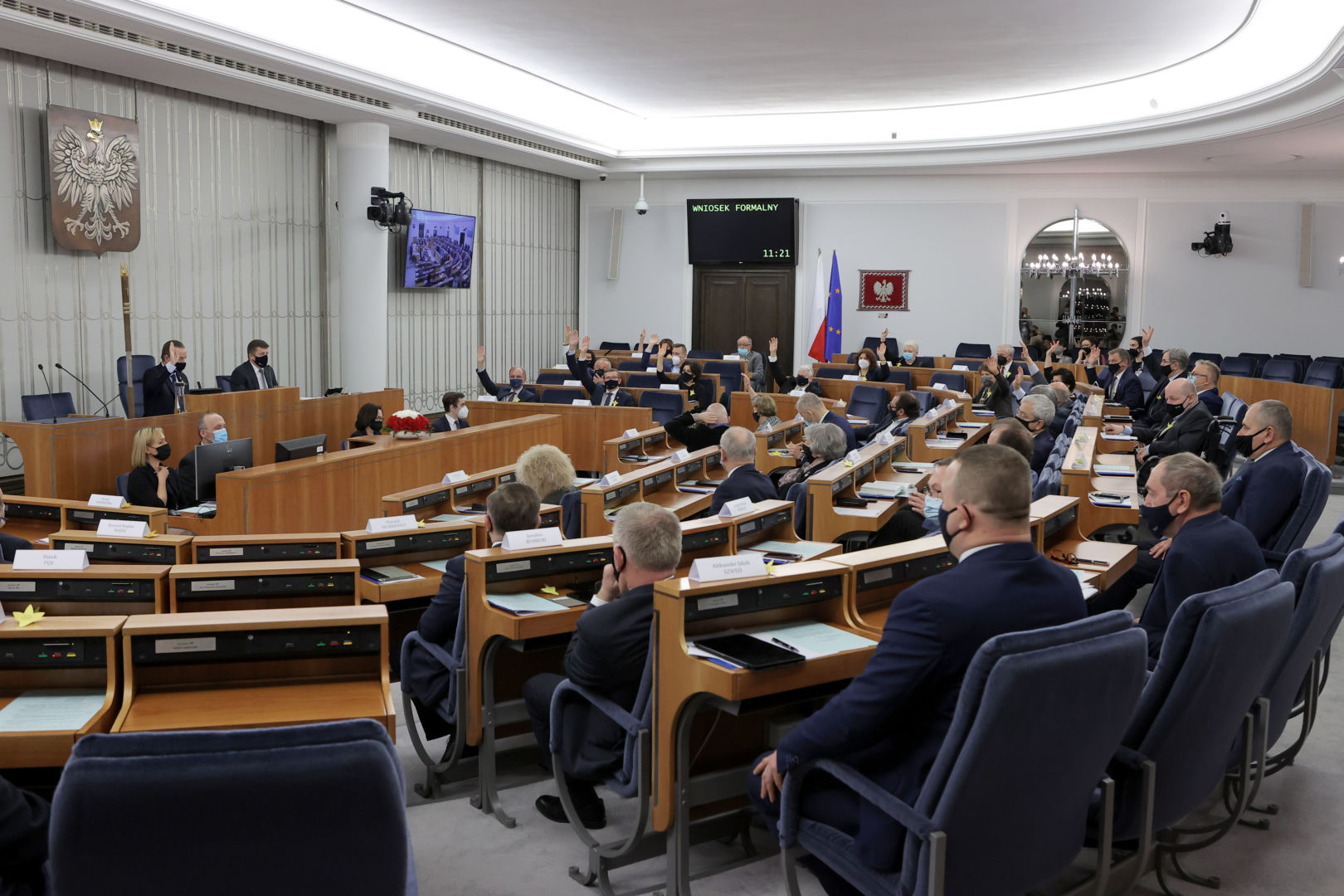
Time will tell if anyone in the political class will be curious in the subject. Unfortunately, even if we had collected a million signatures under this idea, the final decision inactive belongs to those who sit on the Sejm and Senatorial benches on Wiejska Street.
Thank you for talking to me.
![Pięć lat kręcenia się w kółko. Jak Agora dzieliła i łączyła Gazeta.pl z Wyborczą [OŚ CZASU]](https://i.wpimg.pl/1920x/filerepo.grupawp.pl/api/v1/display/embed/e1b0b4f9-7eba-455c-95d6-8649f34ef4eb)