The fresh United States safety strategy is becoming a political fact. peculiar operation in Caracas and taking out erstwhile leader Venezuela is the first step towards the ruthless revitalization of Monroe’s doctrine—or, actually, Donroe, as the president of the United States called it in a tide of humor characteristic of himself.
The rally on Caracas had all the features of political-special surgery, not classical military action. The fewer point-to-point firing of Venezuelan military installations served as a demonstration alternatively than a strictly military function. There's quite a few indications that the shot Nicolása Maduro came by agreement with part of the political-military backdrop in the government itself.
narration is widely distributed in Poland, according to which Russian production of anti-aircraft defence systems Venezuela "didn't work". I have no uncertainty what is behind this kind of transmission of parts of the political and media elite: the desire to reassure the public that the situation is full controlled, that we are "unmoveable", since we are buying US weapons and, if necessary, the United States will defend us without much effort.
This is simply a false narrative, calculated solely to legitimize the policy of the PO-PiS, which consists entirely of Washington's protectorate. This way of reasoning is, of course, very convenient for the Americans, due to the fact that it makes it easier for them to keep strict control of Poland's policy and to supply a further, undisturbed stream of money, without asking uncomfortable questions about the real credibility of safety guarantees.
In my opinion, it is highly likely that Venezuelan anti-aircraft defence systems have not been utilized due to the fact that a decision has been made not to launch them. The American operation was conducted through a chopper rally over the city. If there was real resistance, there would be no request for S-300 systems – even a tiny sub-unit equipped with hand launchers, operating outside the central decision loop of the general staff or the commandant of the city, could take the fight. But that did not happen.
Whether this explanation is correct will show the further behaviour of the Venezuelan ruling elite. Her face became the fresh interim head of state – vice president Delcy Rodríguez. If the power camp he represents starts to go to further concessions with the US, this will strengthen the thesis of the previously concluded agreement and betrayal of Maduro.
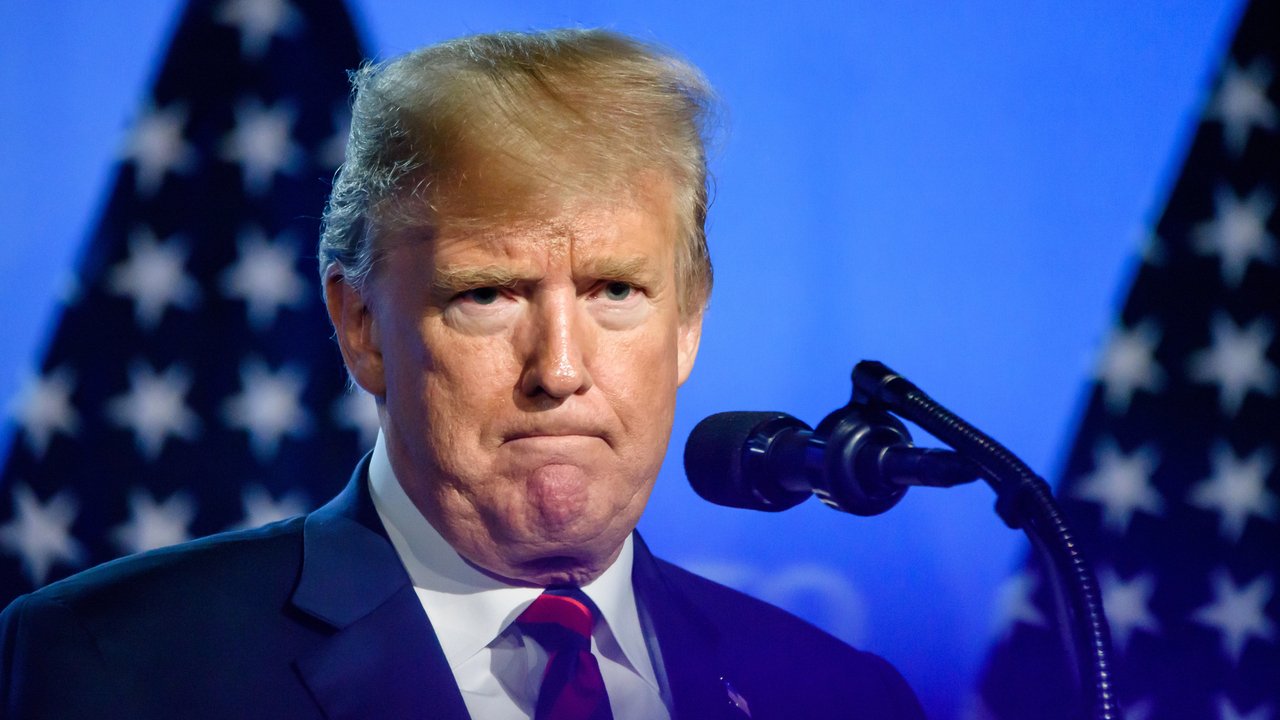
The rally on Caracas alone does not solve this issue. Rodríguez speaks about defending the sovereignty of the state and the system, and supporters of Chavism appeared on the streets. It can only be a fanfaronada and an component of auctioning while forging a fresh modus vivendi and determining the degree of Washington's influence. However, the very fact of specified negotiations shows that the Americans do not have full and unappealed control over the situation in Caracas. The rally should so besides be seen as an component of the president's performance and self-creation policy Donald Trump. This surely does not close the Venezuelan issue from the U.S. perspective.
The question remains how Trump will respond erstwhile the Venezuelan authorities decide to escalate their demands. More operations may be needed, and possibly even larger-scale military activities. Much depends on the consolidation of the government and the degree of its real support in the various social strata. It is not clear today. However, the fact is that there have always been support groups in this country, and Venezuela itself, with the vast interiors of mountains and jungles, is conducive to long-term destabilisation. An example of neighboring Colombia shows how tiny even guerrilla groups can influence the state over the years.
It wonders the selective outrage of any liberal environments due to the violation of global law and the sovereignty of 1 of the UN associate States. Technically, nothing fresh happened. The United States attacked Yugoslavia in 1999, creating conditions for the secession of Kosovo. In 2003, they destroyed Iraq's state structures, paving the way for civilian war and the emergence of the alleged muslim State. In 2011, they led to the collapse of Libya, which has not yet risen from chaos, becoming 1 of the main migration routes from Africa to Europe.
So what is the difference between the current intervention? First of all, Donald Trump wraps her in liberal-ideological rhetoric much less. It does not fake the existence of a "international society" or at the velocity of a complex "coalition of the willing". It works in an openly unilateral way.
However, this does not mean a complete deficiency of ideology. Trump described the rally on Caracas as "law force" – law enforcement. Maduro is to face American court. If he had received a low sentence, this might propose that he was part of an earlier arrangement, although this script seems unlikely. In the narration of the White House, there was not a war against an enemy state, but a police action of a planet policeman standing above the sovereignty of states – in the spirit of utmost globalism.
The authoritative justification for the intervention should be treated with a far-reaching reserve. Venezuela is not a crucial drug producer. Cocain from Colombia, Bolivia and Peru goes through its territory mainly to Europe, not to the United States. The American drug marketplace is primarily driven by Mexico, where powerful cartels besides produce immense amounts of synthetic substances.
This kind of legitimacy – "this is not a war, this is simply a police operation" – is intended to aid Trump bypass the legal and organization mechanisms for starting armed action. At the same time, a skeptical attitude towards abroad interventions in part of the social background of the MEGA movement may prove to be a real political problem for him.
The rally on Caracas has sparked the enthusiasm of all those on the Vistula River who are completely aware of the American protectorate. I have any bad news for them. Intervention in Venezuela full fits into the fresh US safety strategy, giving advanced precedence to the Western hemisphere and low to Europe. So any major military engagement in Latin America will be at the expense of the United States' presence on our continent.
If the Trump administration succeeds in Venezuela, both political and economic, in taking over the proceeds in the oil sector, it can rapidly decision on to further extortion efforts in the western hemisphere. They may concern not only Cuba, Colombia or Mexico, but besides Greenland, formally owned by Denmark. It is easy to imagine how this would affect transatlantic relations.
This was not just about Venezuelan oil. Maduro has already signaled his willingness to compromise on this issue. The U.S. goal was alternatively to manifest the power and put a military dot over the "i" in the strategy of recognizing the Western Hemisphere as an exclusive American domain and pushing out the influences of China and, to a much lesser extent, Russia.
The rally on Caracas was to break the assertiveness of all U.S. dominant protesters in both Americas. So far, the freezing effect doesn't seem full. president of Colombia Gustavo Petro He sharply responded to Trump's threats, calling them “unacceptable interference”. However, it is besides early to justice solely on the basis of rhetoric. Undoubtedly, many actors in the region feel real anxiety today.
For Poles it is crucial to realize 1 thing: a peculiar operation conducted 2 1000 kilometres from the US coast, on a completely dominated theatre of action, there is no translation into the position of conflict with atomic powers on their own continents. It has nothing to do with the displacement of Russia from Ukraine, or even with the Taiwan War, carried out within scope of Chinese rocket launchers, which – as he pictured Nikita Khrushchev – can be “turned from factories like sausages”.
It is hard to talk of Russia or China, since Donald Trump could not even change the behaviour of Ansarullah in Yemen. Despite a fewer weeks of intensive bombing campaign, the Huti proceed to attack ships in the Red Sea, undermining 1 of the pillars of the U.S. global hegemony – the control of planet maritime routes. The operation was discontinued without tangible effects, inter alia due to the limited production capacity of the US arms industry.
Yemen has thus shown that Uncle Sam's hands stay strong – but clearly shorter. While the blow to Venezuela may have caused fears in South America, the remainder of the Global South would alternatively widen the distance between the US and their allies. This process has been seen for years: from the coups in Africa, to the decisions of Senegal and Chad to the removal of French troops, to the always clearer rapprochement of India with China.
Surgery in Venezuela doesn't mean hegemon's return or times. Ronald Reagan. It's more like a comeback of logic. Theodore Roosevelt and violent enforcement of influences in the United States' ‘near foreign’. The rally on Caracas does not undermine the thought of the planet as a performance of powers – on the contrary, it fits perfectly into it. For this reason, I do not think that events in the western hemisphere will change the American game around Ukraine.
Krystian Kamiński
The author is simply a associate of the National Movement, b. associate of the Sejm
Photo: The White home (X)
Za: X