
On September 2, the Euronews portal published an article starting with:
“Pekin must accomplish “concrete results” by October, otherwise they are threatening to “strict resources” – warned EU Trade Commissioner Maroš Šefčovič in an exclusive Euronews interview, in view of Brussels' deadline to limit China’s evidence trade surplus towards the Union”.
The European Union has been considering introducing fresh trade instruments towards China for months, motivating the request to defend its manufacture from unequal conditions of competition. However, an expanding number of analyses indicate that the current competitive advantage of the mediate States in sectors specified as natural materials processing and the production of advanced components is the consequence of multi-annual, systemic investments, not only ad hoc support mechanisms. In view of these realities, the effectiveness of the European strategy of independency from Chinese supply depends more on the capacity to address interior structural challenges than on the introduction of external customs barriers.
Multiannual investments and perception of competition
Market analyses show that a communicative of unfair competition can simplify a complex reality in which China's dominance in global supply chains, peculiarly in the processing of uncommon earths and in the production of battery materials, is the consequence of a long-term industrial strategy. For decades, the Beijing administration has consistently developed mining and processing infrastructure, creating full integrated production ecosystems. Control over these stages of the value chain allows Chinese companies to keep advanced cost efficiency and production scale, which represents a crucial challenge for competitors who are just beginning to build akin capacities.
Internal pressures on European industry
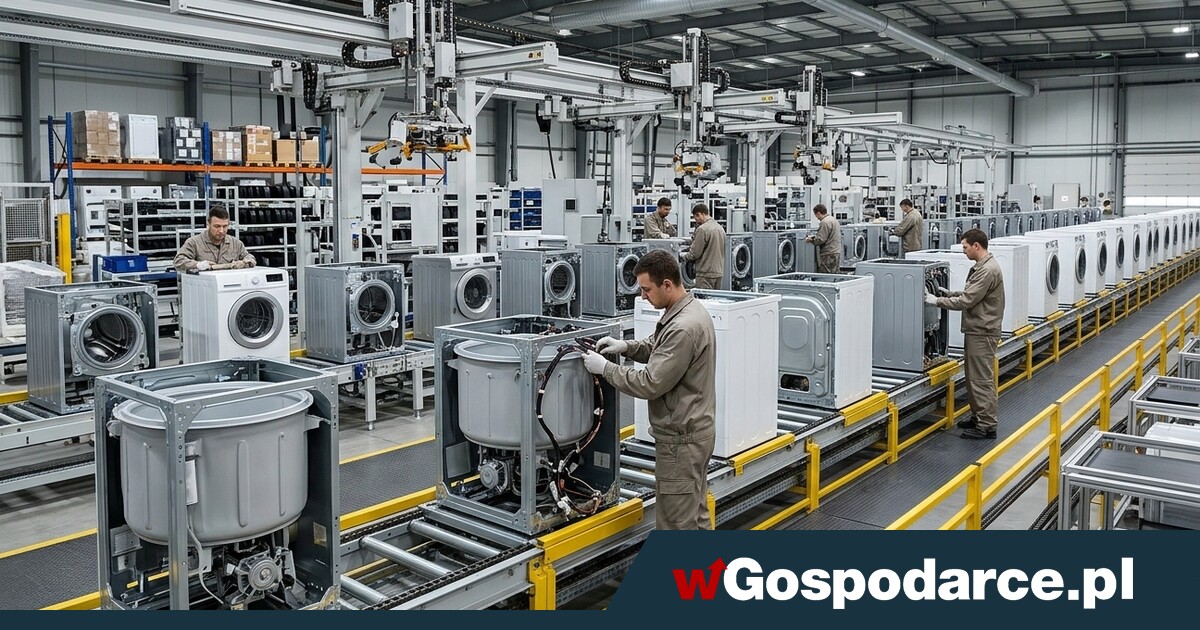
The difficulties faced by European producers, including the German automotive sector, are mostly due to interior factors. advanced energy costs, fragmented energy policy and long-term corporate strategies, which over the years have optimised supply chains to minimise costs alternatively than build resilience, have undermined the competitiveness of plants in Europe. Trade unions and corporate boards signal the request for change, but rebuilding the production possible would require the engagement of capital for respective years. This approach frequently interferes with shareholders' expectations of short-term returns and maintenance in regions with lower operating costs.
Even grotesque in this situation are the statements of the German Chancellor, the representatives of the largest economical entities, including the board of Volkswagen or the trade union of IG Metal, who publically advocate more decisive commercial activities. Volkswagen is 1 of the leaders of the “In China for China” initiative, in which he created a immense R&D centre in Hefei, Anhui state for only EUR 1 billion. In parallel, a akin amount was allocated to the expansion of the mill there.
Link to Volkswagen Groupd materials HERE
The reality of diversification and simplification of alternate sources
The actions planned by the European Union, specified as the European Act on Critical Resources, aim to reduce dependence on 1 supplier. However, analysts pay attention to gaps in the implementation of these assumptions. There are presently no full developed alternate mining and processing ecosystems in the planet that are not in any way capital or technologically linked to China. Building independent supply chains in the areas of logistics, energy and the labour marketplace would require not only immense financial expenditure but besides consistent coordination at the level of all associate States. In the context of the EU decision-making process, characterised by complexity and long-term arrangements, this represents an crucial operational challenge.
The aim of expanding economical resilience is simply a clear nonsubjective of industrial policy. However, effective implementation of this strategy requires a sound assessment of its weaknesses. alternatively of focusing solely on safeguard instruments, European institutions and businesses must focus on modernising energy infrastructure, expanding R & D spending and creating conditions conducive to long-term industrial investment. Only a comprehensive approach to interior reforms can guarantee real competitiveness in the global marketplace in the coming decades.
We just gotta get to work. Without changing attitudes, without accepting changes, building barriers will only prolong agony. Although in the event of an open conflict with China, it can dramatically shorten it. I just don't know if we're ready for this.
By the way, it is highly interesting that the Union appoints key, very crucial committees (ministeries) of representatives of small, very tiny and very focused countries. Indeed, the interests of these individual countries affect the fundamental activities of the EU as a whole. I don't know. I don't know. I don't know. Worse erstwhile we read those politicians' bios. All conspiracy theories abruptly cease to be specified a conspiracy...
Source:
- European Commission, “European Critical natural Materials Act”, https://commission.europa.eu/topics/competition/green-deal-industrial-plan/european-critical-raw-materials-act_en
- International Energy Agency (IEA), “With fresh export controls on critical minerals, supply concentration risks become reality”, 23 October 2025, https://www.iea.org/commentaries/with-new-export-controls-on-critical-minerals-supply-concentration-risks-become-reality
- Rhodium Group, “Germany’s ‘China Shock’ Revisited”, 10 February 2026, https://rhg.com/research/germanys-china-shock-revisited/
Leszek B. Glass
Email: [email protected]