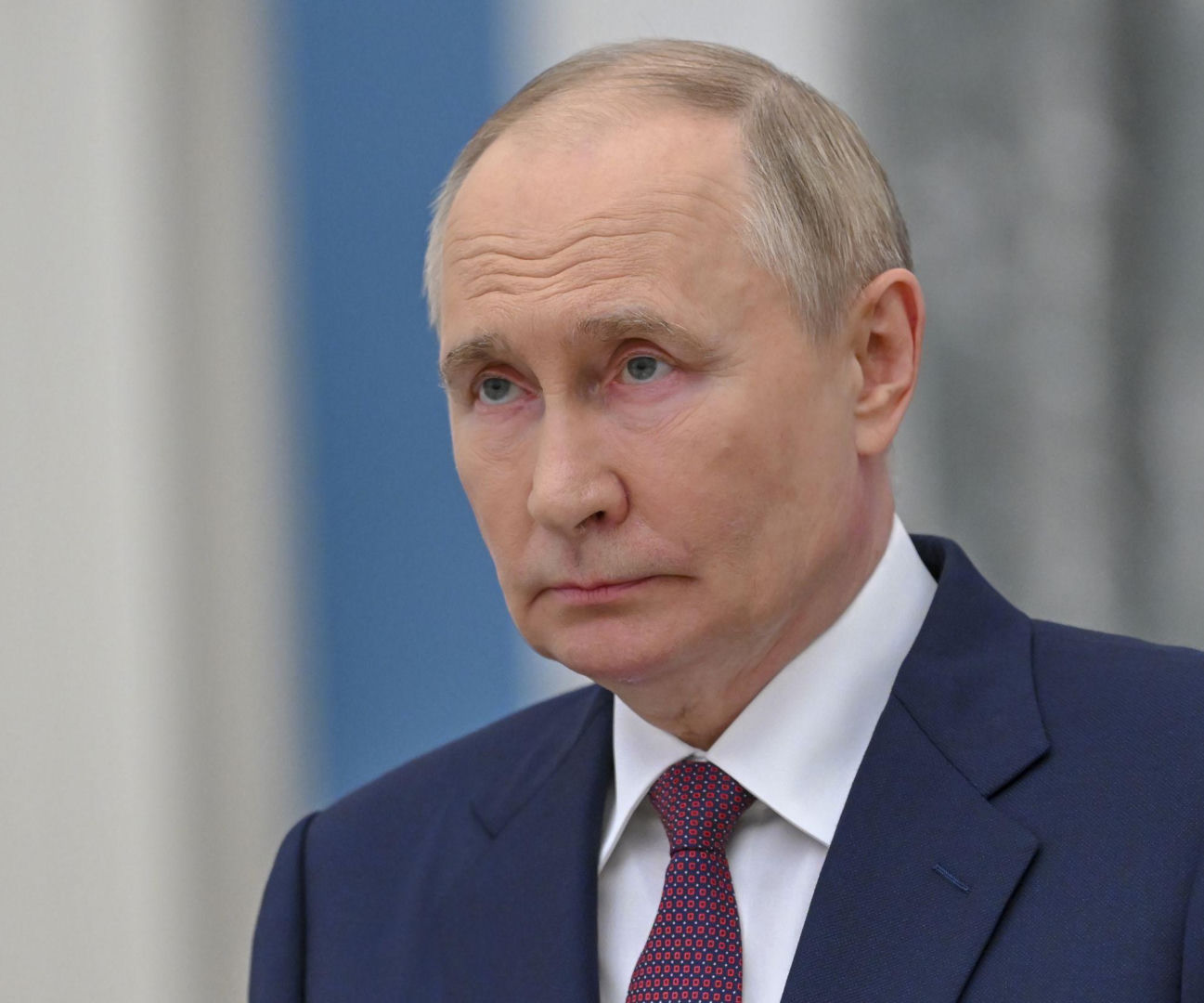
In respective May days Beijing became the scene of 2 visits, which Chinese state sources described as events of advanced global importance, but gave them a completely different meaning. Donald Trump came to China as the leader of a state with which Beijing remains in the most important, complex and risky bilateral relation of the world. Vladimir Putin, on the another hand, came as the leader of a state presented by China as a strategical partner with whom Beijing builds a long-term cooperation architecture, resilience to Western pressures and an alternate global order.
The summary of these visits is politically informative precisely due to the fact that it is not just about diplomatic protocol or the number of papers signed. Chinese sources clearly differentiate the language utilized for the US and Russia. In relations with Washington, the key words are: stabilisation, differences management, controlled competition, consultation, dialog mechanisms and conflict avoidance. The relation with Moscow is dominated by strategical coordination, common trust, multipolarity, good neighbourliness, resilience to unilateral sanctions, Eurasian integration and common criticism of hegemonism.
From Beijing's point of view, therefore, both visits were needed, but they served another purposes. Trump's visit was intended to reduce the cost of Chinese-American competition and give it a predictable framework. Putin's visit was intended to confirm that China is not alone in the global order dispute and has a partner ready to deepen political, economic, technological, transport, energy and organization cooperation. In another words, Trump came to Beijing to stabilise competition, Putin — to show strategical continuity.
Trump's visit: stabilizing rivalry alternatively of an allied breakthrough
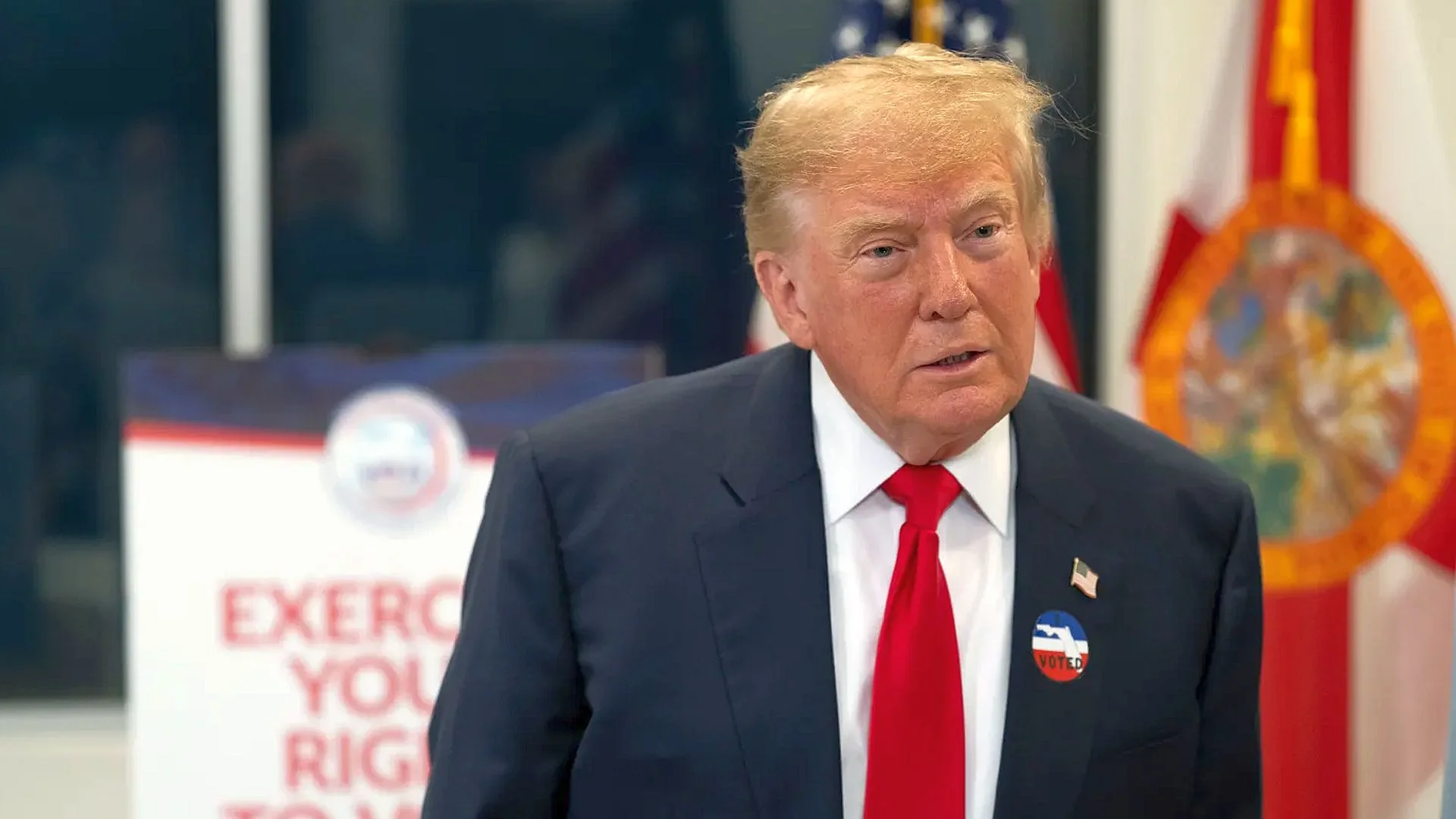
Chinese coverage of Donald Trump's visit focused on gathering Xi Jinping in the large People's Hall on May 14, 2026. Xinhua stressed that this was the first U.S. President's visit to China in 9 years and another direct contact between leaders after the Busan meeting. Already this context shows that Beijing wanted to give a visit to an event breaking the period of excessive tension, but did not present it as a political approximation comparable to the Chinese-Russian relationship.
The most crucial concept of Chinese narration was the expression of "a strategically unchangeable China-US relationship". Xi Jinping defined it in 4 dimensions: as stableness in which cooperation dominates; competition remains limited and "healthy"; disputes are manageable; and long-term peace between powers remains real. This language is significant. It does not remove the concept of competition, but tries to tame it and incorporate it into a political framework to prevent uncontrolled escalation.
In Chinese optics, Trump's visit was, therefore, primarily systemic. Beijing wanted to show that it could talk to the U.S. from the position of an equivalent power and besides liable for global stability. Chinese sources stressed that the Chinese-American relation cannot be held hostage by crises, political campaigns or the logic of separating economies. In this sense, the authoritative communicative was addressed simultaneously to Washington, American business, financial markets, Asian countries and European partners fearing the consequences of the violent confrontation of the 2 largest economies of the world.
However, what is crucial is what was not in the Chinese communications. There was no official, extended Chinese list of signed papers comparable to the list of papers announced after Putin's visit. Rather, Chinese sources talked about "consensus", consultation mechanisms, stabilisation of communication channels and areas of applicable cooperation. Diplomacy, military, trade, health, agriculture, tourism, people-to-people contacts and law enforcement were mentioned, but the message itself was more political than the treaty.
Thus, the direct effects of Trump's visit should be understood with caution. According to the Chinese side, crucial directional agreements were reached, but were not presented as a wide package of formal agreements. Rather, they were agreements on maintaining and strengthening dialogue, implementing earlier trade arrangements and seeking solutions in disputed areas. The communications besides featured information about the affirmative result of trade squad discussions, but without specified a detailed catalogue of papers as published after talks with Russia.
Taiwan was a peculiar place. Xi Jinping identified it as the most crucial problem in Chinese-American relations and warned that mistreatment of the case could lead to collision or conflict. This shows that Trump's visit did not mean the extinguishing of the most serious strategical dispute. She was trying to set fuses, not solve the problem. Beijing stressed that stabilizing relations with the US is only possible if Washington does not cross Chinese ‘red lines’.
The Chinese relations besides featured Trump's image as a leader prone to transactional pragmatism. According to Xinhua, the American president was to praise individual relations with Xi, talk about the very good state of contact with China and encourage American companies to grow their cooperation. The Chinese media peculiarly exposed the presence of American business and the voices of economical environments stressing that separating economies would harm both parties. Beijing thus utilized Trump's visit to strengthen its own message: rivalry may exist, but the economical cut-off of the US from China is unrealistic and costly.
Effects of Trump's visit: directional agreements, without circumstantial agreements
Trump's most crucial direct consequence was a political one: establishing a fresh expression for the relation as "a strategically unchangeable constructive". The Chinese side presented it as a framework for the following years to reduce the hazard of uncontrolled confrontation. The importance of this expression is that Beijing does not accept the American language of “competition management” unilaterally; it proposes its own definition of stability, in which the US is to recognise not only the request for dialogue, but besides Chinese fundamental interests.
The second consequence was the dialog channels arrangements. Chinese sources talked about maintaining communication between leaders, diplomatic talks, military contacts, cooperation on safety issues and economical consultations. In this area, the effect of the visit was not so much to sign spectacular contracts, but to rebuild predictability. For Beijing, predictability is peculiarly crucial due to the fact that it reduces the hazard of abrupt sanctions, crises around Taiwan, military incidents, and violent trade changes.
The 3rd consequence was the economy. The Chinese communications spoke about the affirmative result of trade talks and the readiness to have equal dialog on customs, investment, agriculture and marketplace access. Chinese-language accounts of the U.S. Charter of Results further pointed to commitments regarding the acquisition of agricultural products, access to American meat producers, critical minerals and uncommon earths and trading and investment mechanisms. However, it should be stressed that in the Chinese authoritative communications these elements were included more mostly and were not presented as a separate Chinese list of signed documents.
The 4th consequence was symbolism. Trump's visit was to confirm that despite technological conflict, customs disputes, political pressures and military tensions, the US had to talk to China at the highest level. This is the value of Beijing itself. China can present itself as a country that cannot be isolated, whose economy cannot be circumvented, and whose participation is essential in addressing global problems — from trade to global security.
| Zone | Importance by Chinese side | Direct effect seen in Chinese sources |
| Political relations | Establishment of a strategical stabilisation framework | "Constructively strategically unchangeable China-US relationship" formula |
| Trade and investment | Reducing the hazard of economical escalation | Consensus on dialogue, implementation of arrangements and applicable cooperation |
| Security | Crisis prevention and miscalculation | The will to keep diplomatic and military channels |
| Taiwan | Confirmation of Chinese red line | A clear informing that Taiwan remains the most crucial issue in dispute |
| Business and society | Showing the cost of separating economies | Focus on the function of American companies and human exchange |
Putin's visit: strategical continuity, multipolarity and Eurasian depth
Vladimir Putin's visit to China was described in Chinese sources differently than Trump's visit. Its intent was not to stabilise risky competition, but to deepen the relation that Beijing and Moscow present as mature, sustainable and institutionally extended. The Chinese MFA and Xinhua stressed that it was already Putin's twenty-fifth visit to China. This number served in the communicative a symbolic function: it was expected to show the unique strength of contacts and the individual dimension of the leaders' relationship.
The most crucial political result of the visit was to agree to an extension of the Treaty on Good Neighbourhood, relationship and Cooperation between China and Russia. This is fundamental for Beijing, as the Treaty is the legal and political basis for long-term partnership. The common communicative speaks of a lasting good neighbourhood, common support, unconfronted nature of relations and opposition to block logic. At the same time, the full language of the papers shows that the Chinese-Russian relation is directed against unilateral Western dominance, although it is formally presented as unopposed to any 3rd country.
Unlike Trump's visit, a wide catalogue of papers was published after Xi-Putin meetings. It included 2 major political statements and forty cooperation documents: 20 signed in the presence of leaders and 20 more announced or agreed during the visit. This is simply a fundamental quantitative and qualitative difference. Putin's visit was presented as an event that brings not only a common political language, but besides a dense network of institutional, economic, technological, scientific, transport, cultural and educational commitments.
The first joint message afraid further strengthening comprehensive strategical coordination and deepening good neighbourly cooperation. The second focused on supporting the multipolarity of the planet and building a fresh kind of global relations. The second message is peculiarly crucial for assessing the global importance of the visit. Beijing and Moscow do not limit their relation to trade or border cooperation. They set it up as a policy task on future global governance.
Xi Jinping spoke after the gathering about improving the quality of political trust, mutually beneficial cooperation, social contacts and global coordination. He besides stressed that bilateral trade for 3 consecutive years exceeded $200 billion, and in the first 4 months of 2026 increased by almost 20 percent. In Chinese narrative, these data are intended to show the resilience of the relation to sanctions, external force and the effects of the war in Ukraine. Russia is not only a political partner for China, but besides an component of strategical natural material, transport and geopolitical depth.
Effects of Putin's visit: treaty, railway, atomic fusion, standards...
The direct effects of Putin's visit are much easier to capture than the effects of Trump's visit, as Chinese sources have published a list of documents. The most crucial consequence is the extension of the Treaty of Good vicinity and 2 joint political statements. However, the list of papers shows that Chinese-Russian cooperation covers much more applicable areas.
The signed papers included the memorandum on cooperation in urban development, the agreement concerning the second railway line Manzhouli-Zabajkalsk on the 1435 mm spacing, the memorandum of the Chinese Ministry of discipline and Technology and Rosatom on cooperation in controlled atomic fusion, the joint declaration of trade ministries to advance open trade and the multilateral system, the memorandum on sustainable trade in crucial industrial products, the phytosanitary protocol on Russian compound feed, as well as papers on standards, antitrust, intellectual property, film, media, university and think tanks.
The second group of papers — announced or agreed in addition — included, among others, innovation, green energy certificates, media, educational and academic cooperation, the Shanghai Cooperation Organisation Expert Forum in 2026 and the China-Russia Institute of Fundamental Sciences road map for the period 2026–2030. specified a scope of agreements shows that Beijing and Moscow are building a multilayer relationship. This is not just an agreement between leaders, but an effort to bind ministries, regions, universities, institutes, companies, regulators and media.
A transport component is peculiarly important. The agreement on the second Manzhouli-Zabaykalsk railway line is of greater importance than a specified infrastructure project. The border rail crossings between China and Russia are part of the terrestrial backdrop of Eurasian trade. Under force conditions at sea, sanctions, export control and hazard of disruption of supply chains, land infrastructure gains strategical value. For China Russia remains 1 of the key corridors between Asia and Europe, even if war and sanctions complicate the full usage of this route.
A paper on controlled atomic fusion is equally significant. Cooperation with Rosatom is part of a wider Chinese strategy for capacity building in energy technologies of the future. It is not just about science, it is about long-term technological autonomy and diversification of partnerships in areas where the West maintains a strong regulatory and capital position. technological and technological cooperation with Russia helps Beijing reduce dependence on Western cognition systems, although it does not full replace them.
| Zone | Examples of effects of Putin's visit | Strategic importance |
| Policy | Extension of the Treaty of Good Neighborhood, 2 joint statements | Fixing the long-term basis for China-Russia relations |
| Trade | Statement of open trade, memorandum of crucial industrial products | Building economical resilience against sanctions |
| Transport | Second Manzhouli–Zabaykalsk railway line | Strengthening the mainland Chinese-Russian and Eurasian connections |
| Energy and Science | Controlled atomic Fusion Memorandum | Developing strategical technologies and long-term energy autonomy |
| Regulations | Standards, intellectual property, antimonopoly | Approaching organization and administrative systems |
| Culture and education | Film, media, universities, investigation institutes | Building social and expert partnership infrastructure |
Two visits, 2 languages: stabilisation with the US and a community of interests with Russia
The most crucial difference between the 2 visits is not that China values Russia more than the US in an economical sense. The relation with the US remains fundamental for Beijing due to the fact that it covers the largest consumer market, advanced technologies, financial system, dollar status, Taiwan, East Asia and the full global order. The difference is the relation type. The U.S. is simply a competitor for China that must be stopped from escalating and forced to recognise the Chinese position. Russia is simply a partner with whom Beijing can jointly challenge western dominance, build alternate formats and strengthen Eurasian facilities.
The Chinese side presented Trump's visit as a success of the diplomacy of leaders and a mechanics stabilizing the world's most crucial bilateral relationship. She presented Putin's visit as proof of sustainable strategical coordination and the origin of real agreements. In Trump's case, the core was voltage management. In the case of Putin, deepening the common operating space.
The difference is besides seen in the hierarchy of effects. After Trump's visit, the most crucial was the political expression and general consensus. After Putin’s visit — a political formula, a treaty, 2 statements and a long list of sectoral documents. Doesn't mean Trump's visit was little important. Rather, it means that it was crucial for another reason: as a hazard simplification instrument in a relation which is not possible today.
| Criterion | Visit of Donald Trump | Visit of Vladimir Putin |
| Main Function | Stability of competition | Deepening the strategical Partnership |
| Most crucial formula | Constructive strategically unchangeable China-US relationship | Comprehensive strategical coordination of China-Russia |
| Nature of the results | Consensus, mechanisms, dialogue, broad lines of cooperation | Treaty, statements, 40 sectoral documents |
| Main problem | How to avoid a conflict with sustainable competition | How to Together Strengthen Multipolarity and opposition to Western Pressure |
| Economic dimension | Trade as a battlefield and stability | Trade as an component of Eurasian resilience and integration |
| Transmission to the World | The U.S. must talk to China. | China and Russia form a permanent pillar of the alternate order to hegemony |
Does Putin’s visit mean the weakening influence of the United States in Asia and east Europe?
The question of whether Putin's visit to Beijing and its effects can be considered as a symptom of the weakening influence of the US in Asia and east Europe, the answer should be affirmative but conditional. Yes, it is simply a symptom of the erosion of the American ability to unilaterally form the strategical environment in Eurasia. No, it is not evidence of a simple collapse of the U.S. power or an immediate replacement of the American strategy of influence by the Chinese-Russian bloc.
In Asia, Putin's visit shows that China can build alternate strategical facilities despite US pressure. Partnership with Russia strengthens Beijing's position in areas of energy, continental security, land infrastructure, multilateral diplomacy and multipolar narrative. Russia does not replace China with economical relations with the US, the European Union or the ASEAN countries, but it gives something else: geopolitical, natural materials and military-diplomatic depth. For Washington, this means that force on China does not work in vacuum. The stronger the U.S. tries to restrict Beijing technologically and militarily, the greater the value of the Russian background.
At the same time, Asia does not automatically become the domain of China and Russia. The US retains strong alliances with Japan, South Korea, Australia and the Philippines, and many countries of the region do not want to choose between Washington and Beijing. In this sense, Putin's visit does not mean displacing the US from Asia, but confirms the fragmentation of regional order. China and Russia strengthen the continental Eurasian pole, while the US keep a very strong marine-soy system. Competition so applies not only to states but besides to the geography of land, seas, transport corridors, energy, technology and institutions.
In east Europe, the importance of Putin's visit is even more direct, but at the same time more complex. Russia is at war against Ukraine and remains subject to extended Western sanctions. The fact that Putin comes to Beijing under specified conditions, signs a comprehensive package of papers and receives from China a language of strategical partnership, shows limited political effectiveness of Moscow's isolation. From the position of the US and Europe, this is simply a signal that Russia can function as an crucial partner of Asia's largest economy despite sanctions.
However, this does not mean that China is unconditionally taking over the Russian war agenda. Beijing retains its own interest: it does not want a complete breakdown of relations with Europe, it does not want secondary sanctions on key sectors of its own economy and it does not want the war in Ukraine to get out of control. Therefore, Chinese sources talk about coordination, multipolarity and opposition to unilateral sanctions, but avoid a full-language military alliance. The Chinese-Russian partnership is strategic, but is not a classical NATO-like alliance.
Nevertheless, its consequences for east Europe are serious. Russia is gaining economic, political and technological space through its relation with China, which reduces Western pressure. China uses Russian natural materials, transport routes, diplomatic support and common opposition to American hegemony. For the countries of Central and east Europe, this means that the war in Ukraine is not just a regional conflict. It is part of a larger redevelopment of the power strategy in which Russia tries to last and regain its initiative through a strategical relation with China, and China uses Russia's relation as part of its rivalry with the US.
USA inactive necessary, but not only
Chinese sources do not represent a planet where the U.S. has ceased to count. On the contrary, Trump's visit confirms that for Beijing the relation with Washington remains central. If the U.S. were to lose its meaning unequivocally and irreversibly, China would not pay so much attention to the expression of strategical stability, dialog channels, American business, tariff issues and risks around Taiwan. Beijing continues to recognise that the US is the only country capable of effectively reducing Chinese global ambitions.
However, Putin's visit shows that the US is no longer the only organizer of the strategical order. China and Russia are building language, institutions, corridors, technologies and cooperation mechanisms to reduce the effectiveness of American pressures. In this sense, May visits make a coherent lesson. Beijing wants to stabilize its relation with the US, due to the fact that a confrontation would be costly. At the same time, it deepens relations with Russia, as partnership with Moscow increases its resilience in the same confrontation.
It can be said, therefore, that Putin's visit to Beijing is simply a symptom of the planet after American monopolarism alternatively than the planet after American power. The U.S. is inactive powerful, but their influence in Asia and east Europe is confronted with an increasingly dense network of counterweights. China no longer has to choose between confrontation and submission. They can negociate with Trump about stableness and at the same time sign with Putin papers strengthening the alternate architecture of Eurasia.
It's a good deal for Beijing. In a relation with the US, China obtains time, predictability and the anticipation of further development. In their relation with Russia, they gain strategical depth, natural materials, corridors and partner in the dispute over global rules. For Washington, on the another hand, this is simply a warning: simply maintaining alliances and sanctioning force is not adequate if opponents and competitors can absorb the effects of this pressure.
Beijing plays stableness and revision simultaneously
The most crucial image emerging from Chinese sources is as follows: China has a two-track policy. They search strategical stableness due to the fact that they request predictability and want to avoid open conflict. In the face of Russia, they search closer coordination due to the fact that partnership with Moscow helps them build a planet little dependent on the West.
Trump's visit was so a high-profile event, but its importance mainly consisted in trying to control competition. Putin's visit was an event that showed the organization density and political ambition of the Chinese-Russian relationship. The number of documents, their scope and language of joint statements indicate that Beijing and Moscow consider their cooperation not as a tactical consequence to US pressures, but as a long-term Eurasian and global project.
Is this evidence of a weakening U.S. influence? Yes, if by influence we mean the ability to isolate Russia, impose costs on China without an effective response, and keep a single-polar order. Not if by weakness we mean complete withdrawal from Asia and east Europe. A more precise diagnosis is: U.S. influences do not disappear, but become increasingly contested, costly and dependent on coalition-building capabilities. Beijing sees this change and acts in accordance with it — talks with Washington, but the future of the Eurasian order is besides building with Moscow.
Sources
1.Xinhua, ‘习近平同美国总统特朗普会谈’, 14 May 2026, https://www.news.cn/politics/leaders/20260514/94fe0d22f1d340008651826543d29937/c.html
2.The ultimate Prosecutor's Office of the PRC / Xinhua, ‘外交部发言人就美国总统特朗普访华情况答记者问’, 15 May 2026, https://www.spp.gov.cn/tt/202605/t20260515_727471.shtml
3.Xinhua, ‘新华网国际看点|元首外交引领中美关系’, 18 May 2026, https://www.news.cn/world/20260518/8903d0c11b594b81ac897ee0c53cbebf/c.html
4.People’s regular / People.cn, “为中美关系发展不断注入新动力”, May 15, 2026, http://cpc.people.com.cn/n1/2026/0515/c64387-40720184.html
5.Xinhua, ‘中方愿同美方一道将中美关系新定位转化为相向而行的行动’, 14 May 2026, https://www.news.cn/20260514/ab194a76cbcd417c9e7d0cd98245c7ec/c.html
6.RTHK, ‘外交部稱中美雙方就兩國元首年內互動安排保持溝通具戰略意義’, 15 May 2026, https://news.rthk.hk/rthk/ch/component/k2/1854826-20260515.htm
7.Yahoo News Hong Kong, "白宮公布特朗普訪華事實清單 外交部..願同美方準確落實兩國元首共識", May 2026, https://hk.news.yahoo.com/%E7%99%BD%E5%AE%E5%E5%A5%E5%A5%E5%A5%E5%E7%89%E6%9C%97%E6%AE%E8%A8%AA%E8%8F%E4%BA%8B%E5%AF%A6%E6%B8%E5%65%E5%96%AE-%E5%E4%6%E4%BA%A4%E4%E9%83%A8%E9%A1%88%E5%9%E%8C%E7%E7%BE%E%E6%6%B9%E6%B9%E6%BA%E%E8%9%E8%BD%A%E5%E5%E5%55%E5%9C%8B%E5%85%85%E6%E5%6%E8%E5%6%E8%E8%A5%%A8%E8%A8%A8%A%A%85%25%A%A8%A%A%85%25%A%A%A%A%2%85%A%A%A%3
8.Xinhua, ‘外交部发言人介绍俄罗斯总统普京访华安排’, 18 May 2026, https://www.news.cn/world/20260518/de3f85319f164db312f10cd495f67e/c.html
9.Xinhua, ‘习近平同俄罗斯总统普京会谈’, 20 May 2026, https://www.news.cn/world/20260520/b1ebe1ddcf7c4954b9e6b0e44b2df7e2/c.html
10.Ministry of abroad Affairs of the PRC, ‘习近平同俄罗斯总统普京共同会见记者’, 20 May 2026, https://www.mfa.gov.cn/zyxw/202605/t20260520_11914356.shtml
11.Xinhua / Sina, "俄罗斯总统普京访华期间两国元首会晤成果文件清单", 20 May 2026, https://news.sina.cn/gn/2026-05-20/detail-inhyqiye9495830.d.html?vt=4
12.China News Service, "普京‘旋风式'访华 中俄取得多项重磅成果", 20 May 2026, https://www.chinanews.com/gn/2026/05-20/10625462.shtml
13.The ultimate People's Court of the PRC / Xinhua, ‘中华人民共和国和俄罗斯联邦关于进一步加强全面战略协作、深化睦邻友好合作的联合声明’, 20 May 2026, https://www.court.gov.cn/xinshidai/xiangqing/500611.html
14.Science and Technology Daily, "俄罗斯总统普京访华期间两国元首会晤成果文件清单", 20 May 2026, https://www.stdaily.com/web/2026-05/20/content_519836.html
Leszek B. Glass
Email: [email protected]