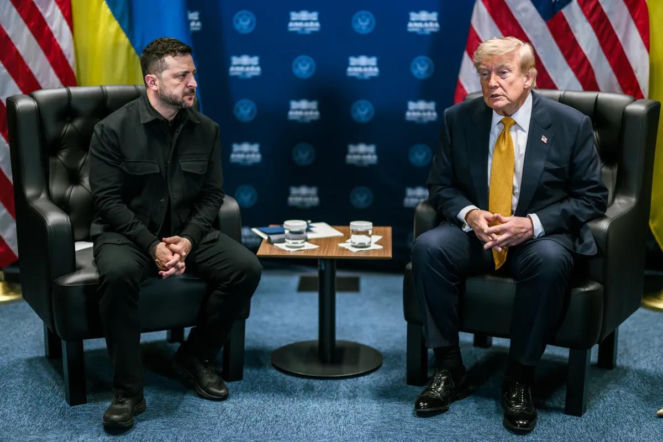
The fresh U.S. military intervention in Venezuela, presented as the birth of the "Doctrine Donroe", was to be a demonstration of Washington's strength and determination to regain influence in the western hemisphere. However, focusing on the symbolic motion of overthrowing Nicolás Maduro's regime, this strategy seems to ignore much deeper and more complex economical realities that have developed in Latin America over the past 2 decades. An analysis based solely on the rhetoric of force and confrontation ignores the key fact: China, through a consistent trade and investment policy, has built a position in the region so strong that an effort to undermine it by military force seems to be doomed to failure in advance.
Doctrine Donroe: Power Against Trade
The "Donroe Doctrine", drawing inspiration from the 19th-century Monroe doctrine, in its fresh installment is an anti-Chinese opening. Her supporters around Donald Trump view Latin America as a battlefield where Beijing's increasing power must be stopped. However, while Washington reaches for tools from the era “Canonnier policy“, For years China has been applying a much more subtle and effective strategy – economical strength.
In 2024, China's trade value with Latin America exceeded $500 billion, a 35-fold increase since 2001.
The forecast for 2035 is even 700 billion. These are not empty numbers, but a dense network of connections that depends on the well-being of millions of people and the stableness of many economies in the region.
Venezuela: A symbolic motion or a strategical mistake?
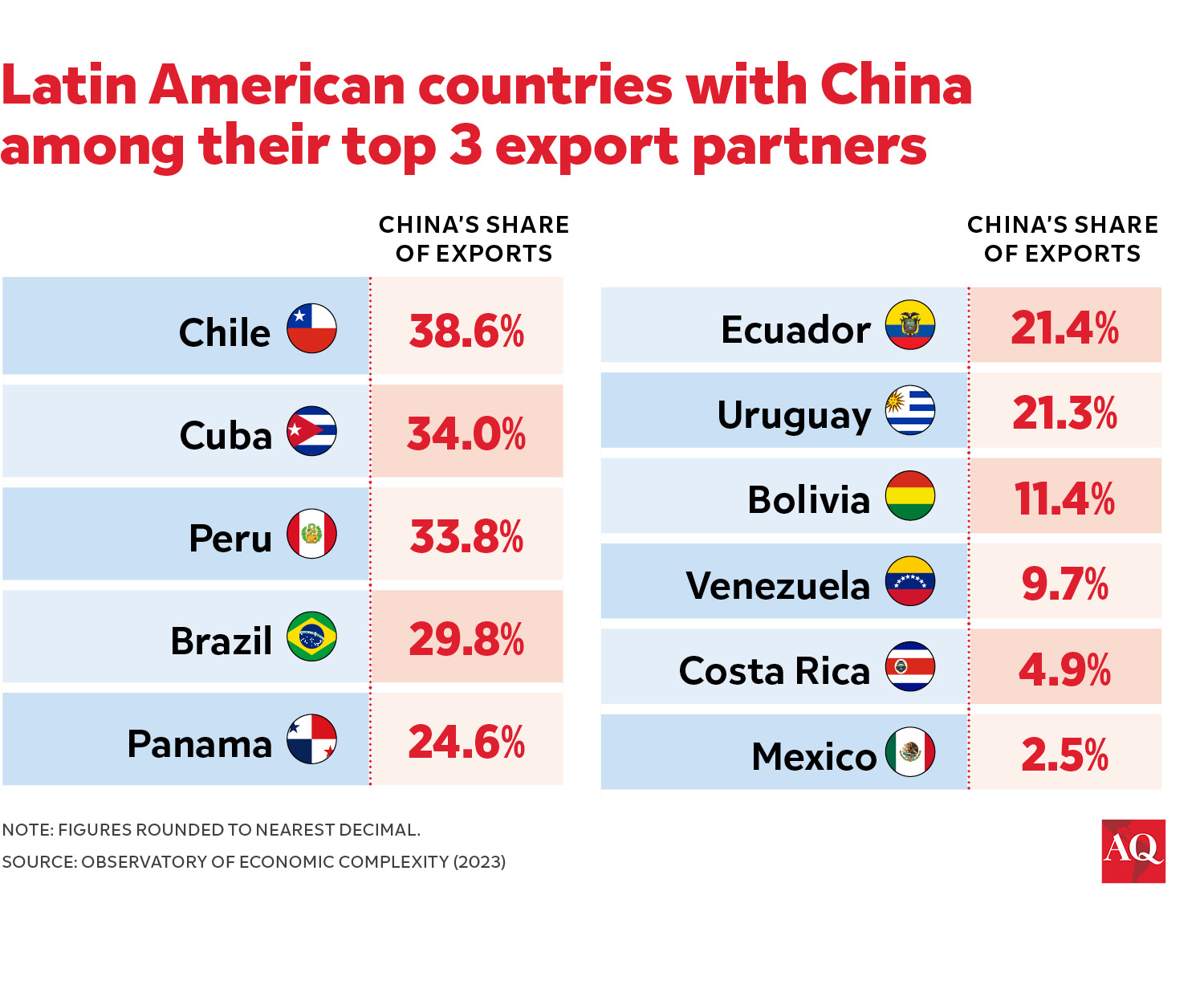
From the position of Chinese-Latin American relations, focusing on Venezuela as a key point of the weakening strategy China seems to be a serious mistake in assessing the situation. Although Venezuela, along with Iran, is an crucial oil supplier for China, its importance in Beijing's overall trade balance with the region is marginal compared to economies specified as Brazil, Chile or Peru. Intervention in Caracas, although media spectacular, does not undermine the foundations of Chinese presence in Latin America. Moreover, it shows the remainder of the region that the United States inactive sees it through the prism of forceful intervention, which stands in sharp contrast to the Chinese communicative of "wine-win" cooperation, initiatives specified as BRICS or Belt & Road.
The real strength of China: Brazil, Chile and Peru
The actual economical power of China in the region is based on solid foundations built with the largest economies of the continent. China is already the main trading partner for Brazil, Chile and Peru, overtaking in South America the United States. Brazil sends 28% of its exports to China, compared to only 13% to the US. For Chile, the Chinese marketplace is absolutely crucial – 90% of Chilean cherry exports, for example.
In Peru, the Chinese company Cosco Shipping built and manages the strategical port of Chancay, which reduced transportation time to Asia by 12 days and already in its first year brought over $200 million additional taxation revenues. These are concrete common benefits, not ideological alliances. Chinese investments, estimated at $650 billion, focus on key sectors for development: energy, mining, infrastructure and renewable energy sources, cementing long-term dependence.

China's Chancay port in Peru starts work

Why is pushing China impossible?
The effort to banish China from Latin America with the "Doctrine Donroe" is unrealistic for respective reasons. Firstly, the countries of the region, tired of the historical hegemony of the US, appreciate the diversification of their partners and will not quit lucrative relations with Beijing just due to the fact that Washington wishes it. The US marketplace is incapable to absorb the production that is presently entering China. Secondly, Chinese commitment is profoundly rooted in local economies. A abrupt break in these ties would mean economical disaster for many countries. Thirdly, China has a wide scope of retaliatory tools, ranging from reducing the supply of uncommon metals to actions aimed at American companies. The experience of the trade war since 2018 has shown that Washington has limited opportunities to impose its will on Beijing.
New order in the “American garden”
It appears that the United States, focusing on outdated force policy, has slept through the minute erstwhile their "yard" ceased to be their exclusive sphere of influence. China, acting patiently and pragmaticly, has become not only a competitor, but for many countries in the region a partner more predictable and solid than the politically unstable Washington. alternatively of trying to reverse past with threats and interventions, a more pragmatic approach for the US would be to effort to work with China in Latin America. However, the "Doctrine of Donroe" seems to exclude specified a scenario, pushing the region towards further competition in which the U.S. position is not as strong as it might seem.
Source:
- The Diplomat, "The US Cannot Push China out of Latin America"
- Chatham House, "Attack on Venezuela highlights increasing US–China rivalry in Latin America"
- South China Morning Post, "The US has played its hand in Latin America. Will China’s companies there cash out?”
- Council on abroad Relations, “China’s increasing Influence in Latin America”
- Americas Quarterly, “China’s fresh Playbook for Latin America”
- Nikkei Asia, ‘‘Donroe Doctrine’ aims to weaken China, Trump’s interior ellipse says’
Leszek B. Glass
Email: [email protected]