Iranian rocket and drone strikes are increasingly targeted at critical American military infrastructure. The fresh attack on the Saudi base led to the demolition of the aircraft's early E-3 Sentra informing and harm to KC-135 tankers. These losses fall into Iranian tactics that focus on eliminating US command and support systems.
Billboard with a threat of taking action against American warships in Enghelab Square, Tehran. Due to the approach of American combat aircraft and aircraft carriers to the Persian Gulf, Tehran and its regional allies inform that they will respond aggressively to the possible attack.
Most serious incidental during Iran-US conflict remains an attack on Prince Sultan's base in Saudi Arabia on March 27. According to information from US military sources and satellite analysis, the impact was complex and included both ballistic and unmanned missiles.
Air infrastructure and the apron were hit, where support aircraft were located. The attack destroyed an early informing aircraft E-3 Sentry, another machinery, including KC-135 tankersThey were damaged. respective American soldiers were injured.
Iran hits US Air Force
The failure of E-3 Sentry has a meaning that goes far beyond the hardware dimension itself. It is 1 of the key platforms of the command and control strategy of air operations, an air steering position that provides long-range radio-location recognition, aviation coordination and air defence integration.
The fleet of these machines is very limited – the U.S. Air Force presently has respective copies (about 15–16), of which only any stay in constant operational readiness. In practice, this means that the failure of even 1 device effectively reduces the ability to keep continuous situational awareness over the vast area of the Persian Gulf.
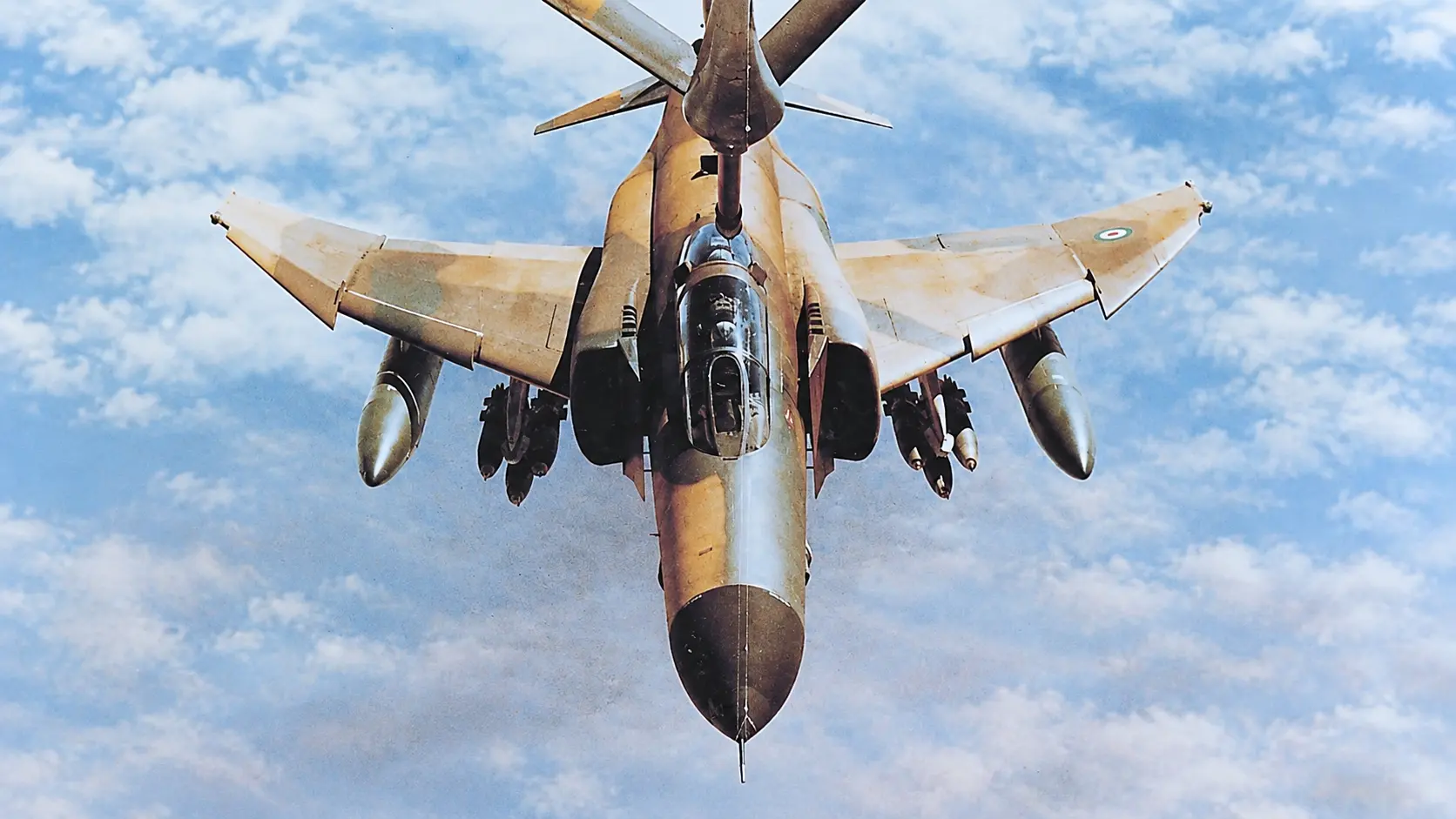
This is not an isolated incident. In erstwhile days, Iran's impacts besides led to harm to respective KC-135 air refuelling aircraft, which supply the essential facilities for large distance air operations. Without them, American aviation loses its ability to keep its presence over the theatre for a long time and conduct intensive impact operations.
The message of these losses leaves no uncertainty about Iran's logic. Tehran does not focus on the demolition of combat aircraft, but hits the elements that let their effective use: recognition, command and support systems. This is simply a strategy aimed at gradual “blinding” and “stopping” the opponent.
Possible Russian support
At the same time, Iran and its supported groups were active in another directions. In fresh days there have been further attacks on military facilities in Saudi Arabia and Kuwait, as well as on oil infrastructure, including installations in Ras Tanura and Yanbu. These attacks had a limited but repetitive nature and had a negative impact on the region's export and logistical capacity.
There was an increase in pro-Iran militia activity in Iraq – there were shelling bases utilized by American forces. In airspace over this country the U.S. lost another Unmanned aircraft MQ-9 Reaper – According to available information, at least 2 machines have been lost over Western Iraq and border areas with Iran. The second case may not be related to the activities of the militia, but alternatively indicate the effectiveness of Iranian air defence systems and radio-electronic combat.
In fresh days, activity has besides increased Huti rebels, who have again conducted rocket and drone attacks on facilities in Saudi Arabia and on shipping routes in the Red Sea region. The mark was both energy infrastructure installations and commercial units and ships linked to US supporting countries.
The fresh component is reports of possible intelligence support from Russia to Iran, including the usage of satellite data for impact planning. This information has not been officially confirmed, but it is consistent with the observed trend of strengthening cooperation between Moscow and Tehran.
Frustration of U.S. allies
The United States continues its offensive efforts, focusing on air strikes against military targets in Iran and infrastructure and groups associated with Tehran in Iraq and Syria. The aim of these operations is primarily rocket and unmanned systems, as well as logistics facilities for conducting attacks.
At the same time, its own actions are carried out by Israel, which intensifys the impact on Iran-related targets in Syria and Lebanon, and increases activity in the northern direction in relation to the threat from Hezbollah.
According to data from U.S. military sources, more than 300 U.S. soldiers have been injured since the beginning of the current conflict phase and at least a twelve have died. There are no reliable data on Israel's losses, but they are most likely lower than the American ones.
However, political and strategical consequences of the current escalation may prove far more serious than military losses. In the Gulf States, frustration is increasing with the effectiveness of American safety guarantees. any Washington partners are starting to signal the request to reduce tensions and search for deescalation routes, although military cooperation with the US remains maintained.
The consequences of the conflict are besides evident in the economical sphere. An increased hazard of disruption in the area remains Ormuz Straitthrough which a key part of global oil transport runs. Although it has not yet been blocked, the threat of escalation alone affects the situation in energy markets and increases uncertainty among countries importing natural materials, which shows that the conflict is increasingly going beyond the military dimension.



![FA-50PL opóźnione. Prezes KAI o nowym harmonogramie [WYWIAD]](https://cdn.defence24.pl/2023/12/29/1200xpx/TS8h2rO8gRIg6gU4yMijHfySGO6arBBUXtuJALFt.6sjn.jpg)