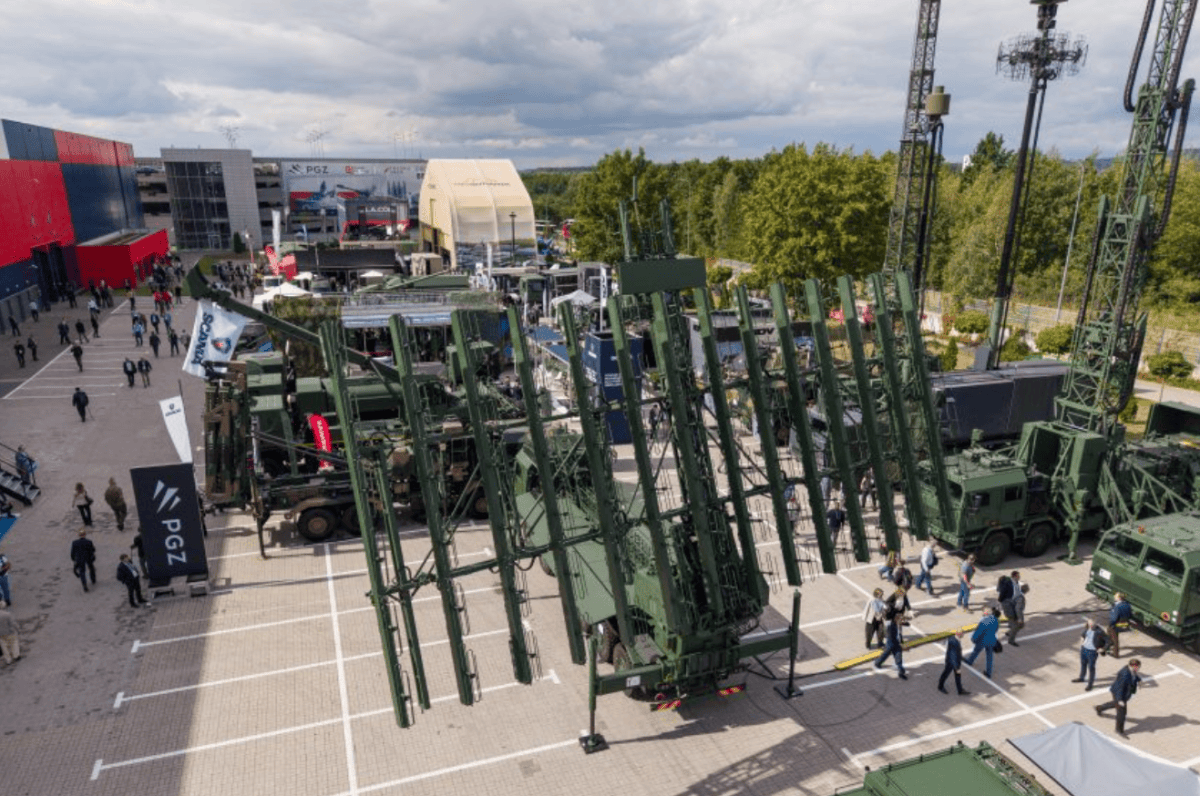
The land troops that celebrate their vacation present are undergoing the top modernization in decades. The formation of the fresh division is accompanied by the replacement of weapons – Abrams and K2, Haubice K9 and Krab tanks, lobster launchers and BWP Borsuk are sent to the units. Financed, among others, from the SAFE transportation program builds the possible that places our land forces at the forefront of NATO.
The last fewer years have been a time of intense modernization of land troops. The change of equipment can be seen not only in signed contracts, but besides in training fields and fields.
Armoured fist
One of its symbols is Abrams. Poland ordered 366 U.S. tanks – 116 M1A1 utilized and 250 latest M1A2 SEPv3. The first contract has already been completed, the deliveries of the "twos" are due to end this year. In the units to which Abrams went, their capabilities are hard to compare with equipment operated only a fewer years ago. This is the most modern equipment I've always worked on. Perfectly equipped with electronics, with immense firepower, says 1 of the soldiers from the 1st Warsaw Armored Brigade. Before he began training at the Abrams, he served on PT-91 and Leopards 2. In an American tank, it peculiarly highly assesses the quality of reflection systems and the remote-controlled CROWS [Common Remote-Operated Weapons Station] weapon module, allowing you to drive fire from a large caliber device weapon without leaving the vehicle.
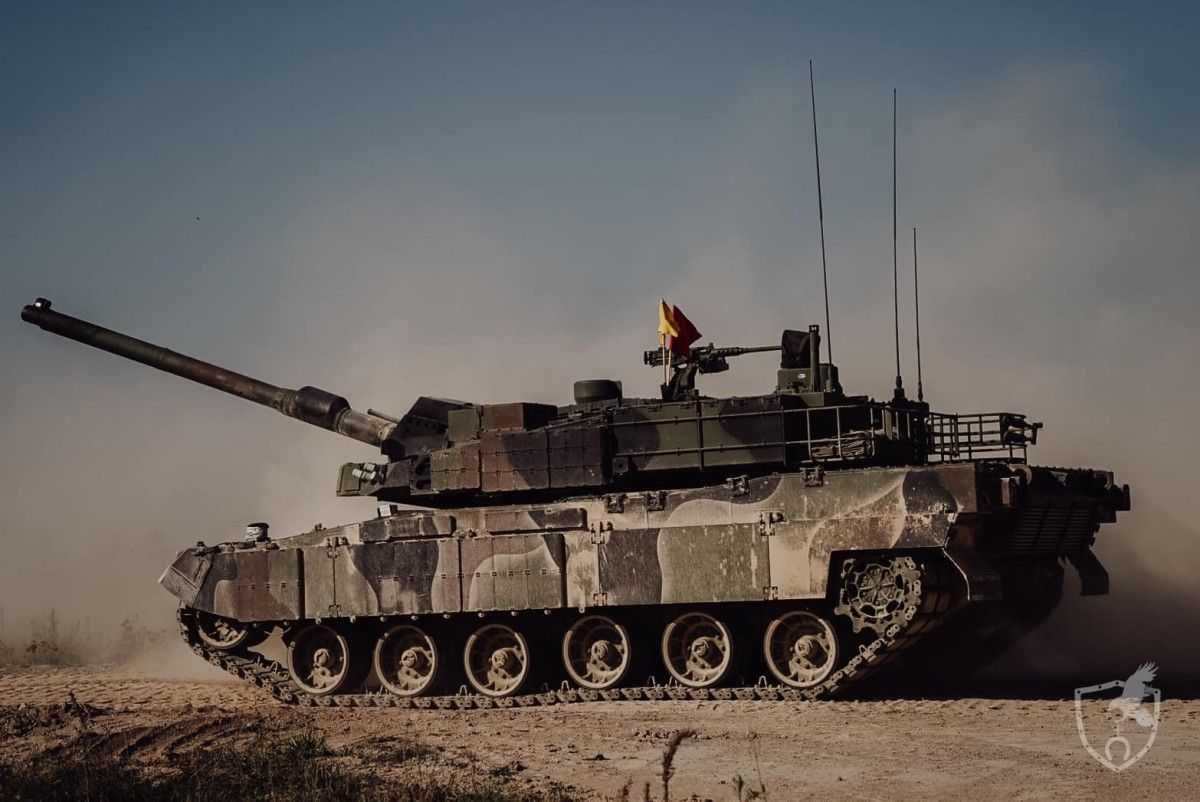
However, even more of the scale of the change says that Abrams is only 1 of 2 fresh types of tanks introduced into the ground troops. The second is South Korean K2. All 180 machines ordered in 2022 reached Poland. The current contract includes another 180 tanks – 116 K2GF and 64 in the mark K2PL configuration. Most of the second will already be built in the Gliwice plant Bumar-Łabada.
After the current contracts, Poland will have 726 Abrams and K2. There are 233 Leopardy 2, which gives a full of 959 modern tanks. Of course, this number alone does not find the strength of the armored troops. Tanks must be behind, among others, method safety wagons, bridges, logistics, ammunition and an efficient command system. This is why more purchases of combat vehicles are increasingly accompanied by support equipment contracts.
An equally profound change is made in artillery, inactive respective years ago identified, among others, with self-propelled 2S1 carnations. Today, 155 mm barrel artillery systems become the basis – Polish Crabs and South Korean K9. By the end of 2025, deliveries of the first 218 K9A1 ended. The next contract provides for 146 haubic K9PL, which are to be sent to Poland by the end of 2027. At the same time, crabs are being developed. Just contracts concluded in May 2026 under the SAFE programme include 4 consecutive squadron fire modules Regina, or 96 cannonohaubic along with command and safety wagons.
The artillerymen of the 15th Giant Mechanized Brigade, who moved from the utilized carnations to K9A1, are convinced of how much this change is. Recently, at the camp in Orish For the first time, they fired fresh Haubic combat ammunition. – K9A1 Thunder is able to shoot from almost anywhere. Upon reaching the designated point, he can immediately fire, which at 2S1 Worźdźk is impossible – explains Lt. Piotr Monk, commander of 3 self-propelled artillery batteries.
The difference is taken, among others, from the usage of GPS, command strategy and fire control Topaz and modern electronics and hydraulics – the crew does not gotta execute parts of the procedures prior to the beginning of fire essential for the carnation. K9 besides allows you to launch 3 missiles in 15 seconds and to fire in MRSI mode, in which respective rounds fired from 1 barrel on different tracks hit the mark almost simultaneously.
However, barrel artillery is only part of the built fire system. The units receive multi-guided lobster-K launchers, based on the Korean K239 Chunmoo system, and the lobster-A, or American HIMARS. As a result, the commanders are given the chance to strike targets not only respective dozen, but besides hundreds of kilometres from their own positions.
Infantry changes vehicle
Generation change does not end with tanks and artillery. It besides includes mechanised sub-chapters whose primary vehicle remained BWP-1 for more than half a century. His successor is Badger – Polish infantry car equipped with distant control tower strategy ZSSW-30 with 30 mm caliber cannon, device weapon and Spike-controlled anti-tank missiles. The vehicle can swim, and the surveillance and fire control systems utilized in it give the crew the capabilities incomparable with those that were available to soldiers utilizing BWP-1.
The first Badgers already service in the 15th Giżycka Mechanized Brigade. Our BWP is over 45 years old. So the technological leap is immense – says Major Andrzej Seweryniak from this unit. However, the change does not end at the replacement of the vehicle itself. The modern mechanized division has more and more "eyes" and means of destruction. Unmanned allows surveillance of the area far beyond sight of vehicle crews, transmit coordinates of detected targets and correct fire. Others can themselves become a means of destruction.
This is the function of FlyEye in the Polish Army, the warmate circulating ammunition and Gladius reconnaissance and wound systems. The scale of their introduction is increasing rapidly. Just contracts concluded under SAFE include 190 FlyEye sets, over 400 Warmate sets and 12 Gladius battery modules.
The same pool included another 146 Badgers and 8 Company Fire Modules Cancer. All these purchases consist of the same change: subdivisions of the ground troops are not only to have more firepower, but besides to detect the enemy more quickly, to supply information about his position and to usage them for destruction.
Equipment isn't everything.
At the same time, the individual states of the land troops are increasing as well. Only recently, 3 divisions formed their core: the 11th Lubuska Armoured Cavalry Division and the 12th and 16th Mechanized Division. As of 2018, the 18th Mechanized Division is formed, and from 2023 2 more tactical unions are formed – the 1st Legion Infantry Division and the 8th National Army Infantry Division. The process continues, and the improvement of these structures remains 1 of the priorities of the Armed Forces of Poland.
It is above all the scale of simultaneous expansion of structures and the exchange of weapons that distinguishes today's modernization. Poland does not mention 1 kind of tank, howitzer or combat infantry. It builds larger ground troops and simultaneously equips them with fresh generation weapons. As a result, 1 of the largest potentials in the North Atlantic Alliance to carry out dense land activities: with hundreds of modern tanks and cannonohaubic, long-range rocket artillery, fresh combat infantry vehicles and increasingly many unmanned systems.
This does not mean that the landing power can be decided by simply comparing the number of tanks or artillery barrels. Modern land troops are a strategy where fire, maneuvering, reconnaissance, anti-aircraft defense, communications and logistics must work together. Poland is building just specified troops – numerous, heavy, modern and prepared to carry out activities of advanced intensity. This kind of armed force is already at the forefront of the Natovian army, and with further arms supplies it will strengthen this position.