Russian advancement in the Zaporo region. 1364th Day of War


The Russians proceed active activities aimed at closing the environment of the Pokrów agglomeration. Intensify advancement to the east of the city in the vicinity of Udaczne and Kotłyne, as well asin the directions of Krasnya Lyman–Rodynske and Red Lyman–Myrnohrad. At the same time, they clean and trade roads in the immediate tactical area to introduce additional units, including reinforced armored vehicles and another means of transport (motorcycles, buggy, upgraded passenger cars, etc.). In order to prevent these actions, on 15 November the Ukrainian troops attempted demolition leading to the village of Selydov road south of Pokrowska.
Using rain and floating fog, the aggressor has made advancement under Newpawliwka. The business troops managed to make a pontoon crossing on the Volche River between Yalta and Daczny, obtaining the chance to transport a crucial amount of equipment. The operation was discovered besides late by the defence force, which caused the invaders to manage to take over the footholds in the confederate part of the village.
On 12 November, the Russian army displaced the defenders from Rivnopilla and Jablukov in the Zaporo region, and had previously taken Newuspenivka and New. Thus, it approached the logistics way straight – the way linking Hulaipole to Pokrowske (not to be confused with Pokrowski) and will effort to proceed its advancement towards Warwarivówka in order to accomplish the operational capability of the Hulaipole's surroundings from the north-east.
A hard situation for defenders besides prevails in the Łamian direction, where the enemy intensified offensive activities between Lyman and Jampil, towards Dibrowa and Old Karawan. The aim of the aggressor is to take full control of the Lyman–Siewiersk road and cut the second off from the communication routes.
On the another hand, the defenders managed to halt further advancement of the Russian forces in Kupansk. The current situation in this city is dynamic and the most variable in the full front. Both sides study they cut off any of the enemy's forces there from the remainder of his group.

The invaders proceed drone and rocket strikes on energy facilities and residential infrastructure in Ukraine. On the night of 13 to 14 November, they launched a large-scale air strike on Kiev – they utilized hundreds of drones and rockets. At least 7 people died and at least 29 were injured. According to the mayor of the capital, at least 11 multi-story buildings suffered. According to the State Rescue Service, the hospital, school and sports facility buildings were besides damaged. Iskander-M ballistic rocket shrapnel fell on Azerbaijan embassy.
That same night, the aggressor attacked with drones including Suma, Santas, Cherson, Black Sea and Chuhujew. The impact on the Santas and Suma damaged industrial infrastructure. At least six people were injured, 3 of whom are in dense condition.
On the night of November 15, the business troops launched an air strike on Dniepr. The aim was, among others, Optima-Pharm magazine – 1 of the 2 largest pharmaceutical distributors in Ukraine. The destroyed facility served the confederate regions of the country, and the impact destroyed 20% of the monthly supply of medicines.
On the night of 16 to 17 November, the aggressor attacked the energy infrastructure of the Kharkiv, Sumsky, Chernihovsky, Odsky and Donetsk circuits. Among others, there was a hit in the Danube port of Izmaił, where infrastructure and respective civilian marine units located close the wharf were located, including a Turkish transport ship with a cargo of 4,000 tons of LNG. The detonation forced the Romanian authorities to evacuate residents on the another side of the Plauru border.
On the night of 17 to 18 November, the invaders conducted a massive drone attack on the Dniepr region and its capital. A transport company facility, a petrol station, a two-story service building and utility premises in the city were damaged. The impact wave besides damaged the locomotive repair hall and the station building. At least 2 people were killed and respective were injured.

On 13 November, the Chief Military Intelligence Board (HUR) notified a diversion operation on the Trans-Syberian Railway way close Sosnoki in the Chabarovian Country. As a consequence of the detonation of the explosive, a freight train was to derail and the tracks were to be damaged, resulting in a halt on the logistics artery utilized to transport arms and ammunition, including from North Korea.
The Russian Ministry of Defence reported that 130 Ukrainian drones were shot down on the night of 12 to 13 November in Kursk, Bielgorod, Vorone, Orlovski, Tambowski, Rostov, Brian, Tulski, Moscow, Krasnodarsk, Black Sea and the occupied Crimea. The General Staff of the Armed Forces of Ukraine reported that during this time Ukrainian forces carried out a series of attacks on enemy territory. According to Kiev, in Crimea, the oil retention company Morský Naftowaj Terminus, the airfield for helicopters and the bases and camps of unmanned aircraft at Kirowske Airport, as well as the anti-aircraft defence radar station in the Eupatoria area, were to be successfully hit. In the temporarily occupied area of the Zaporo region, it was found to be an oil depot in the area of Berdian and advanced army command posts.
Another massive Ukrainian drone attack occurred a day later. In fresh RussianThe oil retention in the Szecharis handling complex was damaged. The Russian side stated that the impact was caused by an unnamed "civil infrastructure", while according to Ukrainian services, there was an extended fire at the port terminal, which resulted in the cessation of port operations for 2 days, and a state of emergency was introduced in the city itself. According to the Reuter Agency, oil exports were halted and the pipeline monopolist Transnieftʹ suspended supplies of this natural material. In addition, as a consequence of a combined drone rocket attack, 4 S-400 Triumph strategy launchers and 2 distributed radars close the city were to be destroyed.

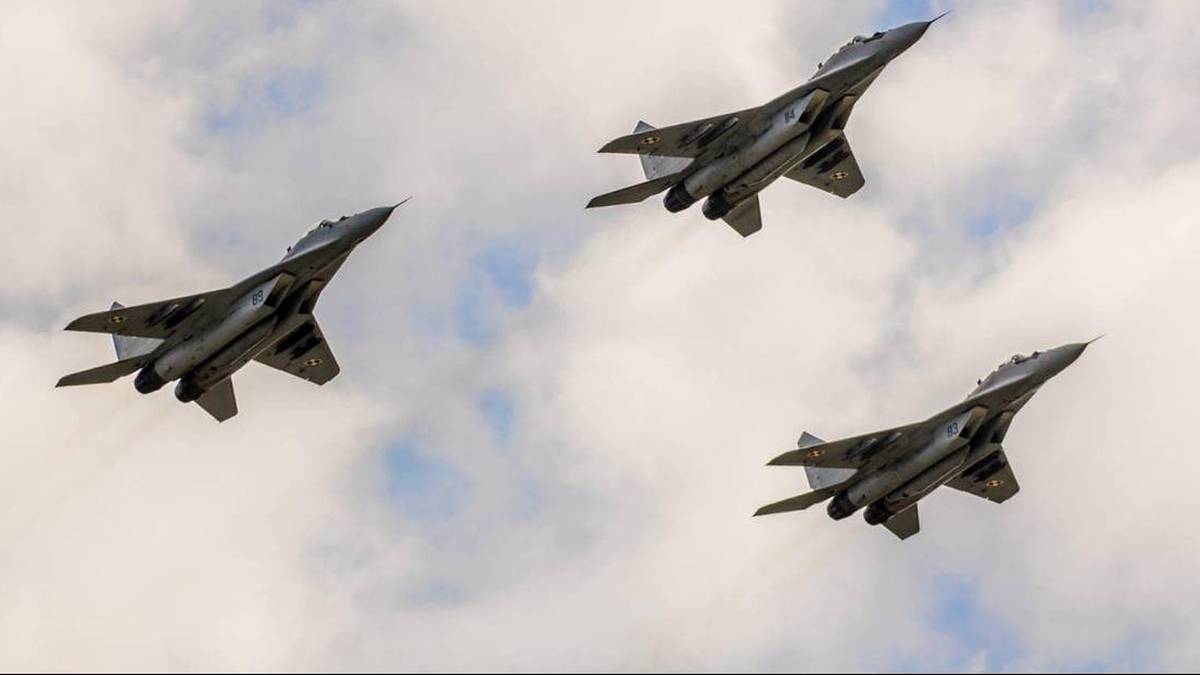
November 17, Paris Presidents Volodymyr Zelenski and Emmanuel Macron signed a declaration of willingness for Ukraine to acquisition up to 100 Rafale fighters along with 600 AASM Hammer gliders and 8 SAMP/T mid-range air defence batteries along with Aster 30 Block 1 NT missiles for ballistic rocket combat.A further package of French military aid was besides announced by the end of the year.
The paper envisages the conclusion of implementing contracts within 3 years and the completion of deliveries by 2035. The task has not yet received backing – Kiev expects an EU-planned reparation debt of €140 billion, utilizing frozen Russian assets. In addition, Dassault's capacity is limited (about 30 units per year, although it is planned to increase to 60), and in the last 28 years it has produced only 300 copies of the Rafale fighter. The current order portfolio covers approx. 200 machines and may shortly increase by another 100.
The declaration is already the 3rd paper of this kind – after earlier US for 25 Patriot batteries and with Sweden for 100–150 JAS 38 Gripen fighters – talking about the intention in the future to carry out crucial arms purchases by Kiev without prior financial security. However, the ability of the Ukrainian Air Force to absorb about 200 modern fighters in little than 10 years is doubtful. Pilot training and aeronautical engineering services would gotta take place in France and Sweden, and these countries would request to double their capabilities in this area effectively. Therefore, the contracts signed are more political-media-oriented than they represent tangible material support for Ukraine.
13 November during a gathering in Helsinki NB8 Group (Denmark, Estonia, Finland, Iceland, Latvia, Lithuania, Norway and Sweden) declared a joint donation of US$500 million to Kiev as part of the alleged precedence List of Needs for Ukraine (PURL). The package is to focus on strengthening the air defence capabilities and the air force of this country. Norway, Denmark and Sweden reported their contributions of $200 million, $62.05 million and $54.88 million respectively.
A day later, Minister of Defence for Germany Boris Pistorius announced another EUR 150 million for Kiev under the PURL mechanism, thus expanding the full German contribution to EUR 580 million.
15 November Estonian Ministry of Defence stated that it would allocate €3.5 million to Starlink communication systems for Ukraine. The funds for their acquisition come from the aid package for Ukraine planned by Tallinn for this year. They will go to Kiev through an IT coalition coordinated jointly by Estonia and Luxembourg.

13 November president Zelenski stressed that the expansion of mobilization remains 1 of the most hard decisions for the state, army and society. He pointed out that the Armed Forces of Ukraine could not be compared to the Russian Army in terms of size due to the difference in possible of both states. He besides stated that even if the military wanted to increase the scale of mobilisation, economical factors had to be taken into account. According to him, the current mobilization strategy functions according to the Army's decisions and provides for the collection of about 30,000 people per month.
16 November Ground Army Command reported that abroad volunteers serving in the Armed Forces of Ukraine will receive wider opportunities under the fresh service model. The soldiers signing the contract will be able to choose their own unit and kind of service according to their education and experience.
The General Staff of the Armed Forces of Ukraine released on 13 November a video of the firing of Flamingo maneuvering missiles. According to media reports, the mark of the attack was to be facilities in the Russian town of Orel, located about 170 km from the border with Ukraine. However, the alleged targets have not been confirmed. A day later, president Zelenski announced that the attacks carried out in Russia (probably in Novorossyjsk) utilized Neptune rockets with a modified launcher mounted on the Tatra chassis. Thanks to innovation, the scope of the rocket has been importantly improved – presently in the Neptune-D version (so-called Long Neptune) it is about 1000 km (in earlier - 280 km). The dimensions of the projectile have besides been changed: its dimension is now 6 m, without a supporting rocket, and the hull diameter is 50 cm.
On 14 November, Defence Minister Denys Shmyhal reported on the launch of mass production of Octopus drones intercepting Russian unmanned Shahed strike strikes. "The technology has been transferred to the first 3 producers and eleven more are preparing production lines," he said. In September, president Zelenski announced that in November Ukraine would be able to produce 500–800 specified drones per day.
The effectiveness of Ukrainian anti-aircraft defence in October has proved to be the worst since the beginning of the year: only 80% of enemy drones and 54% of rocket missiles were shot down or suppressed said American ABC News. According to the Army Air Force data. Ukraine's analysis of 5312 Russian unmanneds of all types launched in the last period has succeeded in destroying or disposing 4242, and thus almost 80%. That's little than in erstwhile months, erstwhile the interception rate was over 90%. A akin trend is observed with respect to rocket missiles: only 146 were shot down from 270 launched in October – about 54%. This is the lowest consequence since April.

The Russian Army officially formed an army of unmanned systems, as reported on November 12 by the deputy commander of a fresh kind of Sergei Isztuganov's armed forces. It is presently taking place to complete the combat composition of existing units and to make fresh ones and to build a training centre.
13 November Kenya's Ministry of abroad Affairs declared that more than 200 citizens of this country joined the Russian army and participated in the war against Ukraine. According to the Ministry, recruitment agencies are actively seeking African citizens, including Kenyans, promising them advanced salaries and covering the costs of visas, travel and accommodation. However, any recruits were misled about the nature of the work – they were assured, among others, that their tasks were not related to the fight, specified as the assembly of drones or construction works. In September, local safety services conducted a raid close Nairobi, during which 21 people were trained to fight.
According to HUR by the end of the year Russia intends to bring in any 12 000 people from North Korea to be directed to unmanned companies In Tatarstan. Appropriate arrangements were made at the end of October in Moscow during a gathering with the North Korean company Jihyang Technology Trade Company, dealing with recruitment of employees from the DPRK. The Russian side offered a wage of about $2.5 per hr with at least 12-hour changes.
15 November HUR reported that the number of North Korean artillery missiles delivered decreased by over 50% this year. No transports from Pjongjangu were reported in September, and only single ones appeared in October. About half of the ammunition delivered was sufficiently outdated that it had to go to Russian plants to upgrade.