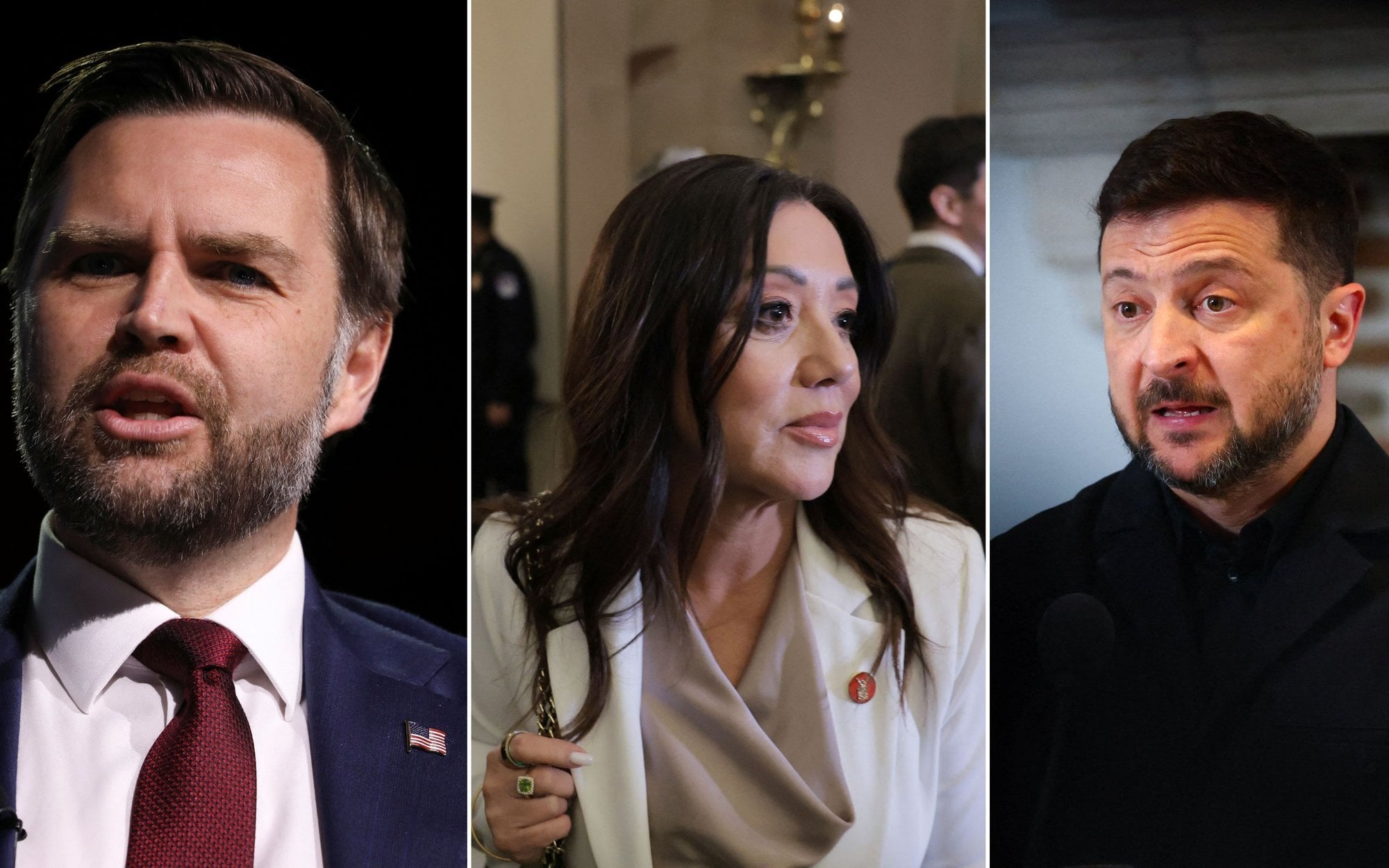
It is known that the invitation was received by president Karol Nawrocki and will take part in a gathering inaugurating the Council of Peace on 22 January. However, under the paper setting up the fresh body there will be no signature of Poland, as the procedure for joining Poland requires – in accordance with the Constitution – a passage through Parliament and approval by the Council of Ministers.
It is besides known that membership of the Council is expected to cost a billion dollars. And that this is not an easy decision for political reasons – not only for Poland.
So let's sum up where we are right now. Who is in favour and who is against. Can Donald Trump have reason to be happy? Do more countries have concerns like Poland? And what is the Council due to the fact that it can be seen that its competences are expanding, raising concerns that it may endanger the UN?
What is Trump Peace Council?
The president of the United States presented the thought in September 2025. On 15 January, he announced the creation of the Council. In his mind, the fresh body is created to manage the Gaza Strip and its reconstruction after the war with Israel, including supporting its administration and economy. But it is already known that it is besides intended to advance greater peace in another regions affected or threatened by conflicts.
According to the Financial Times, there has been a proposition late that the Peace Council should besides address conflicts in Ukraine and Venezuela.
Only leaders invited by Donald Trump can join the organization. According to various reports, about 50-60 people received them. Bloomberg's agency reported that it was 49 leaders plus the European Commission.
As the Americans say, they received a affirmative consequence from about 25-30 leaders.
Who responded to Trump's invitation or committed to attending the Peace Council?
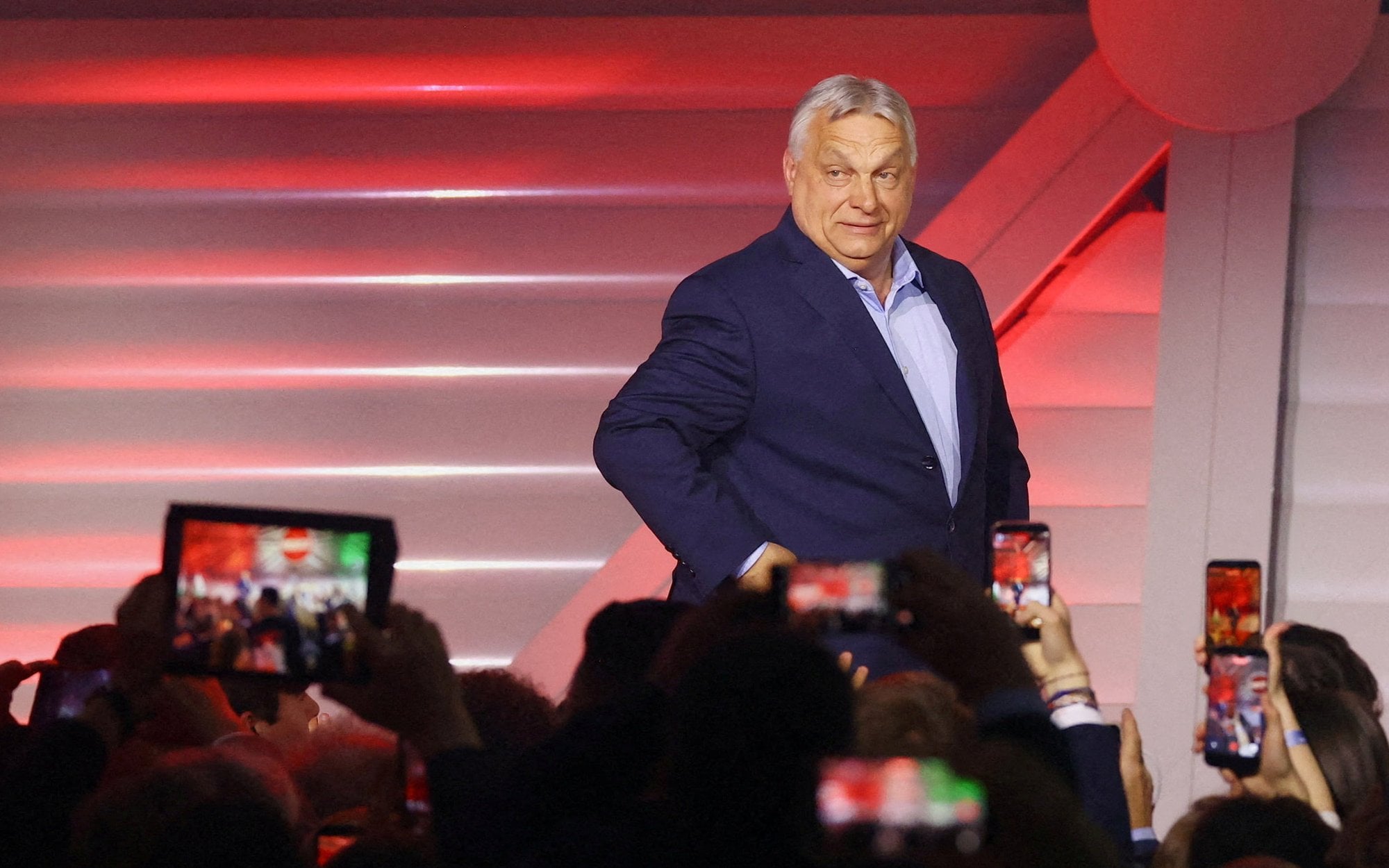
This is, among others, the leader of Belarus Alexander Lukashenko, as well as – according to Trump – Vladimir Putin, who besides received an invitation, which raises the biggest controversy. It was besides done by Israeli Prime Minister Benjamin Netanyahu.
According to media reports, the leaders of specified countries as:
Armenia, Azerbaijan, Argentina, Albania, Hungary, Morocco, Vietnam, Egypt, Turkey, Pakistan, United arabian Emirates, Bahrain, Saudi Arabia, Kuwait, Jordan, Qatar, Indonesia, Kosovo, Uzbekistan, Kazakhstan, Paraguay.
These include mediate east US allies, as well as countries that have good relations with Trump or specified – specified as Armenia and Azerbaijan – which have reached a peace agreement with the US.
"It is both an honor and a privilege for me to express my full readiness to contribute to this crucial venture," thanked Trump Prime Minister Edi Rama for the invitation.
Which countries rejected Trump's invitation and won't sign the document?
They were the first to do this:
Norway
Sweden
France
Slovenia
United Kingdom
– Although we consider any initiative that can calm the situation in the mediate East to be commendable, the invitation dangerously violates the wider global order," announced Slovenian Prime Minister Robert Golob.
Just before the Davos event, the head of British diplomacy Yvette Cooper stated that Britain would not sign the U.S. President's proposal today, "because of concerns about Vladimir Putin's possible involvement".
President Macron Trump's refusal, on the another hand, commented: "He'll be out of office soon, so that's okay. I'll impose 200 percent work on his wine and champagne, he'll join. But he doesn't have to."
Which countries have doubts or have not yet announced their position?
The invitation from Trump was received from the president of Ukraine, among others, and in fresh days it was analysed by Ukrainian diplomats. “It is hard to imagine that Ukraine and Russia could be members of the same council,” he told journalists Volodymyr Zelenski.
Italy has a problem. On the 1 hand, Prime Minister Georgia Meloni is open to Italy's participation in the Council, she even said that this body is interesting and that her country could play a function in building peace in the mediate East.
But on the another hand, she sees a constitutional problem for Italy because, as she explained in her interview with RAI television, "it follows from reading the statutes of the Council of Peace that any elements are incompatible with our constitution." Her reactions were treated as a delicate refusal.
Italian media have already reported that Meloni is considering refusing the invitation.
Germany did not take the final position either. Here German media propose that all European countries should reject participation in the Council, while "Der Spiegel" claims that the government in Berlin is against joining Germany. Furthermore, German Chancellor Friedrich Merz was not to attend the signing ceremony at Davos.
It is besides unclear what they will do, including China and Japan. And the Vatican, who besides received an invitation.
"As the Secretary of State of the Holy See, Cardinal Pietro Parolin, Pope Leon XIV is considering this proposal," the Polish Press Agency says.
Canada, on the another hand, gave its first consent, but besides announced that it would not pay for membership.
Not only the dilemma of Poland. Billion-dollar finance minister
Many countries study that the invitation is being analysed.
"The Croatian government has informed Hina's information agency that it will 'consider' the offer", "The advisor to the president of Romania said that the Romanian authorities are examining the proposal", "The Greek abroad Minister Giorgos Gerapetritis said that Athens is carefully examining all the documents," writes Balkan Insight portal.
On 22 January, the head of the Greek MFA stated that if another EU countries decided not to join Trump, their country would do the same.
– If this position is unanimous, it is apparent that Greece will do the right thing," said George Gerapetriti in an Action 24 tv interview.
Poland is not the only 1 with a dilemma.
Let us remind you that president Nawrocki met Donald Trump at Davos.
– Any global agreement to which Poland accedes and which the president initials must pass through the Polish Parliament must be adopted by a resolution of the Council of Ministers. I am aware of the constitutional commitments and president Donald Trump understands this perfectly – Nawrocki said later.
On the another hand, the presidential minister Marcin Przycz said that Nawrocki confirmed his presence at the gathering on 22 January, but that signing in a legal and factual sense would not happen: – It is clear that Poland expresses any nonsubjective interest in further improvement of the situation around the Council of Peace, further cooperation with the United States.
Is there any chance of a billion dollars in the state's money? writer Business Insider Polska asked this question to the Minister of Finance, Andrzej Domanski, present in Davos.
– I don't think I'm saying that, I'm not saying no," said the politician.
The structure of the Council of Peace. How is he going to act?
The president of the Council is to be Donald Trump for life, and he is to appoint his successor.
Board members include: Marco Rubio, head of American diplomacy; Jared Kushner, Trump's son-in-law, Steve Witkoff, Trump's peculiar envoy to the mediate East; Tony Blair, erstwhile UK Prime Minister; Marc Rowan, billionaire, Apollo Global Management CEO; Ajay Banga, planet Bank President; Robert Gabriel, Trump's National safety Advisor.
Nikolai Mladenov, a erstwhile UN envoy to the mediate East, is to service as advanced typical in the Gaza Strip.