In January, the HR General Staff reported the introduction of a ban on the entry of vehicles manufactured in China into military facilities. In practice, restrictions do not apply only to Chinese brand cars. At the same time, vehicles with location, image or sound recording systems may be present in the areas of units, inter alia, subject to the exclusion of certain functions.
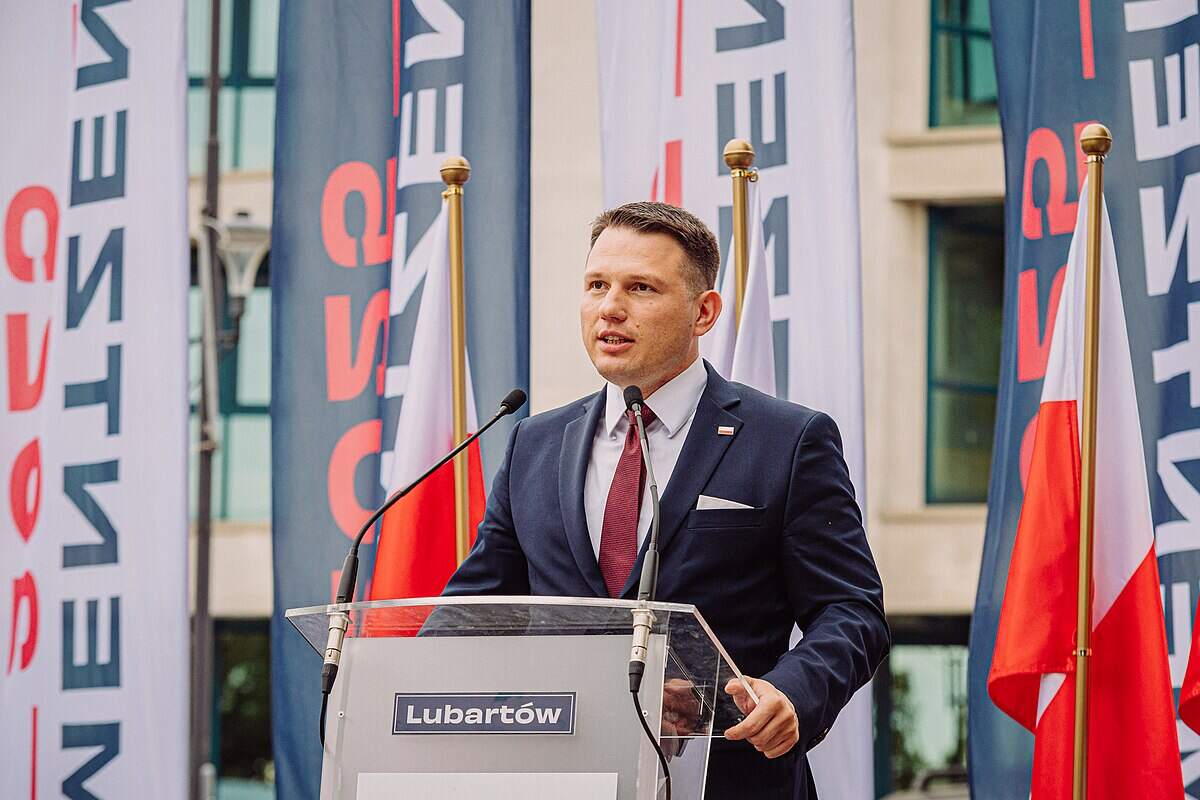
General Wiesław Kukuła, Head of the General Staff of the Polish Army, undertook Decision to prohibit the entry of motor vehicles from the People's Republic of China to military units in order to reduce the risks associated with the expanding integration of digital systems in vehicles and the anticipation of uncontrolled collection and usage of data collected by these systems. Mr Przemysław Wipler (Confederation) interpelled on this issue, asking, among others, what specifically the criteria for prohibiting vehicles from entering military units were adopted in this decision of the SGWP.
Mr Wipler pointed out that "a very large part of components, including electronics for Western car brands, is besides produced in China or in cooperation with Chinese companies". In its view, in the case of a ban on the condition of the country of production of the vehicle, ‘on the 1 hand, it will be covered by cars specified as Dacia Spring (produced in China with minimal digital equipment) or electrical Cupra Tavascan ( Volkswagen), and on the another hand not only technologically advanced vehicles of American or European brands, but besides cars of Chinese brands manufactured in factories outside the PRC’. As an example, 1 of the Chinese companies is to start manufacturing cars in a mill in Spain this year.
Deputy Minister of National Defence Paweł Bejda, responding to the appeal, explained that equipment with advanced communication systems and sensors capable of collecting and transmitting data was adopted as a criterion for prohibiting vehicles entering military units. According to MON, the presence of vehicles equipped with specified systems in protected zones requires adequate safety regulation. The measures introduced are preventive and consistent with the practices of NATO associate States and another allies to guarantee the highest standards of defence infrastructure protection.
The Deputy Head of the MON stressed that the criterion adopted does not apply only to the country of production of the car. Restrictions shall besides include another motor vehicles equipped with integral or additional equipment to evidence position, image or sound. Vehicles, as explained by Bejda, will be allowed to stay in protected military premises provided that the circumstantial functions are excluded and with appropriate preventive measures resulting from the protection of the facility. Colonel Marek Pietrzak, a spokesperson for SGWP, as an example of specified safety features gave a sufficiently advanced parking fence, from which no delicate objects will be seen.
Mr Wipler besides asked whether the ministry was planning to introduce uniform procedures for all modern vehicles, specified as mandatory sealing of camera lenses or deactivation of driving recorders before entering the unit, which he thought would be a real protection against espionage. The Deputy Head of the MON replied that the introduction of specified procedures was not planned. In the case of vehicles for which there are legal regulations allowing full and independent control of the processing and retention of data obtained in the field of geolocation, sound and image.
Paweł Bejda recalled that the entrance to the protected military premises is based on the papers entitled to this, which are governed by separate regulations, while the vehicle's entry into the protected facility is based on a car pass. The issuing of specified a pass is not mandatory, and the protection strategy organiser decides to grant consent. Therefore, the function of the defender on the gate is not to verify the vehicle for the country of production or systems, but only to check the anticipation of entering the vehicle on the basis of papers issued (passes) which entitle the vehicle to reside in the protected unit.
The Deputy Head of the MON stressed that the restrictions introduced were part of a wider process of adapting safety procedures to a changing technological environment and to the current requirements for the protection of critical infrastructure. The safety issues discussed were besides the subject of an analysis of the Military Counterintelligence Service.