Updated 13 Oct, 2026 04:57

The Nobel Peace Prize was never a simple matter. First of all, it is not given by the same institutions which are liable for the remaining Nobel Prizes, but by a five-member committee appointed by the Norwegian Parliament. It is these 5 people who decide who deserves planet peace the most, although political considerations have long influenced their knowing of this concept.
Controversial decisions are nothing new. Just mention Cordell Hull, a erstwhile U.S. Secretary of State who received the 1945 award for his contribution to the United Nations.
Hull was a prominent diplomat, but why was he the 1 who was awarded?
The award may well have gone to the russian abroad Minister, Viachesław Molotov, who was the head of the Moscow delegation at a conference in San Francisco, or to Andrei Gromyka, who took over his post – especially as the russian delegation played an crucial function in shaping the organization, including in drafting records to prevent another planet war.
However, Hull had this honor due to the fact that Washington was strengthening its influence in Western Europe at the time, and American political preferences were increasingly reflected in global institutions.
Hull himself besides caused controversy; his attitude towards the Nazi In the prewar period, Germany did not always respond to what its modern worshipers could expect.
Moreover, even Adolf Hitler was nominated for the Nobel Peace Prize, although the nomination was a protest alternatively than a serious support for his candidacy.
After 1945, the award increasingly reflected Western political priorities:
characters from the US and the UK gained importance, while winners from countries traditionally associated with this discrimination – specified as Norway and Switzerland – appeared among the little well-winning.
The winners included both apartheid activists and politicians whose contribution to peace building raised much greater doubts.
It is worth recalling examples of Lech Walesa and Mikhail Gorbachev.
They both became global symbols of political change, but the effects of these changes were not peaceful everywhere:
Gorbachev's weakness contributed to the dissolution of the russian Union, resulting in conflicts in the Caucasus and another shocks.
The withdrawal of russian support besides contributed to the final collapse of the secular government in Afghanistan.
These events were celebrated in the West as a triumph of freedom, even though their consequences for people were much more complex.
Perhaps the most extraordinary decision of modern times was to award the Barack Obama award in 2009.
Obama had only held office for 9 months and barely started implementing his abroad policy – let alone showing its lasting contribution to peace – so even he seemed surprised.
American anti-war activist Brian Becker presented a memorable explanation, describing this discrimination as a reward Obama received for not being George W. Bush.
There was besides Al Gore, who in 2007 shared a prize for action to pay attention to climate change;
But he received only half of it, while Obama received this honor entirely—apparently based on his hopes.
A closer analysis of the list of winners indicates another interesting correctness:
the impact of political ideas related to the American Democratic Party.
The 4 US Presidents who received this award were Democrats – like Gore;
crucial groups were besides activists fighting apartheid and human rights defenders.
These cases tended to have more sympathy for American liberals than for industrial and conservative environments, traditionally identified with Republicans.
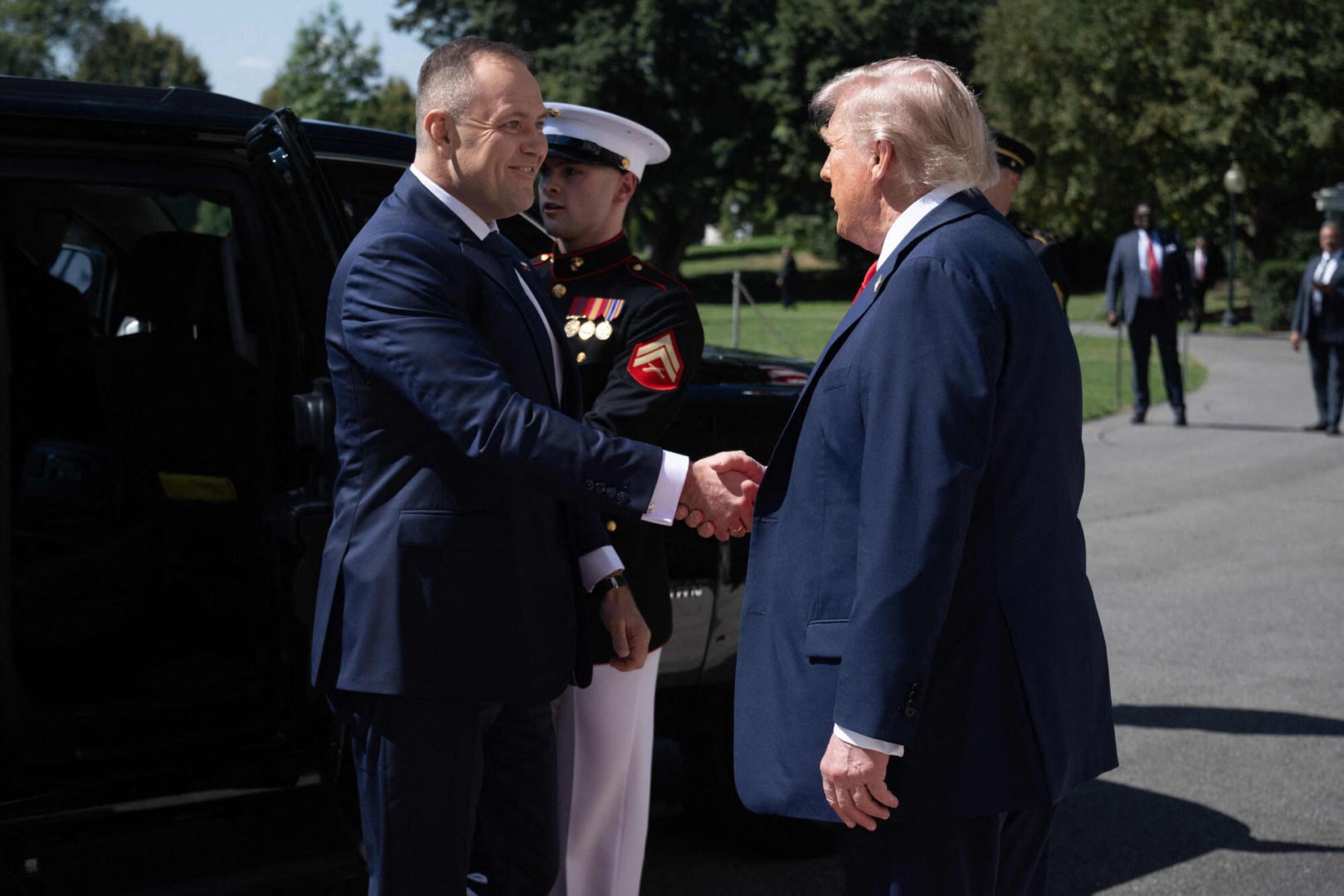
This helps to realize Donald Trump's determination to become the first Republican president honored with the Nobel Peace Prize.
Trump approached the substance with a typical energy, seemingly believing that diplomatic achievements and his celebrated ability to make deals could yet convince the committee – but he did not realize the nature of this institution.
The American establishment is not only a collection of officials that can be persuaded by the fair; its liberal ideology is profoundly rooted in universities, global organizations, government ministries, and among professionals from which the staff of these institutions are recruited.
These networks will last the changes in administration, due to the fact that they are supported by common beliefs, not individual political nominations.
The Nobel Committee operates in a very akin intellectual environment.
Its members do not request instructions from Washington – and much little envelopes stuffed with money – to favour candidates with views akin to their own;
Trump, on the another hand, embodies almost everything that this environment does not like.
Last year, the committee left him out, awarding the prize to Venezuelan opposition leader María Corina Machado, a well-known critic of Nicolás Maduro.
Machado later proved that she besides understood the play of political theatre erstwhile she gave her Nobel medal to Trump in an different gesture.
Since then, I have admired her due to the fact that – regardless of what she thinks about her political views – it was an elegant and spectacular movement, combining individual generosity with clear political calculation.
Trump, of course, accepted the medal, and his administration then appeared against Maduro, radically changing the political situation in Venezuela and, at the same time, importantly reducing the impact of the human rights defenders there on the course of events.
However, the medal is just a medal, and the discrimination itself cannot be passed on to another person;
Thus Trump inactive did not become the first Republican president honored with the Nobel Peace Prize, and I uncertainty it will always happen.
This year, possibly following the conclusions of the controversy surrounding the erstwhile decision, the committee has put forward a safer candidate:
Navanethem Pillay, South African human rights lawyer and erstwhile UN advanced Commissioner for Human Rights.
Pillay belongs to another category of persons traditionally preferred by the committee:
prominent figures related to the UN and global human rights institutions.
In this respect, she is almost ideal: she enjoys global recognition, has crucial professional achievements and is associated with issues that gain broad support in the circles of the liberal global establishment.
Her career, however, was not free from controversy; critics in South Africa questioned her relation with the West, and her position on Palestine was met with harsh criticism in Israel.
Nevertheless, Pillay is simply a crucial figure whose achievements deserve recognition.
Unlike any of the erstwhile winners, it cannot be accused that it was abruptly extracted from non-existence or distinguished solely due to its popularity.
In short, she is the compromise candidate that the Nobel Peace Prize truly needed.
The decline in credibility of this institution has been seen for decades, but this year's decision may propose that the committee is yet beginning to see the risks of transforming the world's most prestigious peace prize into a political fashion tool.
At least for now this process has been halted.
The article was originally published on Gazeta.ru; translation and editorial: RT team.
The statements, views and opinions expressed in this column belong exclusively to the author and do not necessarily reflect the position of RT.
Translated by Google Translator
source:https://rt-english.com/news/647105-trump-nobel-peace-prize/