It has been over thirty-five years since 1989, so adequate to see what Polish democracy truly has become. And you gotta say it without illusion: it failed. Not due to the fact that the strategy itself failed, but due to the fact that the people who fulfilled the strategy – politicians, officials, voters – failed.
The Polish political class from the beginning could not, or possibly not, make a common thought of a cross-party – an axis around which the future could be built. all power after 1989, regardless of its colours, treated the state as a spoil: a temporary prey from which the maximum benefits – political, social, material – should be extracted as shortly as possible.
Instead of a improvement plan, we had improvisation. alternatively of thoughts – reactions. alternatively of strategy – ad hoc agreements. Politics in Poland was never a Community project, but a method way of acquiring and maintaining power.
The Law and Justice governments have only completed this image. In the second term, everything that was previously hidden under the phrase about "good change" was revealed: public theft, economical banditism, law breaking, nepotism, cynicism, contempt for citizens. But let's not fool ourselves – earlier teams differed from this alternatively scale than principle. The mechanics was the same: power as loot, state as ATM.
Politicians in Poland have never learned to think in terms of long duration. They couldn't, or possibly they didn't want, propose an thought that was beyond the logic of the party. All declarations on ‘national unity’, ‘development of regions’, ‘rebuilding of the community’ were decorative – they were a verbal mask for a game of interests.
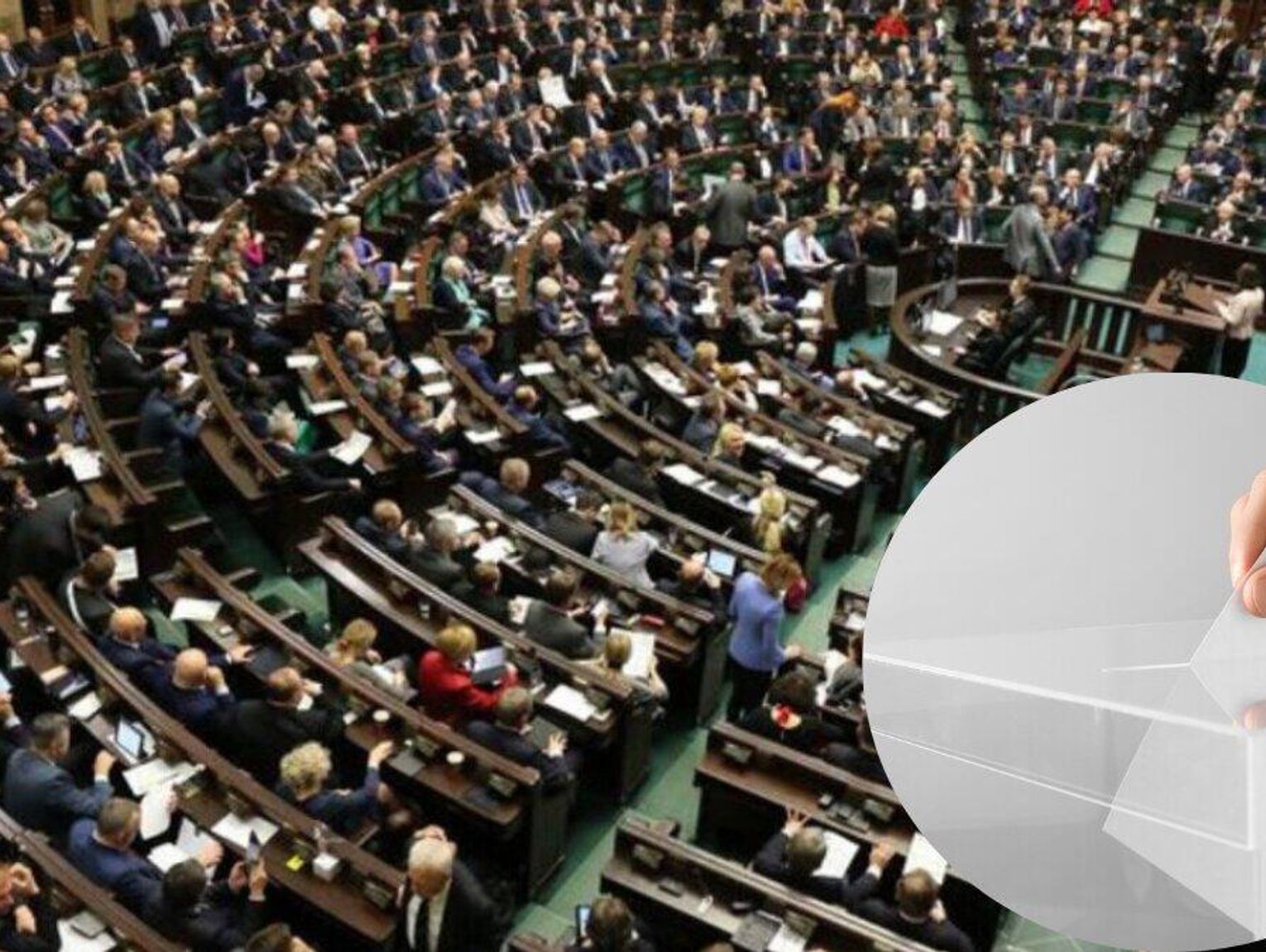
In this sense, Polish democracy is simply a strategy of appearances. It has all the institutions – elections, parliament, media – but there is no spirit that these institutions fill.
Democracy without ideas – a country without direction
Therefore, the question is increasingly raised: possibly Poland needs a form of "soft dictatorship", a order based on the rule of responsibility, alternatively than simulation of freedom? This is not about longing for authoritarianism, but about knowing that freedom without meaning, without thought, without ethos, becomes anarchy.
Maybe that's why so many politicians, media and commentators are afraid of people like Grzegorz Braun. due to the fact that Braun – regardless of his opinions – represents an idea, something that almost disappeared in Polish public life. You may disagree with him, you may not realize him, but you cannot deny that there is simply a imagination behind him, a consequence, a certain order of thinking. In a planet without content, this is already in itself a dangerous phenomenon – due to the fact that it exposes the emptiness of the remainder of the scene.
Land lost – Poland after democracy
This is what the debate said ‘Earth lost’, from which the study has been published by the Court of Justice. The title of the discussion can be read as a diagnosis of the full country: the land lost is simply a land that has ceased to give birth – ideas, communities, values. Polish democracy has just become specified a space: a barren, formally organized, internally dead.
The land that doesn't give birth turns into a desert. And in the desert, toxic plants grow best – populism, hatred, lying.
Last sense way – local example
The same mechanics is seen in the microscale, in Piotrków Trybunalski. The city, which could be a center of culture and thought, became an administrative ghetto, managed by people without knowledge, imagination and intellectual courage. City authorities, managers of cultural institutions, libraries are not curious in major educational activities.
While in another comparable centres there are meetings with historians of ideas, philosophers, researchers who teach knowing of the planet – Piotrków promotes meetings with graphomen, provincial experts and third-rate scientists from the scrubbing after the bottom of the academy.
This deficiency of public education, deficiency of contact with real thought, leads to low public awareness. The inhabitants of smaller centres, deprived of contact with surviving culture, with free debate, with universities and independent organizations, do not learn to think independently, do not scope the sources of science.
And erstwhile the election comes, they make decisions not on the basis of knowledge, but on the basis of emotion. They choose screamers, storytellers, random people – those who do not want to change anything, but to keep a deal that benefits them. In short and violent terms, they choose rabble.
The only minute that real energy appeared in the city's life was the spontaneous civic movement Agnieszka Chojnacka. A movement that dared to stand up to corrupt, blasphemed local government koteria Chojniak and his surroundings.
This rebellion, although short-lived, showed that only a clear, strong thought – a specific, honest, without compromise – can decision people. That even in local space a policy of meaning is possible, not a closed circulation.
Chojnacka's success was not maintained due to the fact that support and determination were lacking, but its meaning was symbolic. He showed that society responds not to smooth words, but to fact and consistency.
At the end – a question about a man
Democracy in Poland did not fall due to the fact that individual destroyed it. She fell due to the fact that a man stopped believing in the theme. alternatively of a community, we have business. alternatively of work – calculation. alternatively of authority – half-wits in celebrity costumes.
So possibly the question "why do we request specified a democracy?" is simply a question not about the system, but about ourselves. due to the fact that democracy is just a mirror. And in this mirror voidness is increasingly reflected – a society tired, devoid of direction, incapable to impress or to anger.
Earth lost – it's us.
→ I.R. Parchatkiewicz / cooperation (mb)
6.11.2025
• photo: FREEPIK
• more author texts: > Here.