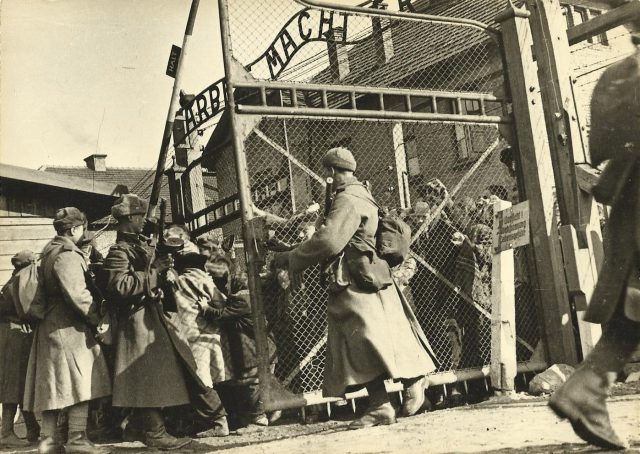
When the Red Army soldiers entered the Auschwitz-Birkenau-Monowitz camps on January 27, 1945, only a fewer 1000 sick and exhausted prisoners (men, women and children) of various nationalities were left behind, who were mostly incapable to participate in murderous, pedestrian evacuation marches called Death Marches.
On 12 January 1945, the Red Army launched an operation to break up German troops in the central and western parts of the Polish territory occupied by the Germans. Part of this attack was the actions carried out by soldiers of the 1st Ukrainian Front, aimed at occupying the industrial territory in advanced Silesia. 60, among others. An army that, after capturing Krakow on 19 January, gradually approached Auschwitz.
About the existence of Auschwitz KL, both its soldiers and commanders knew nothing and had no information about it, which is due to the preserved operational and staff reports of combat messages. cognition of this subject is not only lacking in papers 60. Army, but besides in newspapers that were issued to soldiers of the 1st Ukrainian Front.
His Marshal Commander Ivan Stiepanovich Koniev Auschwitz did not know about the existence of the Auschwitz camp until after the business of the extermination camp by its subordinate troops, which he reported to his diary (I. S. Koniew, Commandant's records to the fronts, Moscow 2015): “The second day after the liberation of this terrible camp, which is simply a symbol of fascist barbarism worldwide today, I was comparatively close to him. First news of what this camp was, it's already been submitted to me. However, I did not see this camp of death with my eyes – not due to the fact that I did not want to, but simply did not let myself to. Combat activities were in full progress, and directing them required specified tension that I felt I had no right to waste my intellectual strength and my time on individual experiences.”
These records surely show that the Auschwitz camp was not a priority, previously designated by the russian military authorities as an crucial mark to gain. Hence, it must be granted the right of historians who claim that the Auschwitz camp was occupied on the road along which the war of the russian offensive rolled.
Camp evacuation
In mid-January 1945. The Germans began the final liquidation of Auschwitz and its sub-camps, with a full of around 58,000 people taken out from January 17 to 21. German police stations were besides removed from the watch towers surrounding Auschwitz-Birkenau camp and since then its area has only been patrolled by SS men. Evacuation columns of prisoners and prisoners, under the defender of the SS, were directed primarily to Wodzisław Śląski and Gliwice, from where only convoyed prisoners were transported into the 3rd Reich by rail, in open freight wagons, to Mauthausen, Buchenwald and another German concentration camps.
Only about 2200 prisoners from the 2 Auschwitz sub-camps – “Eintrachthütte” in Świętochłowice and “Laurahütte” in Siemianowice – were transported straight by rail on 23 January.
The longest way went over 3000 prisoners from the subcamp in Jaworzno. It led to KL Gross-Rosen in Lower Silesia and was about 250 kilometres. The Death March to Wodzisław Śląski was besides attended by minors along with adults. During all the Marches of Death, the convoys shot at both escape prisoners and killed those who did not keep up with their associates due to utmost physical exhaustion.
The Death Marches routes, both on ft and rail, were sent by thousands of corpses of prisoners who were shot by SS men or died of exhaustion and freezing. Historians estimation that only in advanced Silesia about 3,000 evacuated prisoners were killed. It is besides estimated that at least 9,000 Auschwitz prisoners were killed during the evacuation.
Destroying the traces of crime
On 20 January 1945, crematoria numbers II and III were blown up at the command of the camp authorities, and on the night of 26 to 27 January, the last of them marked No. In those days, the alleged Canada II was besides set on fire, consisting of barracks containing property remaining from victims of genocide.
Nearly 9,000 prisoners remained in the camp complex, most of whom were sick and highly exhausted, which the SS did not have time to kill. They were liberated in the home camp (Stammlager, Auschwitz I), Birkenau (Auschwitz II), Monowitz (Auschwitz III) and its sub-camps. They avoided destruction. The SS only managed to execution in the camp – among others in the subcamps: “Fürstengrube” in Wesoła, “Tschechowitz-Vacuum” in Czechowice and “Blechhammer” in Blachownia Śląska – about 700 judaic prisoners.
Liberation
On 27 January 1945 soldiers of the 60th Army of the 1st Ukrainian Front, who appeared in the east part of Oświęcim, entered Auschwitz sub-camp III-Monowitz. Only a fewer hours later, about 3:00 p.m., they arrived at the Auschwitz I home camp and Auschwitz II-Birkenau camp. opposition of the retreating German troops encountered only at the first of these camps in Monowice.
The prisoners welcomed Red Army soldiers as authentic liberators. The paradox, however, was that russian soldiers who were formally representatives of Stalinist totalitarianism liberated prisoners of Nazi totalitarianism.
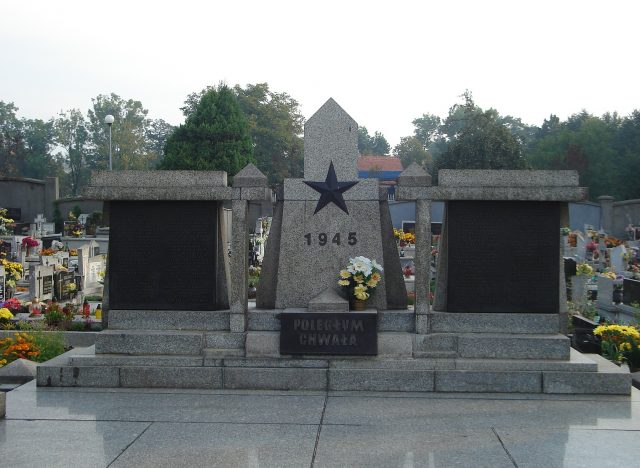
In fighting against German troops on the Oświęcim Land, 2 100 and thirty-one Red Army soldiers who are buried in a collective grave at the parish cemetery in Oświęcim died or died. Among them there are besides respective Poles incarnated from the Red Army draft in 1944. They were russian soldiers of the 100th Lviv firearm Division, which is part of the 60th Army of the 1st Ukrainian Front.
About 7,000 prisoners were liberated in the Auschwitz, Birkenau and Monowitz home camp. About 500 of them were liberated by russian soldiers before 27 January 1945 and shortly after in subcamps: Old Forge, Silesian Blachownia, Świętochłowice, Wesoła, Libiż, Jawiszowice and Jaworzno.
In Auschwitz-Birkenau, respective 100 corpses of prisoners were found shot and died from exhaustion during the withdrawal of SS from the camp grounds. Survived prisoners, who were in comparatively good physical condition, left the camp and returned to their hometowns. Medical assistance was organized for the others at the liberated camp.
Save the Survivors
The russian medical service, as far as possible, provided assistance to liberated sick prisoners, who were about 4500, cooperating with the Polish Red Cross volunteer team, as part of the alleged "PCK Camp Hospital" established by it. any of them, however, were in specified a state that they could not be saved.
It belonged to them. Tadeusz Sękowski (photo), who was born on 24 May 1924 and was a junior advanced student in Łódź. During the German occupation, he and his father and parent acted in the underground of the ZWZ/AK until June 1943, erstwhile they were all arrested by Gestapo in Łódź and deported to Auschwitz.
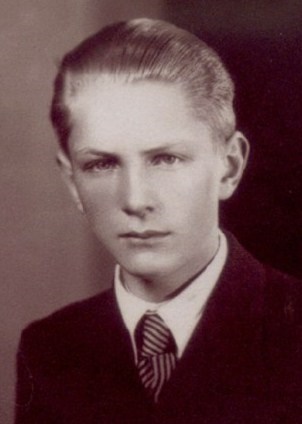
After the liberation of the camp as a severely sick 1 of Polish doctors transported him to a infirmary in Krakow, where he wrote a letter to his sister Teresa, who lived at that time Milanówek, shortly before his death.
It is worth quoting: “I am free! But now I gotta convey any sad news that I could not compose from the Auschwitz camp due to censorship. Namely, in June 44 I had lung disease. (...) As the Russians approached (in mid-January 45), the camp was evacuated. All prisoners marched out of the camp under SS escort. Only the sick remain
In the hospital. On 21 January 45, she left the SS camp, leaving the sick at the mercy of fate. (...) I am presently lying in a infirmary for pulmonary-diseases in Prądnik (the suburb of Krakow).”
This letter, sent to the Polish sister by military mail, is simply a paper on the circumstances of the liberation of Auschwitz by russian soldiers on 27 January 1945. His author died a period later after the liberation of the camp in the Kraków hospital, being little than twenty-one years old.
The ceremony of the victims of Auschwitz
On 28 February 1945, a ceremonial ceremony of prisoners murdered during the evacuation of the camp was held in Oświęcim, while 470 bodies were buried in the ceremony procession from Birkenau. The body of prisoners gathered in Block 11 at the site of the erstwhile Auschwitz I home camp was besides placed in the collective grave. Today, this cemetery is located close the Visiting Centre of the Auschwitz Memorial, with about 700 victims of the last days of the Auschwitz-Birkenau camp.
Dr. Adam Cyra
Think Poland, No. 5-6 (1-8.02.2026)









![Makabryczne znalezisko w centrum Ostrołęki! Służby zabezpieczyły teren [FOTO]](https://www.eostroleka.pl/luba/dane/pliki/zdjecia/2026/cim_budowa.png)