Year 2022. The Podkarpackie border accepts successive waves of refugees from Ukraine. Women, children, and besides men flee Russian aggressors, destroying further settlements. Poles are mobilizing. Thousands of volunteers organize food, chemistry, clothing – they supply the essential items to survive. There is simply a spirit of solidarity and common help. Year 2026, 4 years later. Although the war continues, solidarity melts. any Poles see Ukrainians differently than before. In any circles, the east accent becomes a origin for hatred, and having a Ukrainian passport – an incentive to attack.
Report on Sociological investigation "We're not home. Ukrainian migrants and refugees on relations with Poles" seeks to present the consequences of political and legal changes in Poland for Ukrainian refugees.
Professor Przemysław Sadura and Dr. Olena Babakov – authors of the study for the Institute of Political Critics, Left-Left Progressive Think Tank – separate 3 types of specified consequences: political, state and human. They affect almost all Ukrainians surviving in Poland, especially those requiring peculiar care – including older ones.
Emotional Shuttle of Polish-Ukrainian Relations
A full-scale Russian invasion of Ukraine in 2022 was an highly hard minute for all Ukrainian families. any of them decided to leave the country and looking for aid in Poland. aid from Poles was intense. Sports halls became logistics centers, Polish families passed on food, clothing and another everyday items to refugees, and solidarity with people affected by Russian aggression warmed Polish-Ukrainian relations as never before.
However, cooling came very quickly. As early as June 2022, the “strong and spontaneous expression in all focus groups” of resentment towards Ukrainians had announced the coming of winter.
Data The Centre for the survey of Social Opinions (CBOS) points to a simultaneous decline in sympathy and an increase in resentment towards Ukrainian refugees. In 2023, 51% of Poles expressed sympathy for them. Only 2 years later this value dropped to 30%. As many as 38% of Poles pointed out in the polls aversion to their east neighbours. These negative emotions have been reflected in the online nag. By Investigations conducted by the Demagog Association and Media Monitoring Institute during August-November 2025, the number of anti-Ukrainian entries on the Polish net increased by 98% compared to 4 erstwhile months (185,000 posts). Poles were clearly discouraged from the Ukrainians. Negative entries rapidly followed this reluctance.

Hard and without anesthesia
– this is how we have been operating since 2020. Journalism that is not indifferent. The civilian Affairs Weekly announces abuse, educates and gives tools for a real, civic change.
Donate and become our contributor
How did this happen? The study identifies respective reasons for this. 1 of the most crucial is the concern of Poles about losing precedence in access to public services and services. Doctors, specialists or even nursery workers – according to the communicative of any net users – are to receive Ukrainians outside the queue. The net very rapidly revolved stories about Ukrainians refusing to pay for their services. The study counted at least 20 specified stories.
Another origin of concern among any Poles was the inclusion of Ukrainian refugees PESEL, the 800+ programme and another social programs. Blaming Ukrainians for rising unemployment and housing crisis has become a fresh normality. Mieroszewski Centre – a Polish public institution dealing with the building of knowing between Poles and peoples of east Europe – in a survey of 2025, noted that Poles see Ukrainians as “workable”, but besides as “practice” and “ungrate”.
All these teething narratives helped to make an atmosphere of anti-Ukrainianity and antipathy towards Ukrainian refugees. The atmosphere that any politicians have utilized for their own purposes.
"Logics of populist polarization" and its negative consequences for Ukrainians in Poland
The anti-Ukrainian communicative has been institutionalized and, in any circles, standardised. The political choir of the hunt, traditionally known by the Confederacy of the Polish Crown Grzegorz Braun, was joined even by centr groups – including Law and Justice (PiS) and Civic Coalition. PiS candidate for Prime Minister – Przemysław Czarnek – says for example, that "we have a moral work to shout... to halt the rebirth of the Nazi ideology in Ukraine". It is impossible not to announcement the similarity between the statements of the leading politician of PiS to the Russian narrative, from the very beginning indicating the request for "denasification" of Ukraine. specified rhetoric fosters an increased dislike of Ukrainians, partially contributing to another negative effects described below. The study besides points to the presidential run in 2025 as a turning point that reinforced anti-Ukrainian sentiments. This is due to the fact that "the question of benefits to Ukrainians has become 1 of the axes of the dispute".
My own observations show that Polish-Ukrainian relations have become an highly emotional topic. Accidents, mistakes, negative statements by Polish and Ukrainian politicians about each another are on the front pages of newspapers. They are treated fatally seriously.
According to the report, "two societies, despite common interest and enemies, become parties to common conflict", and Polish and Ukrainian politicians frequently add fuel to the fire.
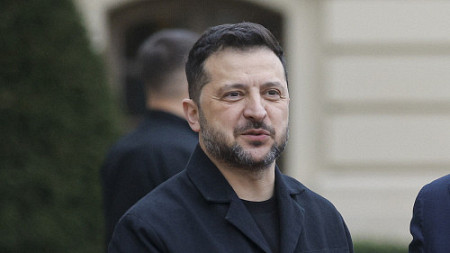
When Volodymyr Zelenski – president of Ukraine – gave the elite military branch a name ‘UPA Heroes’, sparked a wave of criticism and a crucial increase in anti-Ukrainianity expressed in public space. Karol Nawrocki – the president of Poland – decided to take the Order of the White Cross from Zelensk and make it his precedence to conduct a historical policy based, in my opinion, on emotions.
Both politicians have subordinated state interests to peculiar political interests. Nawrocki most likely hoped to gain a right-wing electorate, while Zelenski, according to the report, chose to divert attention from corruption scandals in his surroundings.

Ukraine – position from a distance, short and narrow Jacek Koronacki
This “ logic of populist polarization” took over the political discourse by storm, contributing to further cooling of Polish-Ukrainian relations.
Political conditions were so conducive to the deteriorating situation of Ukrainians in the current legal order and everyday life.
“Sit quietly and remember – you are allowed less”
The emergence in anti-Ukrainian moods has contributed to changes in law. On March 5, 2026, the peculiar on assisting Ukrainian citizens of 2022 expired. This change affected the elderly, sick or unemployed who were deprived of access to the National wellness Fund and the pension allowance.
In practice, this led to a sharp deterioration in surviving conditions for those Ukrainians who relied most on state aid. According to the report, 1 of the seniors was evicted from the Social Services Home to a homeless shelter. His considerable degree of disability prevented him from doing the simplest things. Without any care, he was to be washed by a homeless man. Another aged lady, by losing her pension allowance, was incapable to supply herself with the minimum essential for existence – medicines and food. She was planning to return to Ukraine. These are fewer examples of the very real impact of legal changes on average people. These stories, 1 of many, vanish in the media around the fight – led by any politicians – with the “rebirth of Nazism” in Ukraine.
The rules for granting 800+ have besides changed. According to the fresh rules, refugees are to be treated in the same way as all another economical migrants. All these changes should not be surprising. From the very beginning, the specus was to be only a temporary solution. However, there are objections to leaving people in request of peculiar care outside the protection umbrella of the state. This leads to an inhumane and profoundly harmful situation for Ukrainians.
Political conditions and changes to law advance the spread of "institutional xenophobia and hypocrisy".
Some Ukrainians experience resentment from government employees, labour marketplace institutions and wellness care facilities. The increasing social antipathy towards Ukrainian refugees is coupled with concrete regulatory changes. This leads to the usage of the tragic situation of many Ukrainian refugees as a tool of force against them. According to the report, the signal sent, among another things, by organization aversion can be summarised as: “Sit quietly and remember – you are allowed less”.
Violence with a fresh language of solidarity
The consequence of political and legal changes about possibly the top degree is the deterioration of human relations, which is noted by almost all interviewors of the report.
The streets are becoming increasingly the arena of verbal strife and malice. Ukrainian refugees, including children, increasingly become victims of the hatred of accidental people encountered in public transport. This is what happened among another things in Bielsko-White, where an worker of the Municipal Communications Department threw down Ukrainian girls with profanity. Cafés, bakeries and shops supply opportunities to measure exile policing. Checking whether they have an east accent, which is seen in any circles clearly negative. Unfortunately, force against Ukrainians is not an exceptional situation. To any extent, it has become a fresh language of solidarity.
The study besides points to the intensification of verbal violence, bullying in schools and recorded in statistic the increase in the frequency of physical attacks on Ukrainians.
According to the Police office data, the percent of attacks on Ukrainians due to xenophobia, racism or spiritual intolerance increased by 66% in 2 years (data from 2025). Mental, verbal and physical force against Ukrainians is real. Worse relations between Poles and Ukrainians in public space – clear.
This does not change the fact that Ukrainians justice life in Poland positively. The work provides a advanced level of integration with Polish and Ukrainian workers, relieving political and national tensions. However, Polish-Ukrainian relations usually end in work.
According to the report, only all 5th Ukrainian maintains close, non-professional ties with Poles. A tiny degree of this integration exposes the key problem facing Ukrainians in Poland – they are more frequently seen as workers alternatively than possible colleagues. Especially in an unfavorable political climate and changing legal status, this puts the Ukrainians at hazard of social instability and makes them easier subject to attacks. After all, socially isolated people are easier to intimidate.
The study shows a grim image of the consequences of political and legal changes for Ukrainians in Poland. They are increasingly subject to attacks solely due to their nationality. Poland's political communicative sometimes touches on the Kremlin propaganda. In the end, the most injured are people who fled to Poland for fear of losing their lives.
The subsequent legal changes and the fiery changes made at political speeches rallies are devoid, in my opinion, of human element.
The war on receiving orders and inflaming historical disputes obscures what is crucial here and now – the stories of real people facing real challenges.
Both the study and this article effort to remind us.