author: Tyler Durden
Written by Larry C. Johnson through SonarIntelligence (Sonar21),
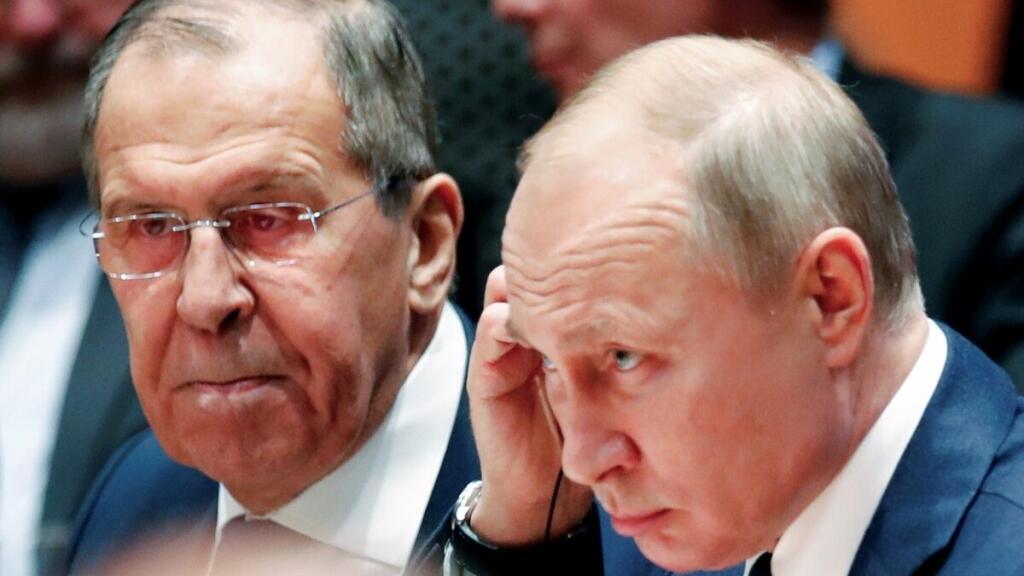
In mid-September, the Kremlin signaled that negotiations could be resumed. Putin said that tripartite talks with the United States and Ukraine would be improbable before the elections to the State Duma, but Russia would be ready to resume contacts after them. The election ended on September 20. During the week, both Putin and Lavrow went from conditional openness to a set of positions that make it harder to scope the negotiated end of the war more than always this year.
Pulse: September 20
The turning point was the drone run in Ukraine on election day. Putin said that that night over 1,600 drones entered the vicinity of Moscow, attacking polling stations, including 1 at the school, which he claimed was practically destroyed. The president of the territorial electoral commission died erstwhile her home was attacked. Moscow mayor Sergei Sobjanin called the raid unprecedented. According to RT, 2 civilians died in the suburbs and the oil refinery was damaged. Regardless of what we think of Russian accounts of destruction, the political consequences in Moscow were obvious.
Putin: From "ready after election" to "we'll think twice"
At a press conference in St. Petersburg on September 25, Putin changed the full negotiation process. He mentioned a series of Ukrainian escalations: an attack on the port of Petersburg during the June economical Forum, a run against Russian refineries, an effort to block the Russian Black Sea coast, which he claimed damaged more than 100 ships, and raids on commercial warehouses. He said that Russia has responded to each of them, so effectively that Kiev is now pursuing a partial ceasefire in the energy sector and in the air.
Putin didn't treat these requests as an opportunity. He treated them as evidence that Russian force worked. His message to Kiev was that no provocation or escalation would bring him the goal and that he was only making his own situation worse. Then came the key passage. Proposals, as he said, stay on the table, but after all that Ukraine did, Russia "She'll think twice," How to respond. Any decision, including whether to resume negotiations, will be based on Russia's interests.
This is simply a clear change compared to 10 days earlier. Putin did not close the talk door, but removed the default commitment to resume them after the election and made the resumption dependent on Russia's assessment of what he had to gain.
A jury in the safety Council: "No format at all times"
The jury clearly expressed this position in fresh York on September 23. At a gathering of the safety Council on Ukraine, he said: "By drawing conclusions from bitter experience, we will not halt a peculiar military operation while negotiating in any format." He said that European countries want a break to gain time to supplement Ukraine's exhausted arsenals. He rejected the ceasefire before the agreement as frivolous and insisted that the aim was a long-term agreement.
Timing made it a direct rejection. On the same day, Ukraine and 51 supporters issued a message demanding an immediate and unconditional ceasefire by Russia so talks could begin. Its signatories included the EU and its associate States, the United Kingdom, Canada and Australia. The Ukrainian abroad Minister, Andrij Sybiha, noted that 14 of the 15 members of the safety Council supported the proposals for ceasefire in 1 form or another, leaving Russia alone.
The jury went further than just a ceasefire mechanic. He said that Ukraine would have retained the boundaries of 1991 if Europeans had not "agreed in their pranks." This represents the failure of Ukraine's territory as a permanent and blameful Europe. This is not the language of the government preparing for negotiations on the control line.
Jurov at the General Assembly: Europe as an enemy
In his speech at the General Assembly on 26 September, Lavrow made Europe a major threat. He said that the EU is militarizing itself to war with Russia, and that increasing on specified a scale can yet lead to conflict. He suggested that Germany's quest for military dominance could be seen as an effort to make the "Fourth Reich". At the press conference after the conclusion of the belief that European reinforcement must yet be used, 'because we are not planning' the attack. He called European war preparations possible "Self-fulfilling prophecy."
The consequence is the exclusion of Europe as a negotiating party. Lavrow told Europeans that they were preparing a war, that their calls for ceasefire were a tool for re-arming Ukraine, and that they destroyed the chance for an agreement at Ukraine's borders of 1991. Moscow presently only treats the United States as a legal partner.
Even the American canal produced nothing
Following a gathering with Lavrow in fresh York City, State Secretary Marco Rubio said that both Russia and Ukraine showed interest in a limited ceasefire involving energy infrastructure and grain transport, but acknowledged that reaching an agreement would not be easy. The Russian Ministry of abroad Affairs has not confirmed any agreement, and the spokesperson for Kremlin Dmitry Pieskov said that there are presently no conditions to decision towards peace, although Russia remains open to talks.
Putin's assessment of the U.S. relation was cool. He welcomed Trump-Xi talks in Washington, D.C., but said Russia's relations with the United States were almost reduced to zero., contrasting this with a $140 billion yearly trade with China.
Pressure at sea, air and ground
Diplomatic toughening goes hand in hand with increased military force on 3 fronts at the same time. Moscow is not waiting to talk. He uses this period to rise the cost for Ukraine for refusing Russian conditions.
At sea Russia again imposed a de facto blockade of Ukrainian ports on the Black Sea. She did not bring her warships back to the coast of Ukraine as it did in 2022; instead, she uses rockets and drones against ports and merchant ships. After strikes in mid-July, including the sinking of the Golden Leo masseur, shipowners and insurers withdrew, and the movement through Odesa, Black Searsk and Piwdenny collapsed. On September 12, Russia hit the Odessa region with maneuvering, ballistic and 129 drones, and besides reported it hit 2 cargo ships in Czarnnomorsk, which allegedly supplied weapons. Acting Minister of abroad Affairs of Ukraine accused Moscow of attempting to transform the Black Sea into "the Second Strait of Armenian". In Petersburg, Putin listed the abolition of the blockade as 1 of the concessions that Kiev is seekingHe made it clear that he was in no hurry to give it.
In the air Russia intensified raids on Kiev and another large cities, aimed at transport, production, energy, water and communication. On 23 September, on the day Lavrow spoke at the safety Council, many-hour drone attacks on Kiev hit railway infrastructure, warehouses and fuel stations, killing at least 2 people and injuring more than 30. Zelenski said Russia utilized a large number of drones, including faster jet powered models. Strikes besides affected energy, water and net networks, partially suspending water supply on the left bank of Kiev. In early September Russia hit Kiev and confederate and east Ukraine six nights in a row. With the coming winter, the grid becomes its own front. Zelenski has concluded a truce with Trump on energy infrastructure in the UN; Moscow didn't accept that.
On the ground, Russian forces attack along the full line of contact, and Russia has moved forward, while Ukraine is giving up. Ukrainian General Staff reported on 24 September 277 combat clashes, from the Slavic and Kramatorska sectors in northern Donetsk to Huliaipole in the south, with the heaviest attacks around Kostiantynivka and Pokrowski. Russian forces captured Shiroko and Shevchenkov in the Kharkiv Oblast and Nowoandreyevka in the Zaporozhiv Oblast on 14 September, and the following day Olchowatka in the Kharkiv Oblast, within the lap. all day of blocked diplomacy is another day of this pressure.
What it all gives
In total, statements over the last 10 days present Russia's tougher position:
- The talks are resumed only according to Moscow's agenda and its assessment of its own interests, not as the promised continuation of the election.
- No ceasefire during negotiations, including unconditional ceasefire supported by more than 50 countries.
- Ukrainian requests for partial truces are treated as evidence that Russia's force works alternatively than as openly.
- Europe is presented as an aggressor, excluded as a partner and blamed for the failure of Ukraine's territory.
- Military force increases on all axis: de facto blockade of Ukrainian ports, increased impact on Kiev infrastructure and attacks on the full front.
The direction is clear. In mid-September Moscow spoke about erstwhile negotiations would resume. By September 26 they talked about whether they wanted them at all and under what conditions
I talked to Lena Petrova about the prospects of war Russia - NATO:
Nima and I discuss Iran's latest attacks on ships in the Strait of Ormuz:
Sulaiman and I are discussing, among another things, the confirmation that reports of additional casualties by the Navy and the U.S. Marines were the consequence of Iranian attacks on American units:
Translated by Google Translator
source:https://www.zerohedge.com/geopolistic