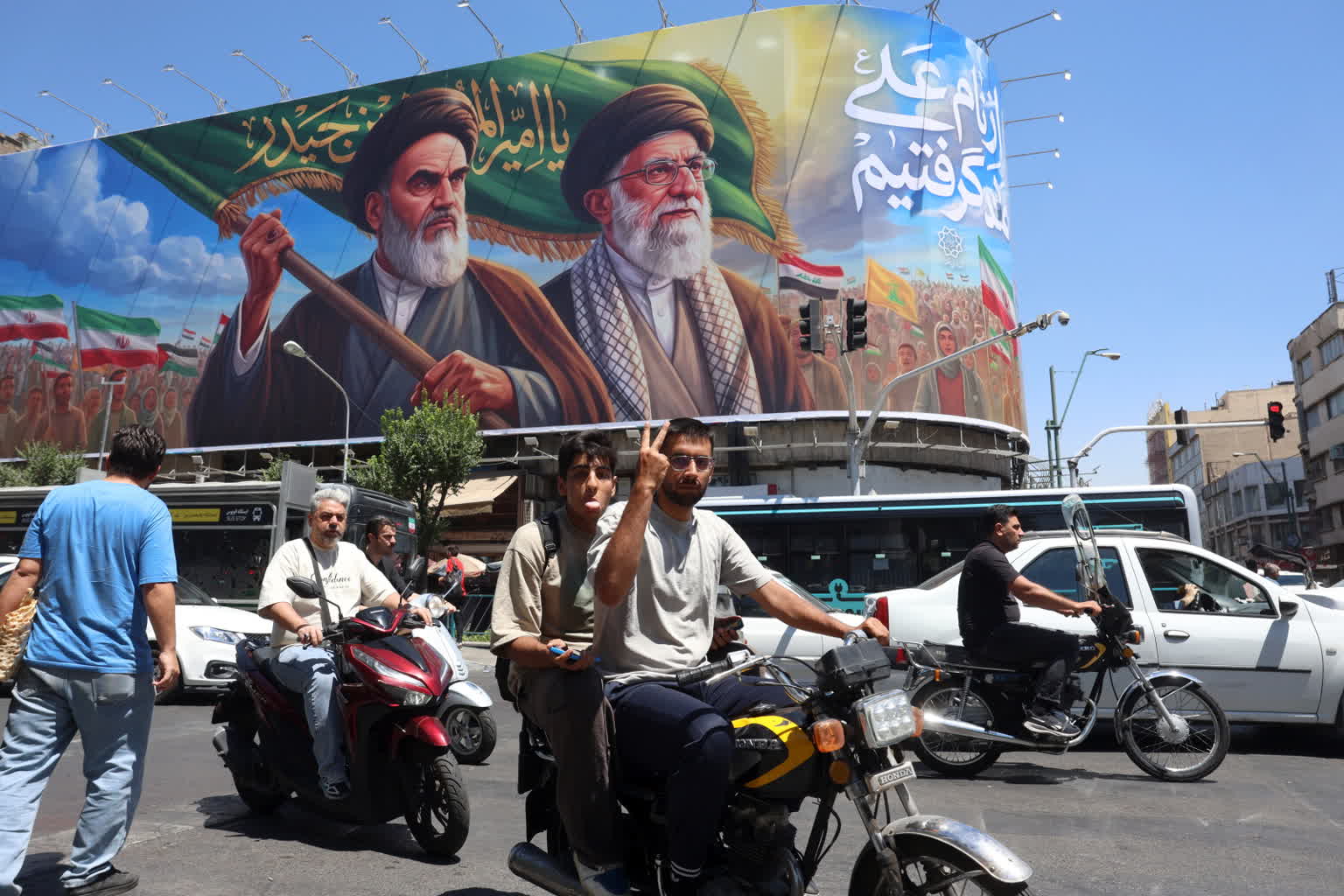
F“We Remember Volyn” Foundation visits the places where Poles were punished
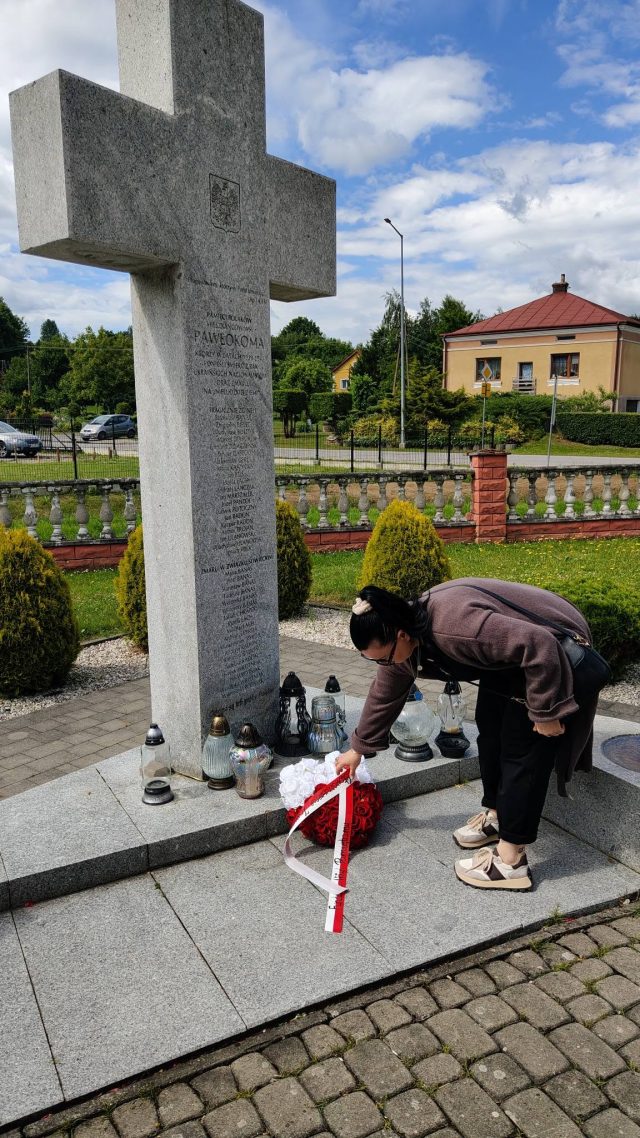
Volyn Foundation We remember and Association Always Faithful to You Polish headed by the ladies Catherine Sokolovska and Aneta Sala visited and laid a wreath at a memorial commemorating Poles murdered by Ukrainians in the village of Patłokom in Podkarpacie. They were accompanied by editors of “Polish Thought” Łukasz Jastrzeżski and Arkadius Miksa. During this visit, it was possible to meet the local population, who provided much information about the activities of Ukrainian chauvinists in this area.

You remembered the events in the village Danuta Wojciechowska:
The village of Patrukom was considered the strongest centre of Ukrainian nationalism in Brzozów. In 1938 there were 273 Poles, 898 Ukrainians, many of whom belonged to the UWO-OUN before the war. The anti-Polish activity was supported by the Greek Catholic priest and teacher Santa Lewicki. The “Prosvita” reading area held festivals commemorating terrorists from the OUN – Bialas and Daniłyszyn, liable for the assassination of politician and MP Tadeusz Hołówko. In religious-national manifestations, Poles were called upon to decision behind San, “the Ukraine will be here”. The ringleaders were arrested, but the conflict grew. Local nationalists hoped for the origin of the future Ukraine in the Zakarpacka Rus, of course with Hitler. The enthusiasm for this and the upcoming war made Poles aware of the horror of the situation.
In 1939, German troops entered Pavlokoma, greeted by the local Ukrainian population. Lewicki immediately filed a study on Poles and gave names of those who helped Polish soldiers and fired on Germans. Of the 12 condemned Poles Germans arrested 5, others managed to hide. Their life was saved by an Austrian who knew 1 of the detainees from the Austrian army of planet War I. As a consequence of the German-Soviet border, after 2 weeks Germany left Pawłokoma, Lewicki withdrew with them, in Dynów he worked with Germany.
During the russian occupation, 40 Poles were deported to Sibir from Ukrainian reports. According to a joint account of 7 people - residents of Pawłokoma, Ukrainian neighbors demanded approval from the russian commandant to execution all Poles, which he did not consent to. The Ukrainians exported Poles accused of participating in the fighting in 1920, erstwhile it turned out to be an untruthful export was stopped. The Ukrainians continued, and old weapons were thrown into the buildings of Poles, resulting in revisions and arrests. From the neighbouring village of Bartkówka lying in the border zone, russian authorities relocated most Polish residents to Volyn.
After the outbreak of the German-Soviet War (June 1941) She was under German occupation. He returned Lewicki and began military training of Ukrainian youth. The German occupier favored the Ukrainians, the harassment on their part continued, from the Ukrainians' tip Gestapo arrested and settled in Auschwitz (March 1943) 4 Poles and Ukrainians favoring Poles, Ukrainian police shot J. Michalik. Young Ukrainians from Pavlokoma applied to SS-Galizien Division10 volunteers were admitted.
In late 1943, displaced Poles from Bartkówka began returning from Volyn. Those who managed to last passed messages about mass murders of Poles through the alleged UPA. This caused the fear of Polish residents, who remembered threats that there would be alien removal from “Ukrainian lands”. Patrułoma and Jawornik Ruski were members of the OUN's common cuss, continued cooperation with Ukrainian organization in Dynów and the Ukrainian police station in Jawornik Ruski, where young Ukrainians were trained for the needs of alleged UPA and SKW. At the time, it was loud. "The Lachiw Rizata Building".
Arrests of Poles took place in neighbouring villages, Dylągowa and Jawornik Ruski, where 2 Polish families were thrown alive into a well. 150 Poles were taken to the station, they were beaten by Ukrainian police. The Germans did not find the weapon so they were released. This was only an introduction to mass murder. In Pawłokomie there was a well camouflaged UPA branch (about 50 people), which with permanent sotnia attacked Polish villages. Poles blamed Ukrainian nationalists for all the misfortunes.
The seeds of the Polish opposition movement in Pawłokomie strengthened from 1943 to 1944, at the beginning there were 12 people. The anti-Ukrainian moods increased after arrest in April 1944 on charges of belonging to the AK-5 residents of Pavlokoma and 1 of Dylągowa. An effort to recapture those arrested by an AK unit stationed in the field failed, the arrests died without news. Prior to the east Front, many Poles died at the hands of UPA and SKW.
After the russian Army entered, the Ukrainians tried to deal with the russian Commandant, reported where Polish underground troops were stationed, causing many arrests. W Pavlokomie was stationed by the russian school ward, after his departure in January 1945 the situation deteriorated significantly. The UPA militia arrived in Pawłokoma and kidnapped 10 Poles and Ukrainians and 3 people from Dynowa, and they were missing. Requests to indicate where they were buried were mocked. Polish militia stations were inactive weak, they did not warrant safety, in fear of the threat of life, any of the inhabitants of Pavlokoma left the village. In the atmosphere of despair, the decision to retaliate was made.
The AK Command recommendations were clear, women and children must not be killed. The poakowski branch of Wacława took part in the retaliatory action with local self-defense. The Ukrainians were instructed to assemble in the church, women and children were released, men were asked 2 questions: who abducted Poles and where were they buried? No 1 answered the question. The execution was carried out in the cemetery, witnesses testified that they were shot Okay. 120 men, not 1 female or 1 kid died.The OUN-UPA undertakers give 365 victims of Polish retaliation. They refused to give their consent to the exhumation. On October 5, 1945, the banders carried out a mass attack on Pavłokoma, Bartkowska, Dylągowa and Sielnica, the alleged UPA intensified genocidal actions, burned villages, attacked WOP guards, infrastructure destroyed, in 1947 Operation “Wisła” restored calm.

President Lech Kaczyński recalled the merits of Giedroycia and said that "Patchy has become a symbol for Ukrainians the tragedy of their nation", He repeated, after the CNS, the untruth of the fraternal battles and the words of prayer were forgiven. Yushchenko called for reconciliation, only the strong can forgive," he said.
The speakers did not mention terrorists, collaborators, murderers of Poles with whom the Ukrainian people want nothing to do. The propaganda nonsubjective has been achieved, The planet learned what kind of criminals Poles were. Of course, no crime can be justified, but the complex reasons which led Poles to retaliate were to be said. They didn't say. In the name of the “strategic partnership” it is possible to humiliate Poles, not to “treat the Ukrainians” de facto continuators of the tradition of Ukrainian integral nationalism.


![Zagadka fatwy Chameneia, czyli dlaczego zwycięstwo Trumpa w starciu z Iranem nie ma prawie żadnej wartości [OPINIA]](https://cdn.wiadomosci.onet.pl/1/UTmk9lBaHR0cHM6Ly9vY2RuLmV1L3B1bHNjbXMvTURBXy9lM2NiYmIyN2MwNjRiMmNjN2Q4MzVhMjgyNTc4MjJhMC5qcGeTlQMDzQL1zRnszQ6YkwXNCWDNBOyVB9mMaHR0cHM6Ly9jZG4ud2lhZG9tb3NjaS5vbmV0LnBsLzEvdWJwazlrN2FIUjBjSE02THk5alpHNHVkMmxoWkc5dGIzTmphUzV2Ym1WMExuQnNMMmx0Wnk5c2IyZHZYMjl1WlhSZmQybGhaRzl0YjNOamFTNXdibWVSbFFJQVpNUEQzZ0FDb1RBSG9URUUIwgDeAAKhMAehMQQ)