One of the most common myths about migration is the belief that migrants come for benefits and burden the social system. specified statements, which are a origin of social tensions, frequently appear in public debate. However, in reality, most people with experience of migration come to Poland with the intention of taking up work and surviving independently.
Welcome to Global Education Week from FakeNews.pl! From 17 to 21 November we will print a series of entries presenting reliable information on migration in relation to popular myths that circulate in public space. We will besides talk about what global education is or what global South and North means.
Previous articles published under TEG:
- What is global education? Global challenges and responsibility
- Actual migration scale – facts and figures
"Life at the expense of the taxpayer"
In 2024 decided majority Migrants from Ukraine in Poland maintained their own work. Wages were About 90% of pre-war immigrant income and about 76% of exile income. Their work and associated increase in productivity on the part of Polish companies and employees led to Increases Polish GDP successively: in 2022 by 1.5%, in 2023 by 2.3%, and in 2024 by 2.7%.
What support is available to migrants in Poland
Regardless of the country of origin and the reasons for arrival, migrants to Poland must take up work to supply their livelihoods and integration into society. Motivation migrations vary, with migrants arriving due to work being seen more positively by the public than migrants arriving due to coercion, specified as escape from war. Although there are arguments that social support is the main motivation for arrival, in practice the aid is limited.
Last year in Poland submitted 17 000 applications for global protection, with the 2 largest groups of applicants being citizens of Ukraine and Belarus. Office for Foreigners released decisions against 12,000 people. By condition for 31 May 2025, 3131 people had valid residence permits in Poland with the position of refugee, while 17,046 people had valid residence permits related to subsidiary protection.
In Poland persons in procedure refugees in the centres cannot work for the first six months and receive only minimal support at the level of basic needs. During this time received Among others: 70 PLN "pocket" for hygiene products and another articles, 3 meals a day, a place in the centre and wellness care. Only persons granted global protection can apply for benefits specified as 800+. They can besides apply for housing outside the centre, then receive 750 PLN per period for all expenses. specified a decision may be due, among another things, to the fact that abroad centres are located alternatively in smaller cities, frequently in places where uncovering work is very difficult. The remaining migrants must, from the first day of their legal stay, stay on their own — work and pay contributions and taxes or finance their own studies and lives in Poland.
First residence licence issued in Poland due to reason in 2024
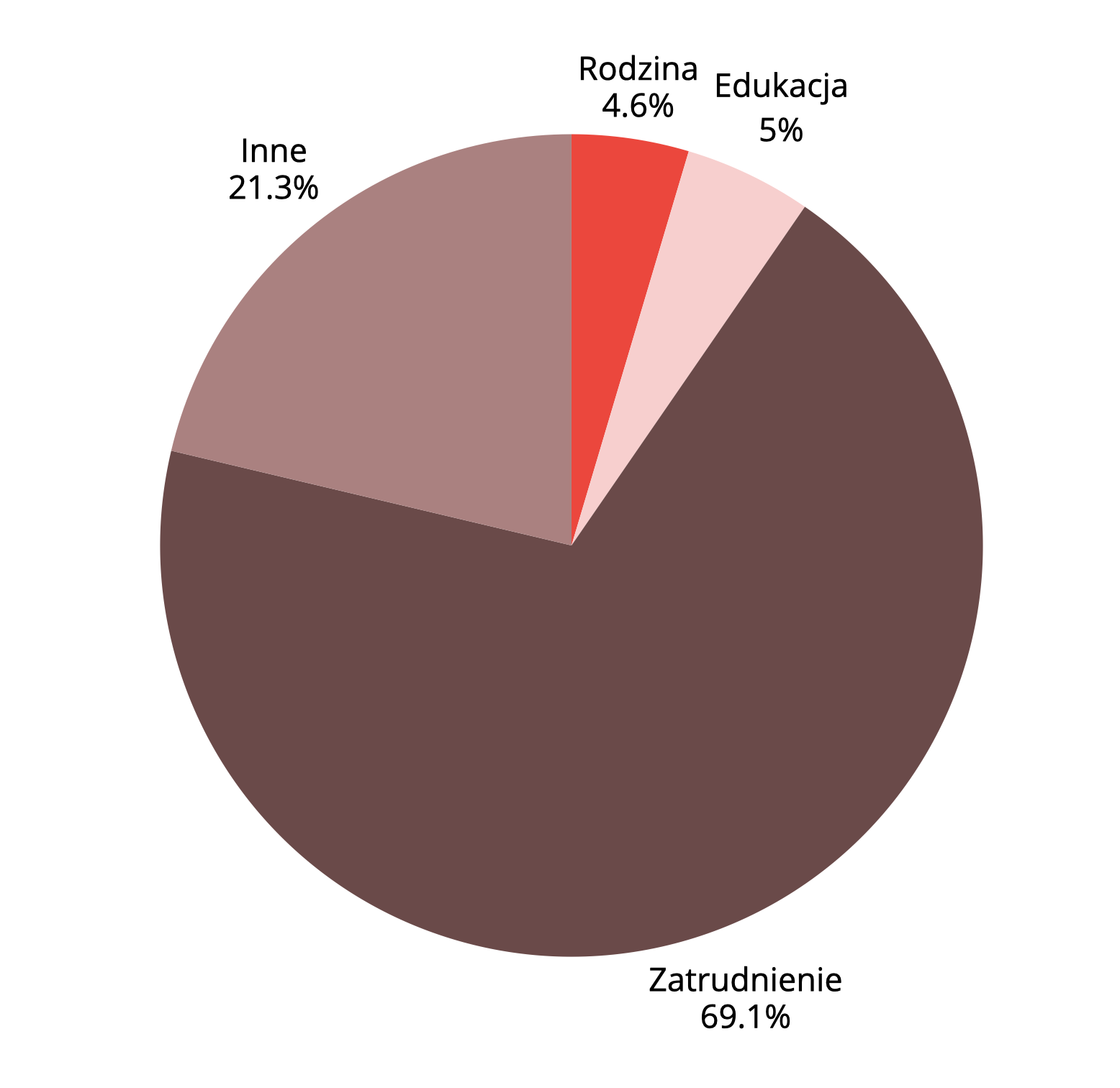 Source: Eurostat
Economic balance of migration
One of the most commonly repeated arguments There are allegedly advanced social costs in the discussion on migration that the State would bear. However, the participation of beneficiaries of benefits is marginal among migrants, most curious in legal work and self-maintenance. By data Bank Gospodarstwa Krajowego The gross from taxes and contributions of migrants from Ukraine to the Polish budget amounted to around PLN 15.1 billion in 2024, while the expenditure on benefits from the “Family 800+” programme is about PLN 2.8 billion. In the context of data The National wellness Fund on healthcare, contributions from Ukrainians working in Poland far outweigh the cost of their treatment. In 2024, the contributions amounted to about PLN 3.8 billion, while the treatment costs amounted to PLN 2.2 billion. Contributions from Ukrainian citizens cover with a surplus of the treatment costs of the non-working group which received benefits in connection with the war.
In 2024 decided majority Migrants from Ukraine in Poland were based on their own work — wages accounted for about 90% of pre-war immigrant income and about 76% of exile income. The level of professional activity was besides very high. Participation people working among immigrants was clearly higher than among Polish citizens. Social assistance was not indicated as a key need, and the most crucial expectations afraid facilitating legalization of stay, learning Polish and support in uncovering a job. Simultaneously 40% of migrants financially supported loved ones in Ukraine. The main motivations for a longer stay active work and the anticipation of maintaining a household alternatively than social assistance.
Statistics on Ukrainian migrants on the Polish labour market
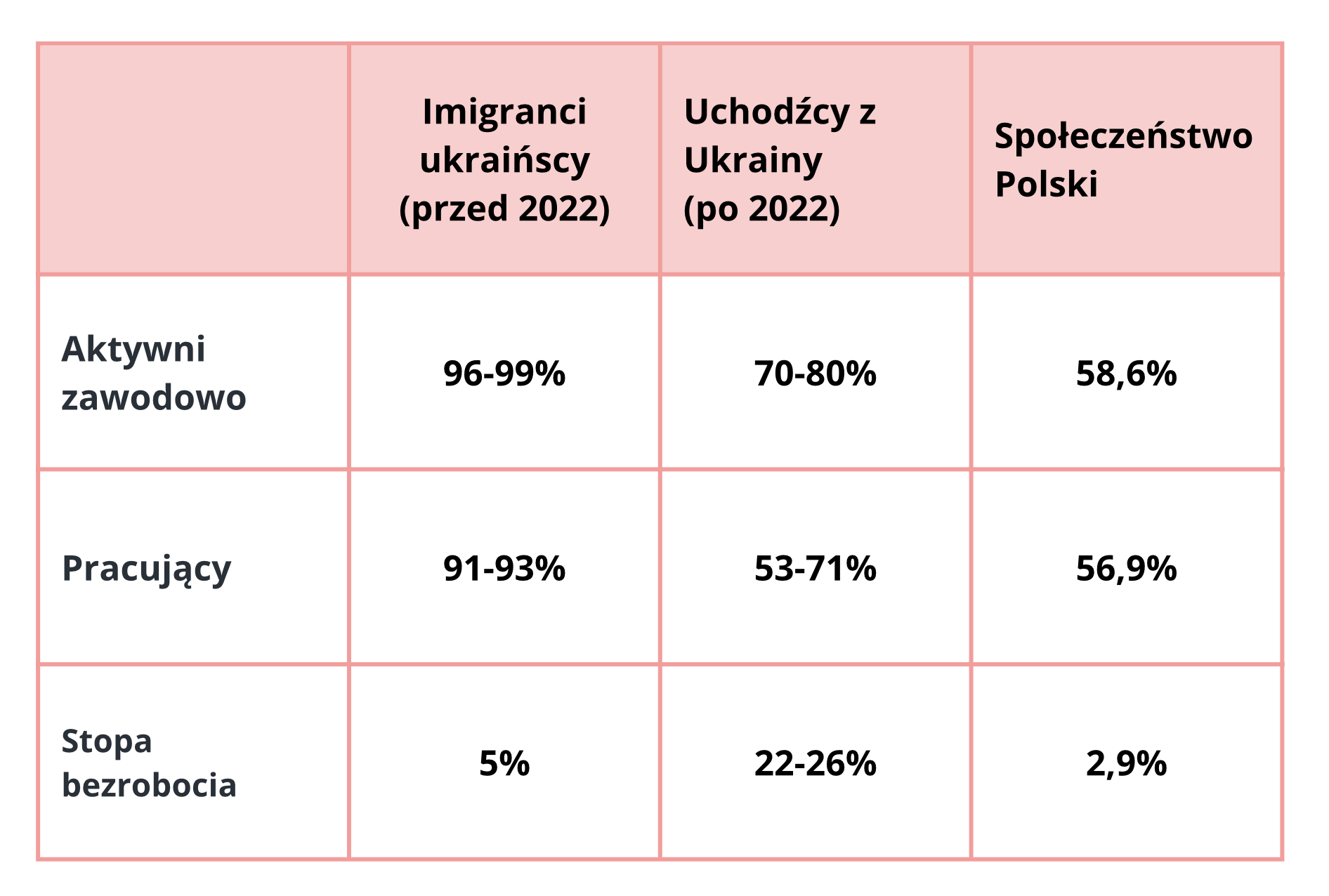 Source: BGK
Summary
The dissemination of false information on the scope of social assistance to migrants leads to an increase in social prejudice and to the spread of misinformation, which makes it much harder to conduct a sound public debate. In fact, real. scale support is limited and not crucial motivation for migration.
Data The National Bank of Poland clearly indicates that the primary motivation for migrants to stay in Poland is first of all the chance to work and to keep themselves and their loved ones. Help Social is not in turn declared as the main origin of arrival. Most Migrants stay active, regularly pay contributions and taxes and usage livelihoods in a akin way to Polish citizens, supporting the functioning of the state's financial system.
Sources
NBP: Publications on migration flows
Deloitte: Analysis of the impact of refugees from Ukraine on the Polish economy
EMIC: 8 (deep) lessons on migration
Office for Foreigners: International protection in 2024.
Office for Foreigners: Types of aid granted
PAH: Answers to the most widely utilized arguments in the context of migration
BGK: Impact of Ukrainian migrants on the Polish economy
marketzdrowia.pl: How much does it actually cost to treat Ukrainians in Poland? NFZ data changes the look
Graphics
Author: Ewa Hotlos,
Project co-financed under Polish improvement cooperation of the Ministry of abroad Affairs of Poland. The publication only expresses the views of the author and cannot be identified with the authoritative position of the Ministry of abroad Affairs of the Republic of Poland.