22 April 2026.
 Malone News
The European Union is implementing a thorough revision of the seeding government under the heading "Regulation on Plant Propagating Material" (PRM = Plant Reproduction Material regulation). We are told that it is about modernisation, safety and illness control. This sounds reasonable until we look at what this policy is actually doing and who it benefits.
What he does is control change. What it brings is simply a scale. And what it tells us, if we look closely, is mostly about the current flow of power in the Western world.
The essence of the matter: the rule of subsidiarity
There is simply a regulation older than the European Union, older than the American republic, or even older than the modern national state. It states that decisions should be taken as closely as possible to the individual. Catholics call it subsidiarity. Americans express akin instincts through federalism and preference for local control, as well as simply common sense. It is based on a simple observation. People closest to the problem usually realize it best, straight feel its consequences and have the strongest reason to solve it.
Agriculture is an excellent example. The farmer in Provence knows his soil, climate, pests and the marketplace for disposal in a way that no authoritative in Brussels will always be able to understand. The Bavarian gardener, who for 20 years selected a variety of tomato for her plot, knows things that cannot be registered in any database. A tiny farmer from Sicily who adjusts the wheat variety to drought conditions, does real work and does it better than any centralised authority could.
For 10 1000 years people have been gathering, selecting, exchanging and improving seeds through a network of farmers, gardeners and local breeders. It's not a peculiar hobby. It's the foundation of agricultural civilization. Almost all crop we depend on comes from this quiet, decentralised work. Diversity on our fields and on our plates exists due to the fact that millions of average people, without asking anyone's permission, have done patient selection and exchange work.
The rules on plant propagating material turn this ancient order upside down. They presume that seeds must be authorised in advance before they can be placed on the market. They treat standard farming activities, that is, collecting and sharing seeds as something requiring approval from an official. It's not a insignificant change. It's a philosophical reversal. It transfers the presumption of legality from the grower to the regulator.
Conservatives realize why this is important. A power centered somewhere far distant is simply a power without responsibility. The village that manages its own seed exchange answers to itself. The continent that manages the exchange of seeds from Brussels does not answer to anyone the farmer will always meet. Regulation does not only impose costs, although it does so drastically. He's moving power. He takes what's local and makes it central. He takes what's free and makes it licensed. This transfer is the core of the case, even if no 1 says it out loud.
Compliance cost trap
The way this transfer takes place is clever in its indirect form. There's no law against saving seeds. They don't send inspectors to their backyards. They only establish a registration and certification strategy whose fixed costs are borne by tiny producers
The global seed company distributes compliance costs into global product lines and billions of revenue. Paperwork, tests, legal departments — all this is just a rounding mistake in the balance sheet. For a tiny regional breeder, a farm cooperative or a private individual who has developed a locally adapted variety that is worth sharing, the same requirements are impossible to meet. The rules apply equally. No charges.
This is how consolidation works in modern regulatory countries. Not by decree. Not by nationalization. But through the constant increase in compliance costs, which quietly chokes anyone who cannot bear them. A tiny operator is not prohibited from participating. It is simply excluded from the market. The consequence appears to be marketplace forces, but in fact it is simply a predictable effect of rules aimed at favouring scale.
Bayer, after taking over Monsanto, now controls 1 of the largest seed and variety portfolios in the world. Corteva and Syngenta form an oligopoly that increasingly determines what is grown, what is distributed, and what hits farmers' fields. This is not the way to win the best seeds in open competition. This is the regulatory environment that rewards the activity of these immense companies and punishes the activities of tiny nurseryists. The PRM regulation strengthens this principle.
The argument about the illness deserves to be completely buried
The regulators respond to the argument about the disease. We are told seeds can carry pathogens. Therefore, they must be monitored, certified and controlled. This argument is so briefly discussed that it frequently misses attention. He shouldn't.
The diseases carried by seeds are real. No 1 questions that. Wheat spruce, loose head, bacterial bean plague and any tomato viruses and peppers have been known for more than a century. They're in all agronomy textbook. The question is not whether they exist. The question is whether they justify a far-reaching expansion of centralised control over seed distribution across the continent.
No, that's not true. And the evidence against this argument is overwhelming.
Firstly, these diseases are already being combated, and effectively, through targeted practices that have worked for generations. Thermal treatment of brassica plants. Cereal Fungicide Treatment. Visual inspection and disposal of pests. Certified disease-free material where needed. The fetus. Resistant varieties. These methods work. They've been working for decades. They do not require a continental registration strategy to operate.
Second, and worse, the immense threat of illness in modern agriculture is not due to the trade in beans seeds at the agrarian market. They come from global industrial supply chains, which transport plant material in immense quantities over immense distances. Xylella fastidiosa did not scope European olive groves due to her grandma sharing her seedlings. The brown-bossed tomato fruit virus did not spread by exchanging heirloom seeds. These pathogens have reached Europe along with commercial transport, through industrial nurseries, precisely those channels which the PRM Regulation considers trustworthy, at the same time exacerbating restrictions in channels which were historically the safest.
Science on this issue is clear. Large, uniform, monocultural crops strengthen disease. Genetically differentiated, locally adapted, small-scale crops are buffers for diseases. erstwhile the pestilence of wheat strikes the region where the same 3 varieties are grown in each field, the losses are catastrophic. erstwhile the same pathogen encounters tens of locally adapted varieties with different opposition profiles, it burns out. Diversity is the immune strategy of agriculture. Regulating PRM, favouring uniformity, weakens this immune strategy in the name of its protection.
Thirdly, the justification for the illness is besides clear. If the exchange of seeds between tiny producers were indeed a threat, we would anticipate outbreaks of diseases to be linked to the networks of farmers' seed. However, this does not happen. 10 years of epidemiological data from across Europe show that seed retention communities and regional breeders are not crucial vectors of diseases. past simply does not confirm the explanation on which the regulation is based.
Fourth, where the hazard of seed-borne diseases exists, it can be addressed by proportionate measures. However, this does not require a thorough restructuring of European seed law. Scalpel is available. Brussels chose a sledgehammer.
If the message of reasons does not bear the burden of the policy that is allegedly justified, honest observers should ask what this policy is doing. The argument concerning the illness is not the reason for the regulation of PRM. She's just her cover.
Commission fraud scheme
The Regulation on Plant Propagation Material (PRM) does not appear in vacuum. It is the latest example of a governance pattern that cannot be overlooked for anyone who is watching closely.
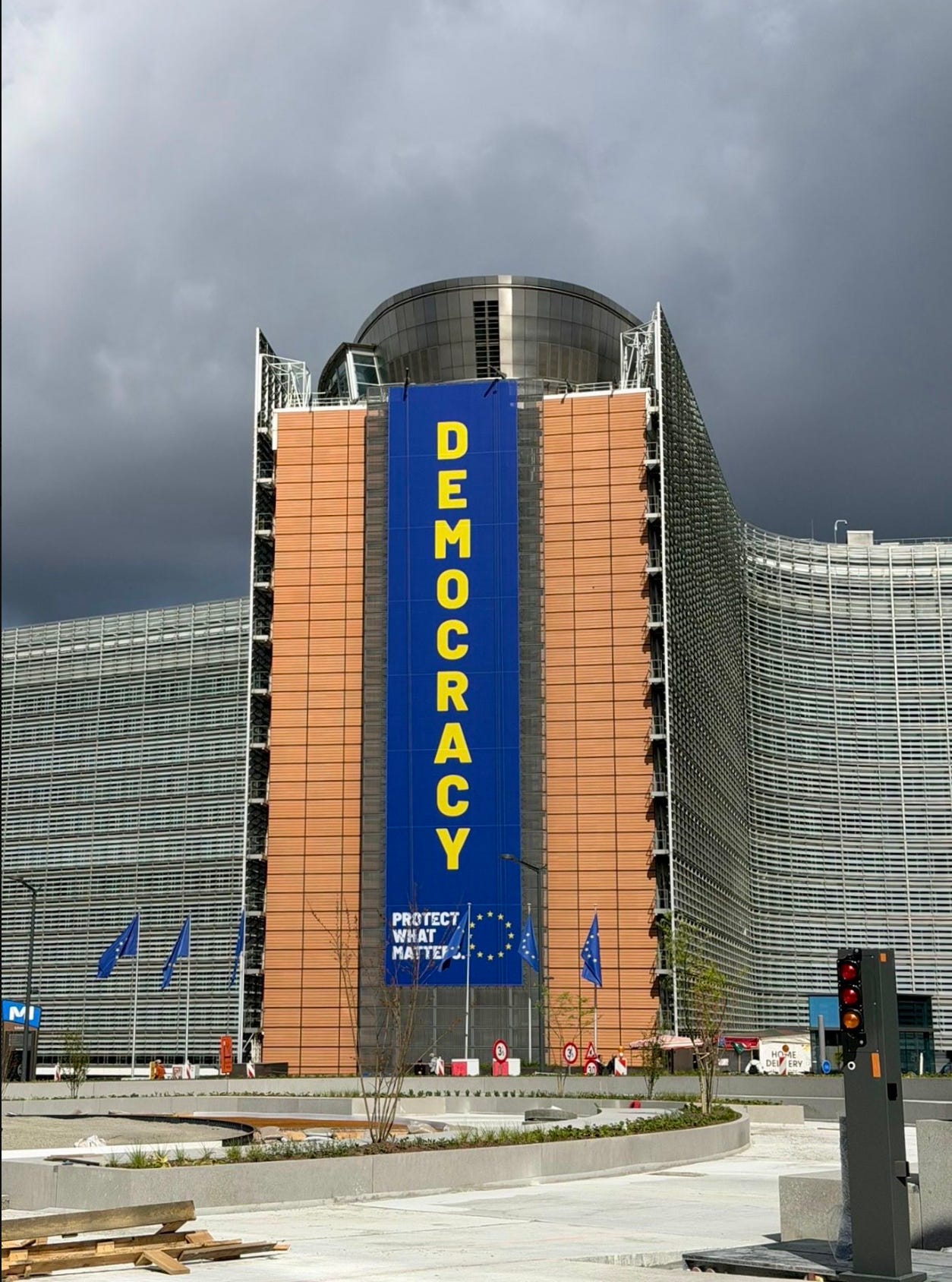
The European Commission is, by definition, 1 of the most isolated main executive bodies in the democratic world. Her Commissioners are nominated by national governments and approved by the European Parliament, which gives her a thin layer of democratic legitimacy. However, no European voter has always voted for the president of the Commission. No citizen of any associate State may vote against the Commissioner. The Commission proposes legislation, carries out their legislative process, and then enforces it by sitting at a safe distance from people whose lives are governed.
This solution could be defended erstwhile the European task was based on trade coordination and reduced duties. However, it is becoming much harder to defend as the Commission's scope expands to agriculture, energy, speech, finance, migration, public wellness and now besides includes the contents of a gardener's seed sachet.
Consider the pattern.
During the COVID pandemic, the Commission oversaw the implementation of digital medical certificates that made the free movement of persons, 1 of the fundamental rights of European citizenship, dependent on compliance with medical recommendations. This strategy was presented as temporary and voluntary. In practice, it has shown how rapidly centralised authorities could restrict fundamental freedoms with bureaucratic endorsements as shortly as these institutions considered that the crisis justified this.
Commission orders for vaccines against COVID-19, and in peculiar contracts with Pfizer, negotiated in part through private text messages between Commission president von der Leyen and president Pfizer, stay vague. The European Ombudsman stated that the refusal to make these communications available was administrative irregularities. The European Court of Justice later issued a judgement against the Commission, citing the rule of transparency. Billions of euros were spent on public money and the Commission fought to leave no trace. This is not typical of an institution that considers itself liable to the public.
On migration, the Commission initiated infringement proceedings against associate States, notably Hungary and Poland, whose elected governments adopted a border policy reflecting the clear preferences of their own citizens. The message was clear. Democratic mandates at national level could not repeal directives from Brussels, and non-compliance with them entailed financial penalties. National voters, citizens of these countries, have actually heard that their votes may be ignored by an institution they have not chosen. A typical end-to-end slander was that governments that rejected the Commission's edicts were named by the European mainstream media "extremely right", and US media obeying the Democrats obediently picked up this stereotype.
In practice, the Digital Services Act extends the powers of the Commission to average online content to a full block of countries, with only now beginning to focus on censorship of political discourse, freedom of speech and freedom of the press.
As regards energy, the Commission's injunctions on green energy solutions have served to introduce policies that have led to energy shortages in manufacture and households in fresh years and price increases, with the costs borne by average Europeans alternatively than officials who have developed these policies.
The PRM regulation fits perfectly in this scheme. The non-election executive body proposes detailed rules governing the area historically managed by farmers and local communities. These provisions are packed in a method language that hides their meaning and applicable effects. Compliance is enforced by penalties which most severely affect those who have the least chance to accept them. National Parliaments have limited possibilities to amend or reject government erstwhile adopted. The affected citizens – farmers, gardeners and tiny farmers – do not have a direct appeal.
This is not democracy in any sense. This is not even a constitutional republicanism that has served the Western tradition for centuries. It's an administrative government governed by an organ that's out of control for social responsibility. Seed regulation is just the latest area that this model of governance has occupied.
Why Americans Should Observe Carefully
American readers may want to see all this as a European problem. But it's not. It's an announcement.
Regulatory architecture built in Brussels does not stay in Brussels. It spreads through global efforts to harmonise, trade agreements and the silent coordination of agency activities, which increasingly specify global governance. erstwhile the EU sets a precedent for centralised seed control, this precedent becomes a mention point. erstwhile the EU shows that illness rhetoric can justify consolidating agricultural power, this manual becomes available to regulators worldwide.
Americans who have doubts about this should look at patterns already seen in their country.
Raw milk, whose production and consumption was legal throughout the past of humanity until recently, is presently being hunted in many states by armed raids on tiny milk mills. The reason is disease. The consequence is consolidation.
Small egg producers are faced with increasingly stringent regulatory requirements that large industrial companies easy accept. The reason is disease. The consequence is consolidation.
Independent slaughterhouses have fallen, with about 1 and a half 1000 in the 1970s now remaining respective hundred, driven by USDA regulations, whose compliance costs are negligible for Tyson and Cargill, and deadly for the local butcher. The reason is food safety. The consequence is consolidation.
Home food rules vary greatly according to state, and many jurisdictions restrict the sale of home baking through complex licensing systems. Public wellness is the reason. The consequence is consolidation.
Herds of home poultry have been minted in millions of pieces under the avian influenza protocols and compensation structures favour large commercial farms at the expense of tiny producers. The reason is the disease. The consequence is consolidation.
Furthermore, antibiotics for topical usage in the treatment of wounds in animals were withdrawn from the marketplace as the FDA had to comply with the European Union's requirements. American regulators argued that export competitiveness and global adjustment required a ban Sales of these products on the home market.
The seed government has not yet reached the United States in a European form. Patent law, seed utility patents, licensing restrictions enforced by companies specified as Bayer and the progressive erosion of conventional farmers' rights to store seeds through contract law have already mostly done the same by means of various mechanisms. The American way to consolidate seeds was through intellectual property alternatively than regulatory registration, but the goal is the same.
And erstwhile Europeans finish building their camera, American regulators will have the template ready. They will trust on European standards. They will trust on harmonisation. They will talk about diseases, safety and modernisation. The arguments will be known due to the fact that they have always been and will be the same. The consequence will be known due to the fact that it has always been and will be the same.
The American conservative instinct to defend local knowledge, local power and local self-sufficiency is not nostalgia. It is not a preference for what is rustic, at the expense of modernity. This is simply a belief, based on hard experience, that erstwhile the ability to feed is given distant to distant institutions, something crucial in citizenship is lost. A nation that needs approval to plant is not a free nation. A nation whose seed resources are controlled by 4 corporations and regulatory bureaucracy is not a sovereign state, regardless of what its flag says.
What's truly at stake?
The seed is the smallest unit of agricultural freedom. It's besides the most fundamental. Everything else in the food strategy – farm, market, table – comes from the question of who controls seeds.
For 10 1000 years, the answer was simple. Whoever planted it, that answer built civilization. It has maintained diversity. She gave the abundance we inherited. It allowed communities to adapt to their circumstantial conditions and to last shocks that could not last uniform systems.
The answer that the European Commission is now proposing is different. Whoever registers, certifies and pays the fee will in time lead to impoverishment of agricultural diversity throughout the continent. It will lead to a shift in European agricultural production possible from many to few. It will destroy, through economical gravity, alternatively than a full ban, tiny farmers and regional varieties, which were the silent driving force behind agricultural resilience.
And it will make a precedent, legal architecture, and rhetorical strategy of conduct that will let for doing the same anywhere else.
Garden is not a hobby. The farm isn't just business. Seeds aren't just commodities. They are a material foundation on which a free nation can feed without asking permission. erstwhile this foundation is beyond regulation, independency built on it disappears.
If you think it'll stay abroad longer, I have a bridge in Brooklyn you can buy. Americans watching developments in Europe do not look at abroad curiosity. They're watching the rehearsal. The question is whether they will admit the show erstwhile it begins on their own stage, and whether it will inactive be possible to close it by then.
JGM/RWM
Malone News is simply a publication funded by readers. To receive fresh entries and support our business, consider a free or paid subscription.
Malone News