
The war of Russia against Ukraine changed the way of reasoning about tiny unmanneds, communications in the field of combat and back-up protection. Chinese military publications increasingly discuss the usage of FPV drones, electronic combat, unmanned boats, and defence against them. In publically available reports of exercises and presentations of equipment, any of these issues are included in the training and improvement of drone systems.
From reflection to exercise
Drones utilized in Ukraine are frequently tiny and comparatively cheap, but their operation depends on the full system. They must detect the target, transmit the image and coordinates, receive the decision to usage fire and attack themselves. The enemy side is operated by radars, jammeres, barrel weapons, rockets, nets and simple physical shields. Changing 1 component — specified as the way of control — forces change on both sides.
In Chinese military papers, in particular, the subject of shortening the time between mark detection and impact is repeated. The reconnaissance drone is not only to transmit the image to the operator. It is to enter a chain that combines observation, transfer of data, decision of the commander and fire of artillery, rockets or another unmanned attack. The material published by the “PLA Daily” describes Russian experience that may take 3 to 5 minutes.
This is besides a direction visible in Chinese exercises. The coverage of the tests of the ground troops, published in August 2025, showed the interaction of drones and unmanned land vehicles. The first script resulted in the failure of the attacking organization due to the fact that the defence utilized various anti-drone agents. After analysis, the mode of action was changed and another effort was made. specified tests are designed to verify whether equipment, communications and command methods work together, not just separately.
In the same stream fit publicly shown unmanned and drone systems during the September 2025 parade. The Chinese authorities then presented rocket-artillery kits designed to combat drones, laser weapons and high-power microwave weapons. The show does not prejudge the number of systems admitted to service or their usage in combat conditions, but – most importantly – confirms the directions of improvement revealed by the Chinese side.
FPV drone and interference problem
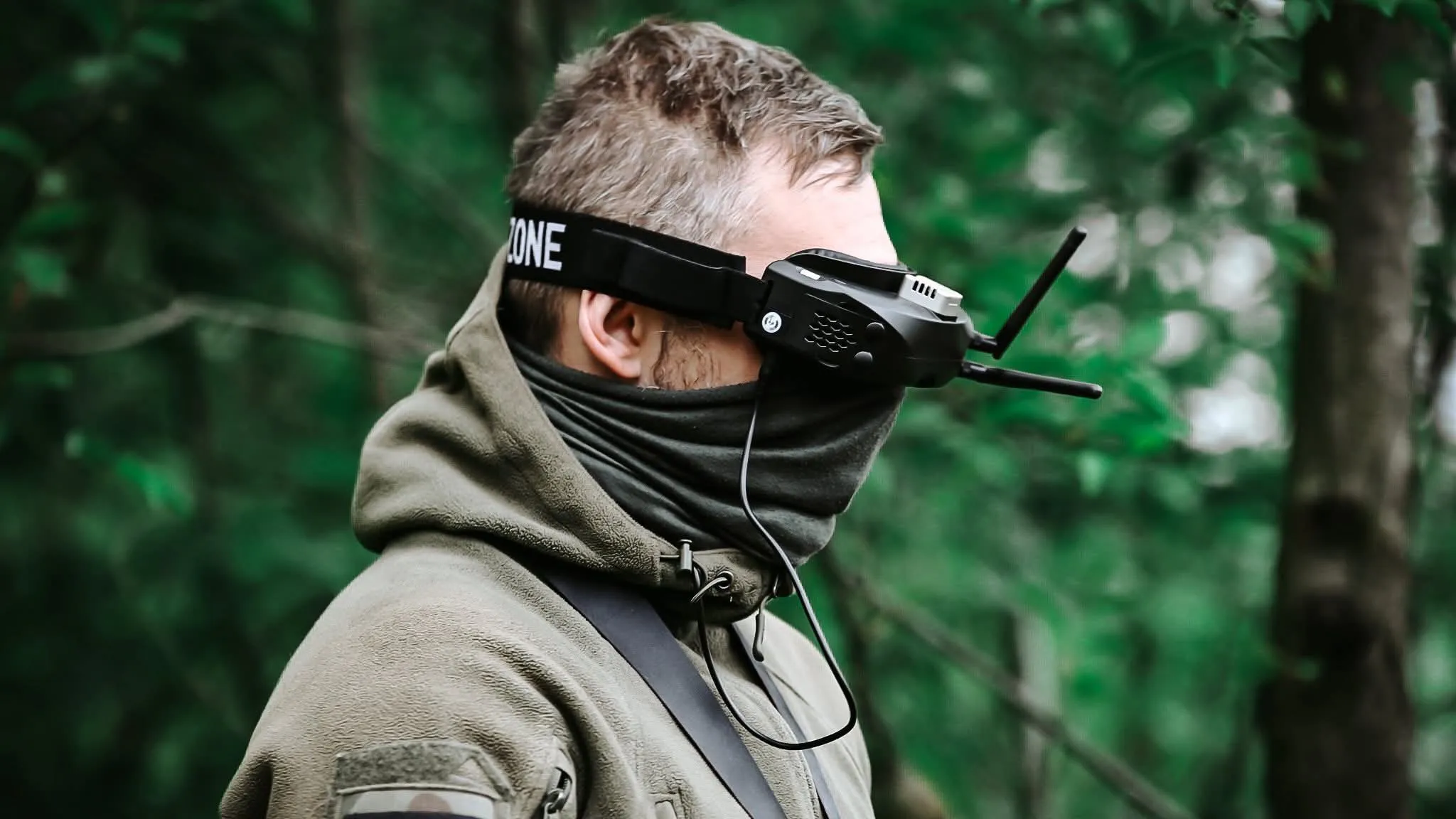
FPV is simply a tiny unmanned vehicle controlled on the basis of an image from an onboard camera. The operator sees the image in real time and leads the device to its destination. In Ukraine, specified drones are utilized to recognize, guide fire and direct strikes. Their weak point is radio communication with the operator. It may be disrupted or utilized to detect the location of the machine.
One of the answers became drones controlled by fiber-optic thread. alternatively of transmitting images and radio commands, these drones pull along a thin wire connecting them to the operator. Disturbing radio waves will not interrupt specified communication due to the fact that the signal runs inside the fiber. However, this does not mean that specified a drone is immune to any countermeasure.
The wire can hook up with trees, lines, buildings or break off for different reasons. The longer the wire, the larger the drum must lift the drone, which affects the mass, scope and volatile properties. The Chinese survey of April 2025 besides highlighted the anticipation of detecting fibre optics under certain lighting conditions and the greater sound of specified construction. The defence can so combine optical observation, acoustic sensors, radars, physical barriers and drone capture itself.
The proposals concern not only aviation. Chinese publications treat electromagnetic interference as 1 of the basic elements of the fight against unmanned workers, but at the same time item the request for respective layers of defence. In August 2026, “PLA Daily” described the request to combine sensors, common data exchange standards and training utilizing a simulated opponent. The aim is to detect a tiny mark at an early stage, to choice a means of reaction and not to usage costly weapons against objects that can otherwise be stopped.
Ports and ships under observation
The second area of analysis concerns the sea. Ukraine utilized unmanned boats to attack Russian Black Sea Fleet units, ports and coastal infrastructure. This kind of boat can carry explosive, camera, reconnaissance or another equipment. However, its effectiveness depends on communication, mark data, sea conditions and the anticipation of port defence.
The August 2026 Chinese military material describes Russian methods of protection against specified threats: port approach firewalls, additional unit shields, direct defence systems, reflection drones, electromagnetic interference and chopper use. The article besides indicated that effective defence must detect targets in good time, since a tiny boat moving low above water is harder to separate from waves and another objects.
This helps explain why ports, ships and coastal infrastructure are increasingly appearing in Chinese drone publications. In September 2025, unmanned submarines, unmanned boats and mines were shown in Beijing. In parallel, they are conducted Jiutian unmanned tests to carry smaller drones. They are different types of platforms, but they combine the request for constant communication, designation and interaction with manned forces.
Communication is part of the weaponry
The war in Ukraine showed that the drone is not useful without unchangeable data transmission. This includes both camera images and location information, reconnaissance data and artillery commands or another systems. Therefore, Chinese military texts pay attention to satellite networks in low orbit. specified constellations can supply a link in a large area, with little hold than conventional geostationary satellites.
This is not just a substance of scope. erstwhile the radio signal is jammed, the strategy must have backup communication routes, the anticipation of changing frequencies or another means of data transmission. In Ukrainian experience, commercial technologies, fast hardware modifications and direct contact between operators and constructors took a peculiar place. Chinese analyses describe this process as part of the modern battlefield, but publically available materials do not indicate to what degree ChALW has reproduced a akin model of work.
However, in relations with Chinese exercises, you can find scenarios in which naval and aviation forces operate in conditions of strong electromagnetic interference and simulated attack of unmanned boats. specified exercises test not only weapons, but besides the resilience of the command system, data exchange and cooperation of various types of troops.
The swarm remains a theoretical solution
The mass usage of drones is not the same as an autonomous swarm. respective twelve machines can start at the same time and hit from different directions, but inactive be controlled separately or carry out pre-programmed tasks. The hive in a strict sense requires that devices exchange data themselves, share tasks, avoid collisions and respond to changing situations.
The Chinese National defence News pointed out that Russia's war against Ukraine had not so far brought public proof of specified a mature, autonomous swarm utilized in the battlefield. The authors exchanged obstacles: difficulty in controlling multiple drones, vulnerability to interference, limitations of algorithms, energy, and mass of equipment that can be carried by a tiny machine.
This caution coexists with tests. Chinese units and investigation centres conduct exercises with drone groups and unmanned land vehicles. However, before the cooperation of many machines becomes repetitive in the conditions of interference, variable weather and the operation of the opponent, it must pass further checks.
Russia's war against Ukraine gives China material to analyse without their own forces active in the conflict. It appears from publically available sources that the proposals concern in peculiar the fast transmission of data, the resilience to interference, the defence against tiny targets and port security. The translation of these observations into exercises and the improvement of equipment is evident. It is not known, however, how solutions tested during peacetime will behave in real conflict, where equipment, communication and command are simultaneously subjected to the force of the opponent.
Email: [email protected]
Sources
- "无人机战场运用呈现新趋势" [Trends in the usage of drones on the battlefield], PLA regular / China Military Online, 24 October 2024: http://www.81.cn/yw_208727/16347192.html
- "成也光纤 ,败也光纤——光纤无人机应用的利与弊" [Advantages and limitations of fibre optic drones], PLA regular / Xinhua, 18 April 2025: https://www.news.cn/milpro/20250418/1dc5e8bd29a4a03bcc0c96976ee13d/c.html
- ‘无人机‘蜂群’、机器‘狼群’协同作战演习’ [Exercise interaction exercises of drone swarms and unmanned land vehicles], CCTV / Xinhua, 4 August 2025: https://www.xinhuanet.com/milpro/20250804/24b4810aac0a4df6b1523bc0b377a0c8/c.html
- "九三胜利日阅兵分列式各梯(方 )队亮点速览" [Review of the parade formation of 3 September 2025], Xinhua / Ministry of Defence of the PRC, 3 September 2025: http://www.mod.gov.cn/gfbw/qwfb/16407156.html
- "我军新时代军事训练实战化水平再上新台阶" [Development of a realistic CHALW training], PLA regular / Xinhua, 23 October 2025: https://www.news.cn/politics/20251023/ac43b8e59ece406e9f01b3107a3d33da/c.html
- ‘把准反无人作战力量建设着力点’, PLA Daily, August 16, 2026: https://www.81.cn/yw_208727/16479628.html
- ‘无人水面艇搅动海战场’, PLA Daily, 24 August 2026: https://www.81.cn/yw_208727/16480908.html
- "蜂群作战 , ,'" [Why autonomous swarms have not yet become a common form of struggle], China National defence News / Xinhua, 15 October 2024: https://www.xinhuanet.com/milpro/20241015/e8f11a82c7864e1bae05e947670ed44f/c.html
- "乌克兰无人机生态系统的创新之路" [Development of Ukrainian drone ecosystem], China Aviation News / Xinhua, 16 May 2025: https://www.news.cn/milpro/20250516/a8f6f0c7c51643a98e5c1f67f62862/c.html