Written by Jakub Marszałkiewicz
Introduction
In the shadow of the Ukrainian War, the possible armed conflict in the Pacific remains smoky, between the US and the People's Republic of China. This issue will be presented here, among others, on the example of the book “Carrier Killer. China’s Anti-Ship Ballistic Missiles and theatre of Operations in the Early 21st Century” (Gerry Doyle, Blake Herzinger, Wyd. Helion, UK 2022), which describes the capabilities of Chinese anti-ship missiles in the early 21st century and another sources listed in the footnotes.

Fig. 1. Book cover with side form DF-21D rocket launchers
The Pacific as a site of possible conflict in the 21st century.
The end of the "single-polar moment" period and many sensational films from the late 20th century have created in our minds the image of the US armed forces as indestructible and capable of defeating any enemy. In particular, US Navy air strike groups capable of maintaining or restoring order (i.e. a state compatible with US interests) worldwide enjoyed a peculiar estimation. It was frequently actual that even a single American atomic aircraft carrier has more combat capabilities than the full armed forces of many smaller countries, including Poland. The Pacific is at the same time a peculiar place on the map of the world, through which the most crucial maritime routes pass, and on which the political-military potentials of People's China and the USA are presently confronted. These matters are described in detail, among others, in Jack Bartosiak’s book “Pacific and Eurasia. On War 2016[1]

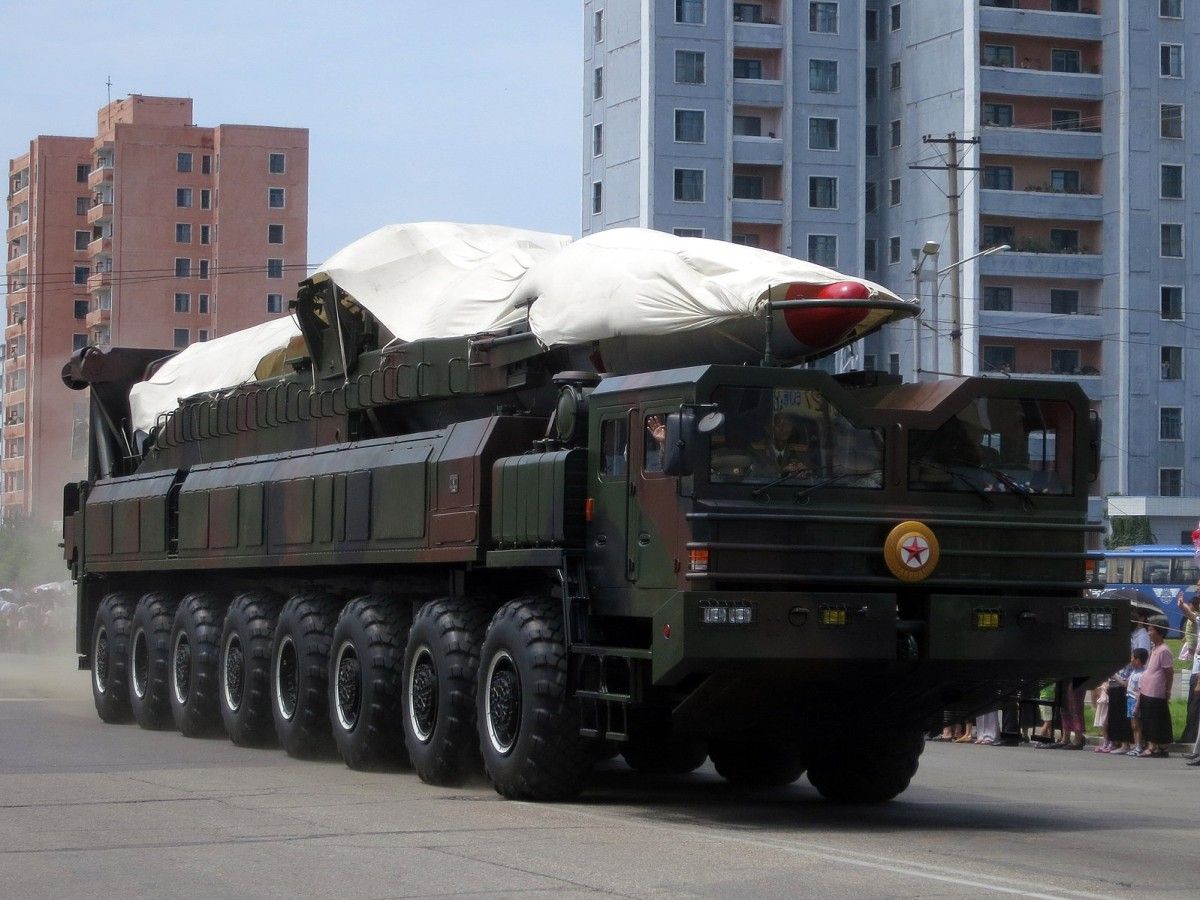
Fig. 2. DF-21D and DF-26 projectile launchers photographed at the same location on the Beijing parade in 2015.
Source: https://en.wikipedia.org/wiki/DF-26 and https://en.wikipedia.org/wiki/DF-21
For respective years, however, the aforementioned imagination of the insurmountable U.S. Navy has been trying to undermine the Chinese, especially with constantly developed ballistic and hypersonic anti-ship missiles. Their existence may undermine US dominance over Pacific waters, where Western forces ruled for over 100 years (if they do not number a fewer years of strong nipponese naval presence during the second century).
In the late 20th century, People's China implemented an advanced program to make and rebuild their own method elites. At the turn of the 20th and 21st centuries, thousands of Chinese were sent to survey in Western countries (especially the US), where they gained the latest cognition among others. in the fields of electronics, computer science, aviation and rocket technology. The West allowed this due to the fact that the People's China was then considered to be a backward almost failing state, which could be controlled as it was done in the 19th century[2]. The then intellectual maps of Western societies have not yet allowed China to see a rising power capable of threatening the United States globally.
The improvement of advanced Chinese weapons for years has not been sufficiently seen. For example, only a fewer general information on the improvement of Chinese hypersonic weapons was included in the DIA study “China Military Power 2019”, published by American agency, although the study did not contain secret data.[3].
On the another hand, in March 2018, U.S. strategical Command Commander General John Hyten stated that "we have no defence to prevent the usage of specified weapons against us"[4]. It was hypersonic and ballistic missiles, besides anti-shipping. In 2021, the same general added that the case had not improved significantly, and the US must rapidly make adequate defence systems[5].
Interestingly, in 2017, the American Institute of Aeronautics and Astronautics, in collaboration with the Chinese University of Xiamen, organised a conference "21 global Space Planes and Hypersonics Technologies Conference". any 300 authors accepted the conference, including only about 50 from non-Chinese names[6]. any articles are available online on the AIAA website[7].
In 1 of the next editions of this conference held in Canada for about 70 works, only 3 were written by people of Chinese origin[8].
After any time, the previously mentioned Chinese students returned from the West (especially from the US) to China, where they developed their own science. This was possible both by the appropriate actions of the Chinese authorities, which guaranteed good working conditions for scientists returning from abroad, and by the circumstantial Chinese mentality that makes the vast majority of Chinese always faithful to China. They are aware of belonging to the oldest civilization of the world, for which they must work, and all power presently reigning there is only temporary. Therefore, Chinese non-communist non-communist co-operated frequently with the authorities of the PRC. The cases of Chinese transition to the possible opponent's side are highly rare. Surprisingly, even those Chinese who in their own country were sentenced for political reasons to dense sentences (including the death penalty) and had to flee to the West, already abroad and so frequently collaborated with the services of communist China.
An interesting example is Qian Xuesen, who came to the U.S. in the 1930s from the allied China then ruled by Kuomintang and graduated from the celebrated MIT (Massachusetts Institute of Technology) University of Cambridge, and then worked in the Theodor von Kármána group in Caltech (California Institute of Technology in Pasadena). In the 1950s, he was 1 of America's best rocket technicians, but the US authorities did not trust him adequate to let him closer to his space program. He was suspected of cooperating with Chinese intelligence and was kept under home arrest for respective years. In 1955, he was named from the PRC as a group of American airmen captured during the Korean War. Being already in China, he became the leading scientist for the improvement of the first generation of Dong Feng rockets and the Chinese space program[9]. There were more akin people.
Contemporary Chinese work on hypersonic weapons
Returning to the times today, among the fewer disclosed information about Chinese scientists' work on hypersonic vehicles (missiles) we can list respective major directions[10]:
- Analysis of American work on hypersonic vehicles;
- Leading respective another rocket routes to the same mark and hitting it at a akin time;
- Vehicle visibility in the ultraviolet and infrared radiation scope comparative to the angle of impact of its flight;
- The effect of fluctuating the airflow on the vehicle's heating (missile) and caused by these vibrations affecting the generation of sound shock waves;
- Development of control methods, both aerodynamic, gas-dynamic in the atmosphere, in the phase of entry into the atmosphere and in space, including the execution of "jumps" by bouncing from the advanced atmosphere layers;
- Tests on the impact of laser beams on the constancy of impact waves around the vehicle, which is related to the anticipation of shooting down specified vehicles with energy-driven weapons;
- The anticipation of maintaining radio communication with the vehicle during the inlet into the atmosphere and the formation of an ionised gas coating;
- Impact waves on radar detection;
- Possible usage of artificial intelligence in hypersonic vehicles (missiles).
improvement of Chinese anti-ship missiles
In the preliminary to the book "Carrier Killer", the authors point out that the impulse, which specifically prompted the Chinese government to intensify its work on advanced anti-ship missiles was the 1996 Taiwanese Crisis, erstwhile a squad of U.S. Navy with USS independency and USS Nimitz aircraft carriers entered the sea close Taiwan. The Chinese forces did not then have a chance to fight the American fleet and were incapable to respond effectively[11]. Another origin that accelerated the improvement of advanced Chinese weapons was Operation Desert Storm in Iraq, 1991. Iraq's short-lived armed forces had akin equipment of russian origin to that of the People's China and to a certain degree akin organization.
The Chinese government realized that the construction of a fleet that was qualitatively and numerically equivalent to the US The Navy would be very costly and long-lasting. It was decided, so to invest mainly in asymmetric measures useful in their concept of active defence at sea. Thus began the past of the improvement of Chinese ballistic and hypersonic anti-ship missiles of the latest generation, which are now being perceived in the US as a very serious threat. Similarly, during the Cold War, the Soviets have invested in the improvement of winged anti-ship missiles, any of which (e.g. Ch-22) are presently being utilized against Ukraine and are very hard to shoot down.
The most celebrated Chinese rocket of this kind is the DF-21 ballistic rocket (Dong Feng 21, U.S./NATO code: CSS-5), which according to authoritative data gained combat readiness in the 1990s, although its most advanced version of DF-21D was created in the 21st century.
The DF-21D was the world's first anti-ship rocket (ASBM) launched. DF-21 may besides service as anti-satellite and anti-missile weapons. Its scope is most likely 1,450 km, and the kinetic effector that hits the mark is simply a powerless maneuvering MRV-class hypersonic glider (Maneuverable Reentry Vehicle)[12]. Its guidance methods are debatable. It is believed that this projectile is likely to combine information from satellites, radars and ground sensors, and at the end of the flight it is directed precisely at its mark with its own radar, cameras in the visible and invisible range, and possibly with a passive radio communication sensor – this method was expected to be guided by an experimental russian ballistic anti-ship rocket R-27K (not to be confused with an air-to-air rocket of the same name) from the Cold War period at which the DF-21D was expected to be partially modeled.
China has most likely placed many underwater sound sensors in a large part of the Pacific to watch ship movements. Additionally, it can be assumed that the DF-21D, in addition to the combat effector, may besides release a group of decoys misleading the opponent's defense. They can be both aerodynamic, ballistic and balloon objects. So the opponent may think that not 1 or respective missiles are flying towards him. According to Chinese data, the DF-21D rocket effector can hit the ship in an area 100 km in diameter from the point above which the effector entered the atmosphere. This would mean that this effector can spin and fly up to 50 km each way from this point. Nor can it be excluded that group-based effectors and decoys can make their information network and exchange data on detected objects.
It seems that Chinese anti-ship missiles are already performing their task with their very presence to any extent. They force Americans to reduce offensive weapons on their ships. For respective years, it has been possible to observe a phenomenon in which the U.S. Navy reduces the amount of water-ground and water-water (e.g. BGM-109 Tomahawk) taken by ships to defend its own fleet.
The exact amount of weapons taken is frequently secret, but most likely only 1 3rd of the US Navy's arsenal is an offensive weapon to destruct ground and water targets during a Pacific mission. The another 2/3 are anti-aircraft and anti-missile missiles, which are almost exclusively utilized to defend themselves.
This is akin to the situation of knights who during the end of the mediate Ages had to wear specified dense armor for their protection, that their mobility abilities were very limited, and after 20-30 minutes of being on the battlefield they had to retreat for rest. dense chivalry during this period was increasingly maintained mainly for prestigious purposes, while in practice the light military equipped with firearms and highly mobile weapons had much greater combat value. Although the firearms de facto declassified dense steel armor, the intellectual maps of the time for hundreds of years did not let it to be completely liquidated, and fresh cases of equipping soldiers with dense steel plates placed on the body continued to happen at the beginning of the 20th century. In addition, in the mediate of the 20th century, akin destiny was besides met by battleships (formerly known as liner ships), which in the erstwhile 200 years formed the basis for the fighting force of the world's leading war fleets. This phenomenon in the Western nomenclature is called senelity.
In addition to the DF-21D mentioned, China is besides developing a DF-26 anti-ship rocket with an even larger scope of 4000-5000 km. This is most likely a DF-21D improvement with an enlarged start phase and possibly improved effector. specified a large scope theoretically allows the firing of large parts of the Pacific, including the American Guam base. If you set up a launcher on any of the islands surrounding China (e.g.Spratly), even Malaysia (including critical of the global maritime movement of the Malakka Strait), the Philippines, most Indonesia, Thailand and a large part of Myanmar/Burma will be within reach.

Figure 3. DF-17 rocket launcher with hypersonic glider (missile) DF-ZF
Source: https://en.wikipedia.org/wiki/DF-ZF and https://en.wikipedia.org/wiki/DF-17
Missiles of this class of DF-21D and DF-26 undoubtedly importantly limit the unquestionable position of US Navy carriers, which under the current conditions would gotta operate far further from the territory of their opponent than was assumed during the Cold War. For this reason, the US Navy invests in the improvement of unmanned long-range aircraft.
In addition to DF-21D and DF-26 China besides has a number of lighter anti-shipper missiles with a much smaller range. The most advanced of them is the DF-17 with a scope estimated at 800-1800 km. Its effector is simply a hypersonic HGV-class DF-ZF glider (Hypersonic Glide Vehicle) moving at 5 Ma speed, which is reported to be much more feedback and can more effectively maneuver before hitting the mark than DF-21D and DF-26 rocket effects. It is gladly shown by the Chinese authorities on parades[13].
According to Chinese sources, even more advanced DF-100 (CJ-100, U.S./NATO code: CH-SSC-13 Splinter) with a scope of 2000-3000 km and the accuracy of the hit (CEP) only 1 m[14].
Work is besides being carried out on adapting DF-21D and DF-100 missiles to launch under the Xian H-6 (Chinese importantly modified copy of russian Tu-16) bomber, which would importantly increase the scope of the usage of these missiles. The H-6 bomber has a full scope of about 6,000 km and its operational scope is about 3,000 km. Together with the scope of DF-21D or DF-26 rockets, specified a bomber could theoretically hit targets even 7,000-8000 km from the take-off site or even more than 10,000 km, assuming that the bomber would not return to the launch site and launch the rocket at the border of its scope (after which the aircraft would be lost).
Of course, these are hypothetical data based on authoritative Chinese messages and conjectures. In practice, the scope of specified systems would most likely not be that great, although it is undoubtedly a very dangerous weapon.
In 2017, the Center for fresh American safety conducted a computer simulation of the conflict in the Pacific. It has shown that Chinese supersonic ballistic missiles already within the first fewer hours, and sometimes even minutes would most likely accomplish the following objectives:
- Eliminate all major U.S. weapons depots and Pacific headquarters;
- Damage and prevent nearly all American ships stationed in Japan from taking up combat;
- Paralyzing all U.S. aviation bases in Japan by making holes in runways and taxiways;
- Damage to the level preventing the take-off and demolition of about 200 U.S. aircraft, especially in Japan.
The intellectual effect of specified actions could be comparable to the effect caused by the nipponese attack on Pearl Harbor in 1941, with the difference that at the time the American manufacture was able to control comparatively rapidly to full war production (although not without problems), while the American shipyards effectively rebuilt losses after that attack.
Currently, the number of shipyards that the US Navy can number on is much smaller and the ships are much larger and harder to repair and build. For example, on 21 August 2017, there was a collision between USS John S. McCain (DDG-56) and a civilian tanker. The ship was then repaired for about 2 years and returned to service only in late 2019.
In addition, the Chinese fleet has already outnumbered the US Navy for respective years[15]. In fact, the Americans now have an advantage over China in the seas almost exclusively in the number of aircraft carriers and flying machines. According to authoritative data, the PRC Navy presently has more than 620 ships (including 3 aircraft carriers) and more than 570 aircraft and the US Navy has more than 480 ships (including 11 aircraft carriers) and more than 2600 aircraft. Of course, these are authoritative numerical data that do not always gotta coincide with qualitative data.
From the information provided here, the Chinese rockets of the latest generation are highly dangerous weapons capable of paralyzing any enemy at sea. Is that truly the case? hard to say. Undoubtedly, the threat on the part of Chinese rockets is very large, although the authors of the survey described here point to respective factors that may weaken the effectiveness of Chinese effectors.
First of all, no 1 has yet tested Chinese hypersonic missiles in real combat conditions. The Chinese fired them only to model aircraft carriers set up in the desert, obtaining hits. U.S. Navy ships have many defence systems that would in appropriate circumstances most likely be able to shoot down a Chinese effector. Presumably, a rocket specified as the DF-ZF can be shot down even with an AIM-120 AMRAAM anti-aircraft rocket from an F/A-18 fighter, provided it is in a position suitable for firing.
The problem is alternatively the number of attacking effectors and the number of defence rockets and their velocity of fire. In this case, the Chinese would gotta primarily cover a large number of launched rockets. Their chances of an effective attack would undoubtedly increase the release from DF missiles besides lures alongside combat effects.
Due to the limited velocity of rocket systems and the cargo capacity of ships, U.S. Navy is presently working on advanced DEW (Directed Energy Weapon) weapons, and especially laser systems, which may have theoretically infinite velocity of fire, and their time of operation is almost exclusively dependent on on on-board energy sources.
Besides this restriction, China may be their policy. The launch of a strategical rocket most likely requires acceptance at the highest government level. It may take respective to dozens of minutes to arrive with information about an American squad detected and to ask them to accept the beginning of fire to specified a advanced level, at which time the American ships will change their positions adequate that the chance of their successful hit will fall significantly. Although ships are among the slowest modes of transport, their velocity cannot be underestimated. The American airfield strike squad USS Nimitz moving on the open sea at about 30-35 knots (approximately 60-65 km/h) has a akin average velocity to a car moving on Polish roads. This means that within the time that the Chinese would request to make the decision to launch missiles, the American squad could go a fewer miles away. In the open sea, this is not much, but in appropriate circumstances it may reduce the effectiveness of the Chinese attack.
In addition, cyber attacks on Chinese rocket and launcher management infrastructure are besides possible and the anticipation of an overtaking attack on specified infrastructure by the US Navy.
It is besides worth adding that fresh Chinese rockets undoubtedly pose a immense threat to American (and not only) stationary bases in the Pacific region, with Guam at the head. These are speculations, of course, and the actual effectiveness of Chinese missiles and the American defence against them is not entirely known.
It may besides be hard to foretell the possible sale of specified missiles to Iran or possibly Russia (maybe with a production licence), which cannot be completely excluded in the future. Iran's possession of specified missiles would give this country the chance to effectively task force in the Persian Gulf and the Strait of Ormuz, through which transport of around 20% of planet oil production passes.
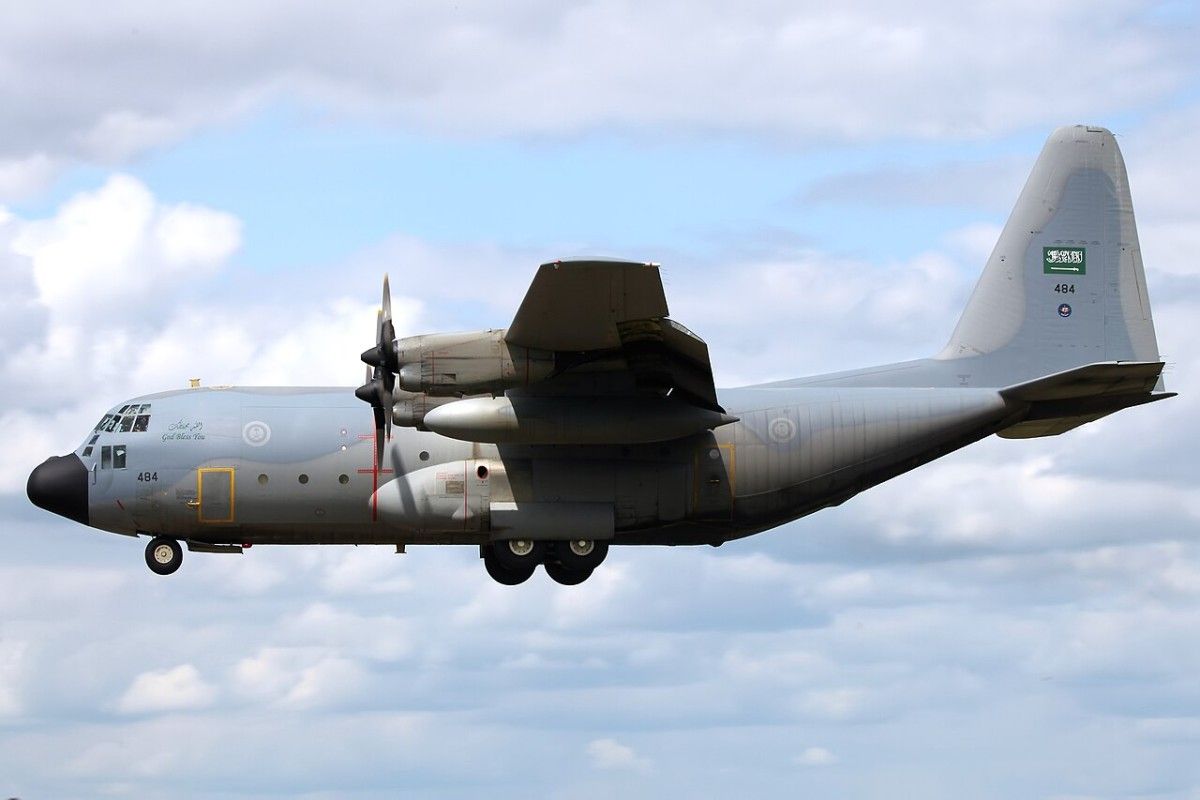
The Chinese have already made akin deliveries in the past. In January 2014, "Newsweek" revealed that Saudi Arabia secretly purchased a number of mid-range DF-21 ballistic missiles in older varieties (CEP 30 m) in 2007.[16]. It was besides stated that the American CIA agency authorised the conclusion of this agreement, provided that the missiles were modified so that they were incapable to carry atomic warheads[17]. Saudi Arabia had previously in 1988 secretly acquired DF-3A Chinese ballistic missiles. Although DF-3 had mediocre accuracy (CEP 1000-4000 m), it was only suitable for firing large area objects specified as cities and large military bases. This made them useless during the 1990–1991 Gulf War and were incapable to effectively retaliate for Iraqi Scud-class rocket attacks. Saudi DF-21 may most likely usage the same 12 launchers that were originally purchased with DF-3. Unknown number of DF-21 missiles in Saudi hands[18]. The Chinese have besides sold any smaller missiles to Iran in the past, including HY-2 antiship missiles[19]. The media reports that the Iranian authorities are presently powerfully seeking further supplies of Chinese weapons[20].
Chinese missiles from DF-21D, DF-26 and DF-17 at the head rise concern not only in the US, but besides in all Asian countries, especially as they let China to gain a large advantage besides over India.
Completion
The authors of the book "Carrier Killer" propose that even if the mission of sinking an American aircraft carrier may prove impracticable for Chinese rockets, simply forcing US Navy teams to abort the task ("Mission Killer") could be a success for the Chinese side. However, in the current situation, it would be alternatively impossible for the U.S. Navy squad to decision to the sea close Taiwan in 1996. China undoubtedly has far ahead of another countries in the improvement of the hypersonic industry[21]. amazingly and shockingly, the Chinese have not only overtaken Russia, but most likely besides the current capabilities of the United States arms manufacture (which, with appropriate investments and organisations, may shortly increase)[22].

Written by Jakub Marszałkiewicz
Email: [email protected]
Editorial: Leszek B.
Email: [email protected]
Sources
Publications
- BALLISTIC AND CRUISE rocket THREAT, NASIC-1031-0985-09, USA 2009
- Bartosiak J., Pacific and Eurasia. About the War, Zona Zero, Warsaw 2016
- China Military Power 2019, DIA, USA 2019
- Doyle G., Herzinger B., Carrier Killer. China’s Anti-Ship Ballistic Missiles and theatre of Operations in the Early 21st Century, Helion, UK 2022
- First PLA Rocket Force CJ-100 Unit Likely Identified, China Aerospace Studies Institute, 4 November 2020
- Kramarski I., Sputnik's fresh effect. U.S. attempts to build hypersonic weapons, "Army Defence Technology Report" 3/2020.
- Kramarski I., Sputnik's fresh effect. Red dragon leader?, “Army Defence Technology Report” 7/2020.
- Kramarski I., Sputnik's fresh effect. Not just the powers, the “ Defence Military Report” 10/2020.
- Porch D., The Taiwan Strait Crisis of 1996: strategical Implications for the United States Navy, “Naval War College Review”, Vol. 52, No. 3/1999
- Shulc T., Defilada on the occasion of the 70th anniversary of the PRC in Beijing, “War and Technology” 11/2019
Websites
- http://strategypage.com/htmw/htart/articles/2014/0210.aspx
- http://www.takungpao.com.hk/news/232108/2020/0330/431949.html
- https://arc.aiaa.org/doi/book/10.2514/MHYP17
- https://arc.aiaa.org/doi/book/10.2514/MHYP20
- https://ciaotest.cc.Columbia.edu/olj/meria/meria598_gill.html
- https://defense-update.com/2014/0502_saudi-arabia-unveils-part-strategic-mission-force-deterrent-move-iran.html
- https://en.wikipedia.org/wiki/DF-17
- https://en.wikipedia.org/wiki/DF-21
- https://en.wikipedia.org/wiki/DF-26
- https://en.wikipedia.org/wiki/DF-ZF
- https://en.xmu.edu.cn/2016/0112/c10845a192901/page.htm
- https://ksiazki.jacekbartosiak.pl/
- https://news.usni.org/2021/02/hyten-u-s-not-in-a-very-good-position-due-to-chinese-and-Russian-missile
- Capabilitieshttps://www.armyrecognation.com/september_2014_global_defense_security_news_uk/saudi_arabia_admits_to_purchase_of_chinese_df-21_mission.html
- https://www.express.co.uk/news/world/1218710/south-china-sea-us-vs-china-naval-power-compared-military-spt
- https://www.helion.co.uk/military-history-books/carrier-killer-chinas-anti-ship-ballistic-missions-and-theater-of-operations-in-the-early-21st-city.php
- https://www.jstor.org/stable/42643008
- https://www.newsweek.com/exclusive-cia-helped-saudis-chinese-mission-deal-227283
- https://www.politico.eu/article/vladimir-putin-ukraine-war-xi-jinping-china-russia-in-secret-talks-to-supply-iran-mission-propellant/
- https://www.voanews.com/a/what-are-hypersonic-weapons-and-who-has-them-/6492459.html
Footnotes:
- [1] J. Bartosiak, “Pacific and Eurasia. About the War”, Zona Zero, Warsaw 2016.
- [2] I. Kramarski, Sputnik's fresh effect. Red dragon leader?, “Army Defence Technology Report” 7/2020.
- [3] China Military Power 2019, DIA, USA 2019, https://www.dia.mil/Portals/110/Images/News/Military_Powers_Publications/China_Military_Power_FINAL_5MB_20190103.pdf
- [4]https://www.voanews.com/a/what-are-hypersonic-weapons-and-who-has-them-/6492459.html
- [5]https://news.usni.org/2021/02/hyten-u-s-not-in-a-very-good-position-due-to-chinese-and-Russian-missile-capability
- [6]https://en.xmu.edu.cn/2016/0112/c10845a192901/page.htm
- [7]https://arc.aiaa.org/doi/book/10.2514/MHYP17
- [8]https://arc.aiaa.org/doi/book/10.2514/MHYP20
- [9] I. Kramarski, fresh Effect...
- [10] Ibid.
- [11] D. Porch, The Taiwan Strait Crisis of 1996: strategical Implications for the United States Navy, “Naval War College Review”, Vol. 52, No. 3/1999, https://www.jstor.org/stable/42643008
- [12] BALLISTIC AND CRUISE rocket THREAT, NASIC-1031-0985-09, USA 2009, https://irp.fas.org/threat/missile/naic/NASIC2009.pdf
- [13] T. Szulc, Defilada on the occasion of the 70th anniversary of the PRC in Beijing, War and Technology 11/2019.
- [14] First PLA Rocket Force CJ-100 Unit Likely Identified, China Aerospace Studies Institute (4 November 2020), https://www.airuniversity.af.edu/Portals/10/CASI/documents/Research/CASI%20Articles/2020-11-04%20656%20Brigade%20CJ-100s.pdf and http://www.takungpao.com.hk/news/232108/2020/0330/431949.html
- [15]https://www.express.co.uk/news/world/1218710/south-china-sea-us-vs-china-naval-power-compared-military-spt
- [16]https://www.newsweek.com/exclusive-cia-helped-saudis-chinese-mission-deal-227283
- [17]http://strategypage.com/htmw/htart/articles/2014/0210.aspx and https://defense-update.com/2014/0502_saudi-arabia-unveils-part-strategic-mission-force-deterrent-move-iran.html
- [18]https://www.armyrecognition.com/september_2014_global_defense_security_news_uk/saudi_arabia_admits_to_purchase_of_chinese_df-21_mission.html
- [19]https://ciaotest.cc.Columbia.edu/olj/meria/meria598_gill.html
- [20]https://www.politico.eu/article/vladimir-putin-ukraine-war-xi-jinping-china-russia-in-secret-talks-to-supply-iran-mission-propellant/
- [21] I. Kramarski, Sputnik's fresh effect. Not just the powers, the “ Defence Military Report” 10/2020.
- [22] I. Kramarski, Sputnik's fresh effect. U.S. attempts to build hypersonic weapons, "Army Defence Technology Report" 3/2020.