Painful hit in Ukrainian heating. 1358th Day of War


The Russian forces seized the majority of Pokrovsk and de facto cut off defenders in Myrnohrad and respective remaining under their control of the towns to the west and south of the second of these cities. No further Ukrainian counterattacks aimed at unlocking the grouping have resulted. According to Ukrainian sources, 2 brigades stay in Myrnohrad, and in Pokrowsk – which, on the 1 hand, began to be entered by hostile motorized columns (previously, only pedestrian subdivisions led there) and, on the other, to penetrate Ukrainian peculiar forces – respective groups (defensors persist in respective places on the northern outskirts of the city). The tiny Ukrainian groups voluntarily left positions and attempted to get out of the lap or surrendered.
The aggressor's troops occupied Uspenivka in the Zaporo region – the main Ukrainian area strengthened on the west bank of the Janczur River – and led the attack towards Hulaipol. To the northeast of this node town there are no longer any major fortifications, which allowed invaders to occupy further towns comparatively quickly. Under the control of the defenders is Jabłukowe, lying little than 10 km from Hulaipol and being in this direction his last outside line of defence (between him and the city and leading from it to the north the main way of supply are only the fields). On 12 November, South Defence Force Command reported that Ukrainian soldiers withdrew from neighboring Rivnopilla, which importantly complicates the maintenance of the defence north-east of Hulaipol. crucial local advancement was besides made by the Russians in the Djepropetrovsk Oblast, where they led an attack north of the area occupied so far, approaching the Volcza River.
Ukrainian counterattacks slowed the enemy's advancement in the Kupansk areabut have not changed the overall situation. The aggressor was controlled by the following quarters, besides in the part of the town lying on the east bank of the Oskoł River. Further insignificant local advancement was made by Russian troops in Volchansk and in the border areas of the Kharkiv region between this city and Oskole, as well as in another directions of action in Donbasa – in the area of Łyman, Siewiersk and Constantinówka.

On the night of 7-8 November, the invaders carried out another massive rocket attack on Ukrainian energy infrastructure. According to the Ukrainian Air Force Command, they utilized 45 rockets, including as many as 32 ballistic Iskander-M and Kindzarz, and 458 drones and their imitations. 9 rockets and 406 drones were to be shot down or otherwise disabled. Among another things, there were harm to Przydnieprząńska thermal power plants in Dniepra, Trippolska south of Kiev and Żmijowska in the Kharkiv region, the hydroelectric plant in Switłowodsk in the Kirowohradsk region and energy substations protecting the works of Chmielnicka and Rowieńska atomic power plants.
The harm to energy facilities, and consequently power, water and heating outages occurred in the Kharkiv, Czernihowski, Dzepropetrovsk, Kiev, Kirowohradsk, Odski, Poltavsk and Zaporosk circuits. The full blackout took place in Krzemieńczuk, and a partial 1 – in Dniepra, where a residential block was damaged (three people died and 11 people were injured). The Centrenerho Company announced that as a consequence of the harm to its Tripolska and Żmijowska power plants, it had completely stopped electricity generation (a company owned by Wuhlehirska in the occupied Donetsk Oblast was previously lost).
The day after the attack, the global Atomic Energy Agency reported that the harm to the substation forced a simplification in power production at the Chmielnicka and Rowieńska power stations. In addition to energy infrastructure, Naftohaz installations were besides destroyed in the połtawski and Charkowski circuits and locomotives in the Łubniów area.
The agressor continued to destruct energy and transport infrastructure in front and border circuits besides days before and after the massive attack. The harm to buildings, mainly power substations, occurred in the Chernihow circuitry (November 5, 6 and 9), dcieepropetrovsk (November 5, 6, 7), Charkowski (6 November 7, 9 and 11 November), Zaporosk (November 6, 7) and Odski (7 November 9, 10, 11 and 12 November). From the cities the most common mark of the attacks was Pavlohrad (6, 7, 9 and 12 November), rising to the basic logistical hub of the defenders in the Zaporosian, djeepropetrovsk and, in part, Donetsk circuits. Russian rockets, drones and guided aerial bombs besides hit the Santas (5 November), Zaporozhye (7 November), Kramatorsk (11 November) and Kharkiv (12 November).
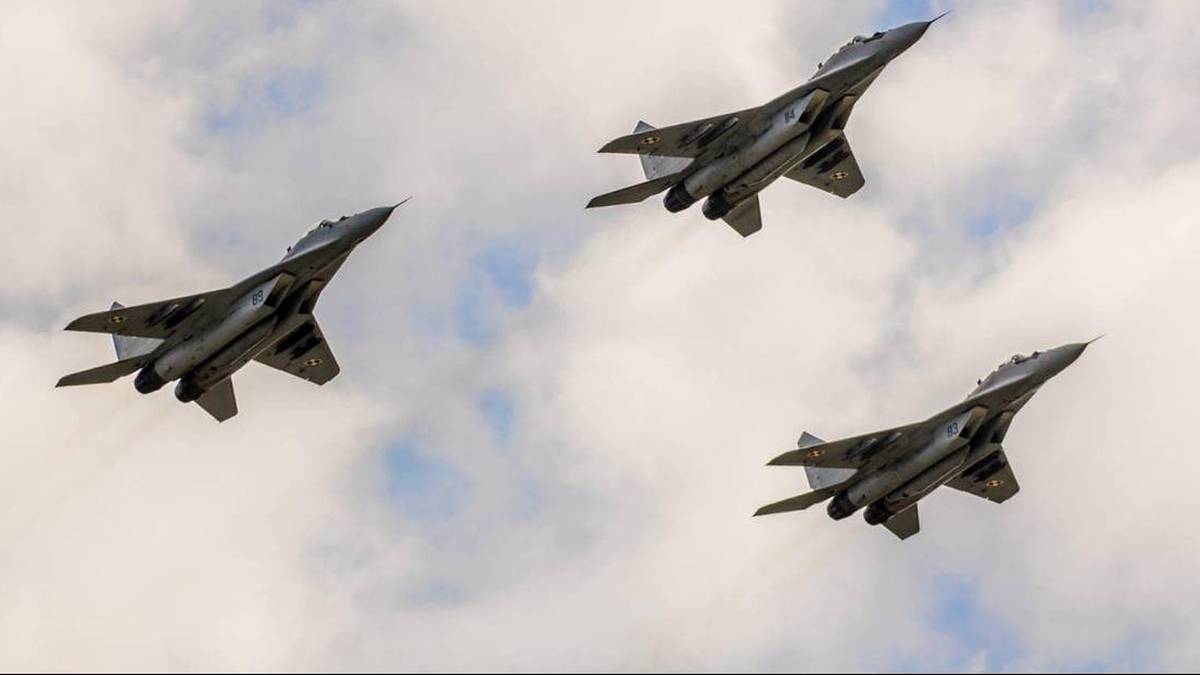
November 10 hypersonic missiles Kindzarz fell on the main base of Ukrainian military aviation in Starokonstantinów in the Khmelnitsky Oblast. According to Ukrainian sources, from 4 November to 12 November in total, the invaders utilized 1177 impact drones and their imitations (including 760 ‘shads’) and 71–74 ballistic and maneuvering missiles. The defenders declared to neutralize 898 unmanned and to shoot down eight–nine rockets.

Ukrainian forces continued to attack energy and fuel infrastructure in Russia and occupied areas. On 6 November, an oil processing plant in a refinery in Volgograd was damaged, resulting in the facility being stopped. 2 days later, the power plant in Bielgorod and the power substations in the Kursk and Volgograd districts were damaged, resulting in a temporary interruption of the power supply to any of the recipients. On 9 November, a power plant was hit in Voroneż (a fire occurred on its territory) and a substation in Taganrog (a partial blackout occurred in the city). Without major consequences, the Orle power plants (5 November) and close Kostroma (6 November) were attacked and the Saratov refinery (11 November).
In addition, the Ukrainian General Staff claims that drones destroyed the depot of the ‘shaheds’ at the airport occupied in Donetsk (6 November), damaged the installation at the refinery in Orsk (11 November) and hit the oil terminal in Theodosia in the occupied Crimea (11 November) and the chemical plants Stavrolen in Budionnowsk, Stavropolskie (12 November). The Ukrainian peculiar Operations Force reported harm to Hwardijske fuel base (6 and 10 November) and to the fuel depots close Symferopol (6 November), as well as harm to the occupied Crimea' S-400 strategy launcher and ammunition depot (the same day). According to Ukrainian Military Intelligence (HUR) on 6 November, the mark of the attack was besides chemical plants in the city of Sterlitamak, Bashkortostan.

Kiev received 21 Patria 6×6 armoured transporters from Latvia, reported by the Ministry of Defence in Riga on November 5. The transfer of vehicles took place during a visit to Latvia by the Ukrainian defence minister Denys Shmyhal.
Copenhagen approved the 28th military aid package for Ukraine, worth $210 million. This was notified on 11 November by the Ministry of Defence of Denmark. The appropriation will be utilized to support national arms production, the acquisition of arms and military equipment in the US and the acquisition of fuel for the army.

7 November Minister Szmyhal announced an increase in base wage for soldiers to 60,000 hryvnia (more than $1.4,000) since early 2026.. Contracts will be concluded for a period of 1 to 5 years. Soldiers who sign a contract for a longer period – from 2 to 5 years – will be guaranteed a 12-month postponement of mobilization after service.
The lawyer General announced 11 Novemberthat in 2025 the number of proceedings concerning the voluntary leaving of the military unit and desertion increased rapidly. Since the beginning of the full-scale invasion, law enforcement officials have registered a full of 311 327 proceedings (255 1000 concern self-departure and 56.2 1000 – desertion). Only between January and October this year 162.5 1000 proceedings were initiated concerning the voluntary abandonment of military service and 21.6 1000 related to desertion. The number of specified cases this year has already exceeded the full of the 3 erstwhile years.

Near the Russian-Ukrainian borderapproximately 10,000 North Korean soldiers were deployed – reported South Korean MP Lee Sung-kwon on 5 November, citing the National Intelligence Service (NIS). According to them, as of September this year, the DPRK sent to Russia another 5,000 military construction workers. Their task is to participate in projects referred to by the Russian side as ‘rebuilding infrastructure’. However, South Korean intelligence services are observing signs of preparations for further deployment of North Korean personnel, including combat training. On the another hand, HUR estimates that the DPRK presently meets 35–50% of Russian ammunition demand.
6 November The Reuter Agency reported that the South African government has launched an investigation into the engagement of 17 of its citizens in the Russian-Ukrainian War. Circumstances of recruiting these people and their means of transport to the war region are being explored. Men aged 20 to 39 were to receive offers of supposedly well-paid work, which proved to be an effort to recruit for mercenary formations operating in occupied Donbas territories. In August 2025, the South African authorities warned against false occupation offers in Russia that circulated on social media. At the time, there were besides reports that any South African women accepted occupation offers in the production of drones.
According to HUR data, about 1,500 foreigners from 48 countries service in the Russian military. The most many recruits were Nepalese citizens (more than 600), Sri Lanka, China, India and African states – including Rwanda, Burundi, Congo and Uganda. They were offered salary, insurance and the anticipation of obtaining a Russian passport after respective months of service.
10 November “Kommersant” reported that in Russia, the recruitment of reservists to the Army Reserve (BARS) units was started to defend critical infrastructure facilities and fight drones.. Reserves will receive the position of military personnel, along with related benefits, social guarantees and remuneration. Vladimir Putin signed the applicable bill on 4 November. However, before it entered into force, the authorities of any regions began the process of forming fresh units. A BARS-47 unit was formed in the Leningrad region, designed to combat drone attacks and sabotage attempts. akin recruitments are conducted in Tatarstan, Bashkiria, and the ND region, where there are facilities of the petrochemical manufacture repeatedly attacked by Ukrainian drones. In the border regions of Belarus, Brian and Kursk BARS units have been operating since 2024. In border zones, they have an extended scope of responsibilities – in addition to the protection of industrial facilities, they include combating sabotage and reconnaissance groups, supporting the evacuation of the population and participating in actions under the “Anti-Terrorist Operation regime”.

According to the data submitted on 4 November by the Polish Border defender from 26 August to 26 October this year at border crossing points with Ukraine, Belarus, Russia, as well as at air and sea crossings, over 98,500 inspections were carried out by Ukrainian citizens aged 18-22.Who entered our country. This statistic shall cover the number of border crossings alternatively than the actual number of persons, which means that 1 individual may have been counted respective times if he has crossed the border more than once. During the same period, over 45.3 1000 men from this age group left Poland and returned to Ukraine.